Posted by: Sandy Steinman | December 21, 2018

2019 California Birding Festivals

Update: The link was initial faulty.  I didn’t realize my information source was giving me 2018 information. I have updated the festival page so it should no longer get out of date in the future. You now click on each festival to see what its dates are for this year.

I have just updated the 2019 California Birding Festival Schedule on Natural History Wanderings. It includes Birding Festivals in California and nearby for January through June of 2019.

Posted by: Sandy Steinman | December 20, 2018

Border Wall Threatens National Butterfly Center

Alt National Park Service  reports

The National Butterfly Center in Mission, Texas is the most diverse butterfly sanctuary in the U.S. Some 200 species of butterflies find a home there each year, including the Mexican bluewing, the black swallowtail and the increasingly imperiled monarch. And, as soon as February, almost 70 percent of it could be lost to Trump’s border wall.

Posted by: Sandy Steinman | December 19, 2018

Yosemite and King’s Canyon/Sequoia Bird Counts

This Sunday marked Yosemite’s 87th annual Christmas Bird Count! In just one day, 34 participants observed over 60 bird species, from great horned owls to hummingbirds. The National Audubon Society Christmas Bird Count began in the year 1900 in response to the holiday tradition of the “Side Hunt,” where marksmen would vie to bring down the most birds and game in a single day. Today, hundreds of events take place every year across the country, giving birders of all ages and experience levels a chance to gather, celebrate the holidays, and help us better understand and protect our feathered neighbors.

Find a bird count near you or check out trends seen over the years: https://www.audubon.org/conser…/science/christmas-bird-count

Last Saturday, 35 volunteers participated in the 18th Sequoia Christmas Bird Count. Splitting up in small groups to count different routes from the foothills up to higher elevations, enthusiastic birders documented a total of 64 species and over 1,690 individual birds. Our non-profit partner, Sequoia Parks Conservancy, coordinates this annual event. This year marks the 119th Christmas Bird Count nationally –these long-term data help document changes in bird distribution and abundance.

Posted by: Sandy Steinman | December 19, 2018

Why Do Snails & Slugs Prefer Some Plants 

ScienceDaily reports

A study suggests the reason some seedlings are more commonly eaten by slugs and snails may be down to the smells produced by young seedlings in the early stages of their development.

Read article at Puzzle of snail and slug feeding preferences solved — ScienceDaily

Posted by: Sandy Steinman | December 18, 2018

Anza-Borrego Desert Wildflowers: Species in bloom 12/18/18

Borrego Wildflowers has the following bloom prediction, updated December 18 2018

Along the Henderson Canyon Road hundreds of large Geraea canescens, Desert sunflower, some already in bloom. They might give an early of the year bloom (January/February), but cold weather may spoil everything.The Canebrake area (Ironwood canyon, June Wash, Vallecito wash) a lot of plants are starting to bloom.Most visible bloom: Abronia villosa villosa, Desert sand verbena, Ferocactus cylindraceus, California barrel cactus.

Confirmed germination Ocotillo Wells, Blow Sand Canyon, Cut Across Road, Military wash, 17 palms, Arroyo Salado (camp), east of Ella Wash, Palm Wash, Big Wash, Travertine Wash.San Felipe wash ‘road’ along East Butte, is one of the best spots right now, with hundreds of Datura discolor (early bloomer), Desert thorn apple in bloom.Most visible bloom: Abronia villosa villosa, Desert sand verbena, Ferocactus cylindraceus, California barrel cactus, rare Cylindropuntia echinocarpa, Golden cholla;Silver cholla by the dozens and Datura discolor, Desert thorn apple.Some Hesperocallis undulata, Desert lily are in bloom, with probably more to follow, but a good bloom for the lily might not happen at all.Rain effects are visible east of the line Thimble trail (S22) up to Ironwood resort (78).

Check out Tom Chester bloom report


Posted by: Sandy Steinman | December 18, 2018

The Decline & Recovery of the Channel Island Fox

NPR has a video on decline and pretty amazing recovery of the Channel Island Foxes

When the population of Channel Islands foxes started to vanish in the ’90s, no one knew why. Bringing them back from near-extinction has meant unraveling a mystery that started with World War II.

See  a short summary and the video at  To Save A Fox From Extinction, Scientists Took To Land, Air And Sea : NPR

Posted by: Sandy Steinman | December 17, 2018

How Fire Retardant Effects Plant Communities

The Ecological Society of America posted an article on he impact of long‐term fire retardant (LTFR) on ecosystems. The fire retardant contains high concentrations of nitrogen and phosphorus, which effect plant growth. Read about their findings at  Cascading effects of fire retardant on plant–microbe interactions, community composition, and invasion – Marshall – 2016 – Ecological Applications – Wiley Online Library

Posted by: Sandy Steinman | December 16, 2018

Point Reyes Shuttle Starts End Of December

Point Reyes  Winter and Spring Shuttle

With elephant seal breeding season and whale migration nearly here, shuttle buses will start on Saturday, December 29.

Important note! Shuttles will ONLY go from Drakes Beach to Chimney Rock, then back to Drakes because of the lighthouse closure. Shuttles will run on Sat 12/29, Sunday 12/30, Monday, 12/31, and Tuesday 1/1. Thereafter, shuttles will run on weekends and federal holidays.
Questions? See the shuttle page: https://www.nps.gov/pore/planyourvisit/shuttle.htm (ca)

See More

Posted by: Sandy Steinman | December 15, 2018

Birding Berkeley 12/15/18

Snowy Egret

Today I spend most of the day birding in preparation for the Oakland Christmas Count. First a short yard count around my house.

Next I went to Aquatic Park where I met another birder and between us we had thirty-seven different species. Most unusual was a female Barrow’s Goldeneye.

Finally, I spend some time on the Ohlone Greenway and a few residential streets in the North Berkeley flatlands. It was relatively quiet and there weren’t all that many birds but I did get to see a Red-breasted Sapsucker.

Great Egret

Click Read more to see today’s bird lists.

Read More…

Posted by: Sandy Steinman | December 15, 2018

New Tools Predicts Which Plants Will Become Invasive

ScienceDaily reports

New tool to predict which plants will become invasive: Research predicts which species are more likely to become invasive based on biological traits

New research provides insight to help predict which plants are likely to become invasive in a particular community. The results showed that non-native plants are more likely to become invasive when they possess biological traits that are different from the native community and that plant height can be a competitive advantage.

Read full story at  New tool to predict which plants will become invasive: Research predicts which species are more likely to become invasive based on biological traits — ScienceDaily

Posted by: Sandy Steinman | December 14, 2018

Birding in Berkeley 12/14/18

In preparation for Sunday’s Oakland Christmas Bird Count. I did some preparatory scouting today.  Both at McLaughlin Eastshore State Park and a yard count at my home. Here is what I found.

McLaughlin Eastshore SP–Berkeley Meadow, Alameda, California, US 39 species (+3 other taxa).  I went from Gilman to Seaview and around Berkeley Meadow and along  Virginia Annex and came up with 42 birds. Mostly  in the rain and some wind.

Canada Goose  X
Eurasian Wigeon  1
American Wigeon  X
Mallard  2
Green-winged Teal  X
Greater/Lesser Scaup  X
Bufflehead  X
Common Goldeneye  3
Ruddy Duck  X
Horned Grebe  1
Western Grebe  1
Clark’s Grebe  1
Rock Pigeon (Feral Pigeon)  X
Anna’s Hummingbird  1
American Coot  X
Black Oystercatcher  6
Posted by: Sandy Steinman | December 14, 2018

How Climate Change Will Radically Impact Yellowstone

The New York Times reports

Over the next few decades of climate change, the country’s first national park will quite likely see increased fire, less forest, expanding grasslands, shallower, warmer waterways, and more invasive plants — all of which may alter how, and how many, animals move through the landscape. Ecosystems are always in flux, but climate change is transforming habitats so quickly that many plants and animals may not be able to adapt well or at all.

Read story and see excellent photography at  Your Children’s Yellowstone Will Be Radically Different – The New York Times

Posted by: Sandy Steinman | December 13, 2018

Anza-Borrego Desert Winter Wildflowers Observations

Anza-Borrego Desert Wildflowers has posted several winter wildflower bloom reports as well as reporting some winter rains at Anza-Borrego Desert Wildflowers: Species in bloom

Posted by: Sandy Steinman | December 13, 2018

2018 Christmas Bird County

Audubon’s 119th Christmas Bird Count will be conducted between the dates of Friday, December 14, 2018 through Saturday, January 5, 2019.  Please note that Sunday, January 6, 2019 is not included in the 119th CBC period.

A map view of the circles expected to be included in the 119th CBC can be found here. If you’re interested in participating next season, check out the map to find a count near you; more circles will be added as they are approved. Green and yellow circles are open for new participants, and red circles are full.

For more information and to participate go to https://www.audubon.org/conservation/join-christmas-bird-count 

Posted by: Sandy Steinman | December 13, 2018

2019 Chico Snow Goose Festival Jan. 23-27

This action-packed 5-day event celebrates the remarkable journey of millions of waterfowl and raptors along the Pacific Flyway that call the Northern Sacramento Valley their home during the winter months. Includes Field Trips, Workshops and Exhibits.

Highlight include:

Farallon Islands: A Mecca for Birds and Birders, by Naturalist & Birding Guide David Wimpfheimer, keynote speaker at Saturday’s “Gathering of Wings” Banquet & Silent Auction

Remarkable Lives: The Intertwined Worlds of Birds and Humans, exhibit opening Thursday, January 24at the Valene L. Smith Museum of AnthropologyCSUC

2018Audubon Photography Awards traveling exhibit, featuring 12 spectacular bird photographs, on display at the “Snow Goose Festival Wildlife Art Exhibit”, Museum of Northern California Art (MONCA), January 24 – 27

David Wimpfheimer A resident of Point Reyes since the early ’80s, David will outline some of the factors that result in the dramatic diversity of the migratory and breeding birds in his lively presentation, “Point Reyes and the Farallon Islands: A Mecca for Birds and Birders.” He will examine trends and changes and share stories of special birds that have been seen over the decades.

If you have any questions, you can reach us at info@snowgoosefestival.org, or by calling the Festival Office at 530-592-9092.

For Registration, schedule and more information go to: http://snowgoosefestival.org

Posted by: Sandy Steinman | December 12, 2018

L.A. County Approves Development That Threatens Animals & Wildlife

Center for Biological Diversity News Release

L.A. County Approves City-sized Development in High Fire Area

LOS ANGELES— The L.A. County Board of Supervisors today voted 4-1 in favor of the controversial Centennial development, with Supervisor Sheila Kuehl casting the lone no vote. Supervisors Barger, Hahn, Solis and Ridley-Thomas voted to approve.

Proposed for the northern edge of L.A. County in an area subject to high wildfire risk, Centennial would spread over 6,700 acres (the equivalent of about 5,000 football fields).

The development would destroy a large portion of the Antelope Valley Wildlands, which contain some of the most beautiful wildflower fields left in California. Rare wildlife like the San Joaquin kit fox and California condor would lose their homes.

Read More…

Posted by: Sandy Steinman | December 12, 2018

The 8 Million Species We Don’t Know – Correction and update

from World Animal Foundation

You mentioned that there are “8 million” species in the World. Based on our most recent data, these figure has been updated, and The Estimated Number of Animal Species in the World Is 2.16 Million, From the Total Species Population of 8.7 Million.

As one of the leading organizations in advocacy, It’s the World Animal Foundation‘s utmost duty to ensure such statistics are current, not just on our platform but also on other relevant platforms.

Having recently revised our article with the newest statistics, I wanted to share this so you might consider a similar update, or if you are considering to write on this topic in the near future.

For your reference and to verify the new statistics, please visit our page: https://worldanimalfoundation.org/advocate/how-many-animals-are-in-the-world/

To provide your audience with direct access to the latest data, we’d be grateful if you could link to our article when making the update.


The New York Times  reports

Paleontologists estimate that before the global spread of humankind the average rate of species extinction was one species per million in each one- to 10-million-year interval. Human activity has driven up the average global rate of extinction to 100 to 1,000 times that baseline rate.

The most striking fact about the living environment may be how little we know about it. Even the number of living species can be only roughly calculated. A widely accepted estimate by scientists puts the number at about 10 million. In contrast, those formally described, classified and given two-part Latinized names (Homo sapiens for humans, for example) number slightly more than two million. With only about 20 percent of its species known and 80 percent undiscovered, it is fair to call Earth a little-known planet.

Read full story The 8 Million Species We Don’t Know – The New York Times

Center for Biological Diversity News Release

Radical Proposal Would Disproportionally Harm Western United States, Putting Over 75 Endangered Species on Fast Track to Extinction

WASHINGTON— A Trump administration proposal today to radically slash Clean Water Act protections would free industry to dump toxic waste into streams across the United States and allow the destruction of millions of acres of wetlands critical to endangered wildlife.

By limiting protections only to wetlands and streams that are “physically and meaningfully connected” to larger navigable bodies of water, the proposal would virtually eliminate the Clean Water Act’s protections across the arid West, from West Texas to Southern California, including most of New Mexico, Arizona and Nevada.

An initial analysis by the Center for Biological Diversity estimates that today’s proposal from the Environmental Protection Agency and U.S. Army Corps of Engineers would cut Clean Water Act protections for streams and wetlands across 3,000-plus watersheds in the western United States. The plan could accelerate the extinction of more than 75 endangered species, from steelhead trout to California tiger salamanders.

Read More…

Posted by: Sandy Steinman | December 11, 2018

Tejon Ranch Co. Kicks out CNPS & Rancho Anna Bot. Garden

The LA Times reported on blocking  a botanist, the CNPS (California Native Plant Society & Rancho Anna Botanical Garden. from having access. This is due to their opposition of development plans that will have a  negative impact on rare native bunch grasses and wildflowers.

Tejon Ranch Co. has blacklisted a botanical group from visiting its environmental conservancy in what opponents say is a bid to stifle criticism.

Read story at  A botanist criticized Tejon Ranch. So he got kicked out — along with 10,000 of his friends – Los Angeles Times

Posted by: Sandy Steinman | December 10, 2018

Free Hiking Guide to Peninsula and South Bay Trails

A get a free seasonal guide to Peninsula and South Bay regional trails

Know when and where to go, each month of the year! The Hiking Calendar includes:

  • Descriptions and tips for visiting the best trails each season
  • Interactive trail routes on Google maps
  • Other fun events and celebratory days to keep in mind

Get free guide Hiking Calendar from POST – A Seasonal Guide to Six Regional Trails in the Bay Area

Posted by: Sandy Steinman | December 9, 2018

Birding Elsie Roemer Bird Sanctuary 12/9/18

Today I went birding at Elsie Roemer starting just after high tide. Elsie Roemer Bird Sanctuary is at the east end of Marsh Beach in the town of Alameda. It is one of the best places to see large numbers of shorebirds. It was overcast most of the day with sun coming out just before we left. Temperature was in the 50’s. Winds were slight.

We identified 30 species today. There were very large numbers of shorebirds today including Black-bellied Plovers, Willets, Marbled Godwits, Dunlin and Western Sandpipers.

This slideshow requires JavaScript.


Click Read more to see today’s bird list

Read More…

Posted by: Sandy Steinman | December 9, 2018

Tejon Ranch Development Stopped In Kern County

Center for Biological Diversity News Release posted on 12/7/18

Judge Orders Kern County to Rescind Approvals for Grapevine Development

Court Says Kern County Must Consider Air Pollution, Health Impacts

A judge today ruled that Kern County must rescind its approvals for Tejon Ranch Company’s proposed 8,000-acre Grapevine development, which would destroy wildlife habitat and greatly increase car traffic on local highways.

The county’s environmental review of the massive project was flawed, the court ruled, because it potentially underestimated its environmental and public-health impacts. Judge Kenneth Twisselman II sided with the Center for Biological Diversity and Center for Food Safety in finding that county officials could not keep approvals in place while conducting additional environmental analysis.

“The ruling halts this destructive project and forces county officials to fully analyze the pollution risks of adding tens of thousands of cars to local freeways,” said J.P. Rose, a staff attorney with the Center for Biological Diversity. “Kern County residents deserve to truly understand how Grapevine would damage air quality and public health. The county needs to fix these problems, not sweep them under the rug.”

Read More…

Posted by: Sandy Steinman | December 8, 2018

2018 Geminid Meteor Shower Visible 12/7 to 12l16; Peaks 12/14

EarthSky reports

The Geminid meteor shower will reach its maximum rate of activity on 14 December 2018. Some shooting stars associated with the shower are expected to be visible each night from 7 December to 16 December.

The maximum rate of meteors expected to be visible is around 100 per hour (ZHR). However, this assumes a perfectly dark sky and that the radiant of the meteor shower is directly overhead. In practice, the number of meteors you are likely to see is lower

The Moon will be 7 days old at the time of peak activity, presenting significant interference in the early evening sky.

Read more at Geminid meteor shower – In-The-Sky.org

Posted by: Sandy Steinman | December 7, 2018

Recommending Plants To Attract Pollinators 

Science Daily reports

Pollinating insects are integral to the health of all terrestrial ecosystems and agriculture worldwide. As homeowners attempt to conserve pollinators through horticulture practices, they often seek the advice and guidance of horticulture retail employees regarding what plants they can successfully include on their properties to maximize their intended benefit to pollinators as well as to their home ecosystems.

Read article at   Recommending plants to benefit and attract pollinators — ScienceDaily

Posted by: Sandy Steinman | December 6, 2018

Special Channel Island Lecture Dec. 13

Channel Island National Park News Release

New Discovery in the Story of the Lone Woman
Ventura, CA – During a special lecture on Thursday, December 13, a panel of researchers will reveal new information about why the Lone Woman remained on San Nicolas Island after others in her community left for the mainland.
Depicted in the best-selling children’s novel Island of the Blue Dolphins, the story of the Lone Woman is based on the true story of a Native American woman who was left alone on San Nicolas Island from 1835 to 1853.
Steven Schwartz, Dr. John Johnson, Susan Morris and Carol Peterson have examined new evidence revealing that the Lone Woman stayed on the island to take care of her son, who had remained behind. She lived with him for a number of years before he was tragically killed in a boating accident, after which she was truly alone.
Contrary to previous belief, it is now understood that when the Lone Woman was brought to the mainland there were native speakers in Santa Barbara who were able to effectively communicate with her through spoken word. She shared with them why she chose to stay on the island as the others left.
Steven J. Schwartz, recently retired, was the Navy’s senior archaeologist on San Nicolas Island for 25 years. Due to this unique position, he has become one of the leading experts on the Lone Woman’s story, publishing and speaking on this topic at numerous venues.
Dr. John R. Johnson has served as Curator of Anthropology at the Santa Barbara Museum of Natural History for thirty years. He obtained his Ph.D. at UCSB where he holds an appointment as Adjunct Professor of Anthropology. His written contributions include more than 80 studies of the culture and history of California’s native peoples, especially emphasizing the Chumash Indians of the Santa Barbara region.
Susan L. Morris is an independent historical researcher and writer. She has worked on 7 of the 8 Channel Islands (including San Nicolas Island) on archaeology, paleontology, geology, and biology projects. For the past eight years, Morris has focused her research on the Lone Woman of San Nicolas Island, contributing content to the new National Park Service Island of the Blue Dolphins website.
Carol Peterson was the education coordinator at Channel Islands National Park for 16 years and was the main project coordinator for the Island of the Blue Dolphins website. Since her retirement, she has continued to coordinate this project as a volunteer and is responsible for posting all content on the website.
The talk will be held on Thursday, December 13, 2018, and is sponsored by Channel Islands National Park to further the understanding of current research on the Channel Islands and surrounding marine waters. The lecture will take place at 7:00 pm at the Channel Islands National Park Robert J. Lagomarsino Visitor Center, 1901 Spinnaker Drive, in Ventura Harbor. The program is free and open to the public.
This lecture can also be viewed live online, at: Shore to Sea lecture series.
The Island of the Blue Dolphins website is located at: https://www.nps.gov/subjects/islandofthebluedolphins
– NPS –

Terns follow record warm temperatures in ‘shock’ migration to north of Alaska Researchers on north-west coast of Alaska startled to discover Caspian terns 1,000 miles farther north than species had been previously recorded A Caspian tern

Eyebrows would be raised if American crocodiles, found on the southern tip of Florida, decided to relocate to New York’s Fifth Avenue or Moroccan camels suddenly joined the tourist throng outside Buckingham Palace in London. Yet this is the scale of species shift that appears to be under way in Alaska. In July, researchers in Cape Krusenstern national monument on the north-west coast of Alaska were startled to discover a nest containing Caspian terns on the gravelly beach of a lagoon. The birds were an incredible 1,000 miles further north than the species had been previously recorded.

Read full story at Terns follow record warm temperatures in ‘shock’ migration to north of Alaska | Environment | The Guardian

Posted by: Sandy Steinman | December 4, 2018

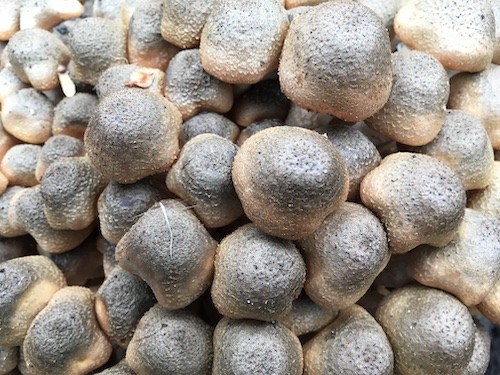
Mushroom Photo

Rain has brought nice clumps of Mushrooms. Photographed in my neighbor’s yard.


Posted by: Sandy Steinman | December 4, 2018

2018/2019 Way Roderick Lectures

The Wayne Roderick Lecture Series takes place on Saturday mornings from November through February at 10:30 a.m. in the Visitor Center of the Regional Parks Botanic Garden. These illustrated presentations are enjoyable for beginners and professionals alike. All lectures are free and open to the public. For addition information go to Wayne Roderick Lectures

Note: Seating is limited, so it is advisable to arrive early, save a seat, and enjoy the garden until lecture time. (Don’t forget: Free tours of the Garden begin every Saturday at 2:00 p.m. and Sunday at 11:00 a.m. and 2:00 p.m.)

Dec. 8 – Heath Bartosh: Northern California Black Walnut – A Tree with Many Stories.
AND After Heath’s talk, there will be a 15 minute break and at approximately noon, Bob Sikora will demonstrate his photographic method for creating digital images of slides.
Dec. 15 – Dan Gluesenkamp: TBA
Dec. 22 – TBA
Dec. 29 – NO lecture – enjoy the holidays!
Jan. 5 – Michael Uhler: A trip in search of floral gems in Nevada’s Ruby Mountains. A photographic recount of a knapsack trip high in The Rubies.
Jan. 12 – Steve Schoenig: Monkeyflowers in Flux – Focusing on Northern California.
Jan. 19 – Bob Case: Exploring Interesting Plants of Iowa, Missouri, and Nebraska on the Lewis and Clark Trail and Badlands National Park, South Dakota.
Jan. 26 – Greti Séquin: Carolus Linnaeus – or Carl von Linné – and the Naming of Everything. An illustrated story of Linné’s life and work and a look at his botanical garden in Uppsala, Sweden.
Feb. 2– Dick O’Donnell: TBA.
Feb. 9– Jon Rebman and Sula Vanderplank: Baja California.
Feb. 16 – Ted Kipping: TBA.
Feb. 23 – Keir Wefferling: Uncovering Cryptic Hybridization and Genome Duplication within the Goldback and Silverback ferns (Pentagramma, Pteridaceae).
Mar. 2 – Bart O’Brien: The Gulf of California Islands, Mexico, Expedition of 2018.

Posted by: Sandy Steinman | December 3, 2018

The Threat Posed By Geotagging Wild Places

The N.Y. Times reports on geotagging can threaten wild places and animals.

conservationists are concerned that photographers who geotag their precise locations are putting fragile ecosystems and wild animals at risk. As a defense, they are asking tourists to stop.
The Jackson Hole Travel & Tourism Board has created a campaign to get tourists to stop geotagging photographs on social media.CreditColle McVoy
Image

Read article at  Is Geotagging on Instagram Ruining Natural Wonders? Some Say Yes – The New York Times

Posted by: Sandy Steinman | December 2, 2018

 Where Can I Find Fall and Winter Birds in the Bay Area?

Bay Nature reports and where to watch winter birds in the greater Bay Area

The Bay Area is home to a bountiful bird population year round, thanks to our rich variety of habitat types and our strong commitment to protecting and restoring them. This month and next, however, bring exceptional opportunities for birdwatching, thanks to two factors: travelers and tides.

Read article about Bay Area birding hotspots at  Bay Nature Ask the Naturalist: Where Can I Find Fall and Winter Birds?

« Newer Posts - Older Posts »

Categories