Posted by: Sandy Steinman | March 4, 2017

Arizona Wildflowers 3/4/17

DesertUSA has the following Arizona Wildflower updates

White Tank Regional Park March 2, 2017 – photos of Poppy bloom and Lupine

Highway 60 goldpoppies increasing along the drive from Miami through Claypool towards Globe and the San Carlos Apache reservation; watch for no less than four different shades of gold/yellow on the East side of Globe at the Taco Bell intersection of highways 60 & 70 – goldpoppies along with Yellow Bladderpod, London Rocket and also tall nodding Wallflower.

Poppies, lupine, desert hyacinth, and heliotropes are blooming at Apache Wash Trailhead (Phoenix Sonoran Preserve). The hills have swatches of poppies and they also can be found along the trails, especially Apache Wash Loop and Ridgeback.

Foothills below the Pinal Mountains have the first Freckled Milkvetch (astragalus); Yellow Evening Primrose, and clusters of white flowers on Mexican Elderberry (Sambuca). I’m told this will be the peak weekend for color at Peridot Mesa on the San Carlos Apache reservation – watch for more unusual varietals along highway 60 on your drive through Globe-Miami.

Catalina State Park and there was a nice variety of wildflowers.

See photos for above posts at http://www.desertusa.com/wildflo/az.html  and http://www.desertusa.com/wildflo/tucson.html
Posted by: Sandy Steinman | March 4, 2017

Lake Elsinore Poppies 3/3/17- updated


Where to photograph in California – Yahoo Groups  (Calphotos) has a report

There was a nice showing of poppies on the hills at Lake Street on Hwy. 15 just north of Lake Elsinore today.

DesertUSA reports

Walker Canyon near Lake Elsinore. Exit at Lake St on hwy15. Follow the Walker Canyon road, you will soon find the spot. Walk deeper into the canyon you will find tons of flowers in patches, many of them very dense and just by the trail. But be careful since trails are not well marked. Make sure to go when the sunshine is strong to see these poppies fully open.
See photos at http://www.desertusa.com/wildflo/ca.html#ixzz4aPARTQXy

Posted by: Sandy Steinman | March 4, 2017

Tejon Ranch Tours, Newsletter and Photos

submitted by Spencer Westbrook author of A Guide to Wildflower Locations of Central and Southern California

Tejon Ranch is one of the top Southern California Wildflower site and opens to public in spring (but tour openings fill up quickly). Check out the very impressive newsletter with its flower photography at https://spark.adobe.com/page/YVIj4DPYnosCr/ 

For information go to the Tejon Ranch website.

Calendar for signing up for tours: http://www.tejonconservancy.org/calendar.htm 

Posted by: Sandy Steinman | March 4, 2017

Fresno Blossom Trail 3/3/17

Blossom Trail Update reports on the Fresno Blossom trail on March 3

Weather forecast calls for sunshine today and tomorrow, 80% chance of rain on Sunday. The trail is in full bloom right now (great viewing today/tomorrow).

Posted by: Sandy Steinman | March 4, 2017

Southern California Wildflower Reports 3/3/17

Theodore Payne Foundation posted its first weekly wildflower report of the season. It includes

  • Anza-Borrego
  • Joshua Tree
  • Santa Rosa Plateau
  • Santa Monica Mts. Recreation Area
  • Antelope Valley
  • Placerita Canyon Natural Area
  • Environmental Nature Center in Newport Beach
  • Elizabeth Learning Center in Cudahy

See report at: http://theodorepayne.org/hotline/2017/TPF_WildFlowerReport_March3-2017.pdf

Posted by: Sandy Steinman | March 4, 2017

North Table Mountain Ecological Reserve Wildflower Hotspot

from the California Department of Fish and Wildlife Website

CDFW will not be offering wildflower tours for the 2017 season.

Description: Created by ancient lava (basalt) flows, the approximately 3,300 acre North Table Mountain Ecological Reserve is an elevated basalt mesa with beautiful vistas of spring wildflowers, waterfalls, lava outcrops, and a rare type of vernal pool, called Northern Basalt Flow Vernal Pools. Typically fissures in the basalt soak up winter rains, forming seasonal streams and waterfalls. In a few places, however, the underlying basalt is impermeable to water forming a temporary pool. Soon to dry up after rains end, only specialized plants and animals adapted to this habitat can survive over time.

Despite the impacts of non-native invasive plant species, range management practices, such as cattle grazing, have contributed to maintaining spectacular wildflower blooms that draw many visitors from near and far to the North Table Mountain Ecological Reserve.

For more information, call the North Central Region Rancho Cordova office at (916) 358-2900 or the reserve at (916) 358-2869 or contact Region 2 Interpretive Services

Click read more for more about North Table Mountain Ecological Reserve

Read More…

Posted by: Sandy Steinman | March 3, 2017

Anza-Borrego Wildflowers 3/3/17

General Flower Update March 3, 2017 by Betsy Knaak – Anza-Borrego Desert Natural History Association Executive Director
With over 7 inches of rain this season, the Borrego Desert is verdant green with flowers in stages of both bud and early bloom. We are on the “uphill side” of the peak bloom and experiencing more open flowers with each passing sunny day. We note a few locations where open flowers can be seen, especially for those willing to wander among the mix of buds and blooms. A top location is anywhere within a two-mile stretch of the Coyote Canyon Jeep Road, north of the north end of DiGiorgio Road with abundant Peirson’s Primoses and others, including a few remarkable Desert Lilies.

Another worth a look is the Henderson Canyon Road with patches of pink Sand Verbena,  Dune Evening Primroses with their wide white petals, yellow Desert Sunflowers beginning to bloom, and a few Desert Lilies.   Around Borrego Springs, roadsides are lined with yellow Desert Dandelions and other wildflowers. These flowers are best seen in the morning, as some blossoms close in the afternoon.

Read More…

Posted by: Sandy Steinman | March 3, 2017

Homestead Trust Wildflowers 3/3/17

Homestead Valley Land Trust has a new wildflower update today. See map at website.

NEW
– Canyon gooseberry with its Chinese lantern-like flowers is blooming at the u-bend, right next to Ridgewood Ave., on the Madrone Park trail and along Homestead Trail East.
– Oakland star tulip, one of the rare plants in Homestead, is starting to bloom along the trails at the end of the canyon.
– Red maids, with its rich pink flower, is blooming along the trail to 4-Corners.
– Stinking iris, native to Western Europe, is blooming below Amaranth near the redwood grove.

Read More…

Posted by: Sandy Steinman | March 3, 2017

Ring Mt. Wildflowers, Birds & Photos 3/3/17

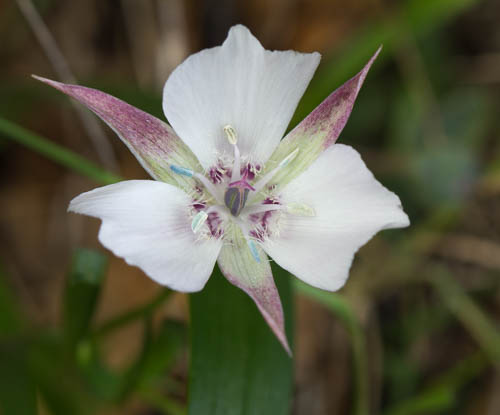
Oakland Star Tulip/Calochortus umbellatus

Oakland Star Tulip/Calochortus umbellatus

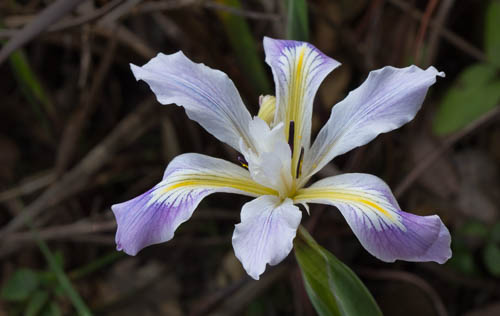
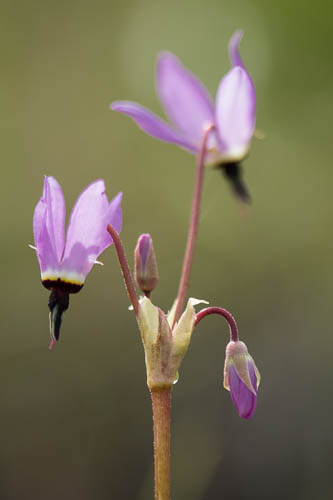
Today we went to Ring Mt. with the goal of seeing Oakland Star Tulip/Calochortus umbellatus. We have a goal of seeing as many species of Calochortus in the Bay Area and somewhat beyond this year.It is still early at Ring Mt. and there are no displays but a number of flowers were in bloom. Most abundant was Milkmaids. My favorites were the Oakland Star Tulip, Douglas Iris and Shooting Stars

Douglas Iris/Iris douglasiana

Douglas Iris/Iris douglasiana

Flowers in bloom includes

Oakland Star Tulip/Calochortus umbellatus
Douglas Iris/Iris douglasiana
Shooting Star/Primula hendersonii
Pacific Sanicle or Snakeroot/Sanicula crassicaulis
California Buttercup/Ranunculus californicus
Milkmaids/Cardamine californica
Manroot/Marah fabacea
Oso Berry/Omeemleria cerasiformis
Bay Tree/Laurus nobilis

Shooting Star/Primula hendersonii

Shooting Star/Primula hendersonii

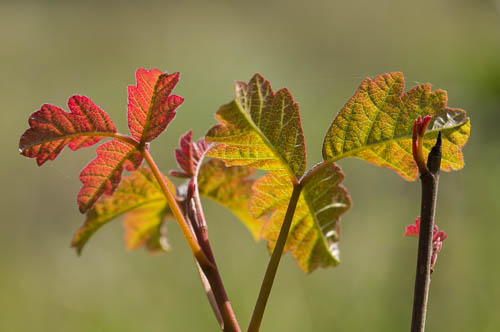
There is also plenty of Poison Oak so be aware of where you walk and what you touch.

Poison Oak/Toxicodendron diversilobum

Poison Oak/Toxicodendron diversilobum


There was also a fair amount to bird activity on Ring Mt. I also briefly checked out Triangle Marsh across the road for a few minutes. Click Read more to see bird lists

Read More…

Posted by: Sandy Steinman | March 3, 2017

Jepson Prairie Guided Walks

Jepson Prairie reports

CORRECTION: Due to road closures, docent-led tours won’t begin until Sat. March 18.  Please see below for the update. We sincerely apologize for the earlier confusion.


Enjoy Wildflower & Water Critter Walks at Jepson Prairie

Every Saturday and Sunday at 10 a.m., starting March 18 and lasting through May 14

Wildflower season is here, and Solano Land Trust’s Jepson Prairie docents are ready to share the first wave of vernal pool flowers with you. Weather permitting, there will be two-hour guided walks starting at 10 a.m. every Saturday and Sunday, from March 18 through Mother’s Day, May 14.

A vernal pool is a world of exceptional diversity and an ecological system of great complexity, and Jepson Prairie Preserve is one of the best remaining examples of vernal pools in all of California. Enjoy an easy, meandering walk under wide-open skies with knowledgeable docents while exploring the bunchgrass prairie and walking alongside the claypan vernal pools. The prairie is transformed by winter rains into fields of stunning wildflowers including white meadowfoam, yellow carpet, and miniature lupine. Docents are also on hand to introduce you to the rare aquatic life that live in the ephemeral pools, including vernal pool fairy shrimp, Conservancy fairy shrimp, and the larvae of the California tiger salamander.

Read More…

Posted by: Sandy Steinman | March 3, 2017

Carrizo Plain Wildflower Update 3/3/17

I received the following update from the BLM today regarding Carrizo Wildflower bloom

As of Monday there were no wildflowers on Carrizo Plain National Monument. It’s just a waiting game to see what blooms and where.  However, the arrival of spring and wildflowers at Carrizo generally occurs from February through May.  Mid March to mid April is the usual time frame for wildflower season, but it is dependent on many factors, including temperature, rainfall and the timing of the two that determine which flowers bloom and their distribution in any given season.  You can also get the most current info by contacting the Education Center on the Monument.  The Education Center is open Dec-May, Thursday-Sunday from 9am – 4pm and you can reach them at 805-475-2131.  You can also contact 661-391-6088, Monday- Thursday.

Posted by: Sandy Steinman | March 3, 2017

Help Western Monarchs & Milkweeds

The Xerces Society has started project to help Monarch Butterflies and  their host plants, Milkweeds. Monarch Populations across North America have been in serious decline.

This project is part of a collaborative effort to map and better understand monarch butterflies and their host plants across the Western U.S. Data compiled through this project will improve our understanding of the distribution and phenology of monarchs and milkweeds, identify important breeding areas, and help us better understand monarch conservation needs. Some of the key research questions that these data will help us answer include:

  • Where are different milkweed species growing in the West?
  • Where are monarchs occurring in the West?
  • Where are monarchs breeding in the West?
  • When is milkweed emerging and senescing (dying back) in the West?
  • How does milkweed phenology (life cycle) differ by species?
  • When is monarch breeding occurring in specific areas/regions of the West?
  • What types of habitats are different milkweed species associated with?

Read More…

Posted by: Sandy Steinman | March 3, 2017

Homestead Valley Land Trust Wildflowers 3/1/17

Homestead Valley Land Trust  in Marin County reports blooming now·

– Buttercup will start showing up in most of the meadows. It’s blooming on the ridge now.
– Checkerbloom is blooming up on the ridge near the patches of blue dicks.
– Common vetch, a native of the Mediterranean, is the purple pea blooming in the meadows
– Marin checker lily, distinguishable from the other checker lily by its rich chocolate color, is listed as rare, threatened, or endangered on the CNPS Inventory of Rare and Endangered Plants. It’s blooming in the meadow below Amaranth.
– Pacific sanicle with its rich foliage and unspectacular dull yellow flower is blooming on the spur trail going up to 4-corners.
– Sourgrass, native to South Africa, is a noxious weed here. We used to suck on the sour juice in the stems when we were children and squeeze the juice onto our Miner’s lettuce salads as dressing.
– Sun cups is a bright yellow close to the ground in the meadows.
– Wooly lomatium, with its hairy greenish disklike flowers grow close to the ground on the Ridgewood Rock and up on the ridge below Homestead Hill.

See photos  other posts at  Homestead Valley Land Trust

Posted by: Sandy Steinman | March 2, 2017

DesertUSA Updates 3/2/17

DesertUSA has a number of new updates

California

Death Valley where China Ranch Wash drains into the Amargosa River. Most plants have not yet flowered but will probably do so within the next week or two. See photos of Phacelia calthifolia, P. crennulata, Geraea canescens and Perityle emoryi.: http://www.desertusa.com/wildflo/ca_dv.html#ixzz4aF1qANvP

Carrizo Plain National Monument reports: The anticipated peak bloom times are mid-late March but with the high amount of rain we’ve received this season, it’ll be very green and blooms may continue into April.

Arizona

Poppies, lupine, desert hyacinth, and heliotropes are blooming at Apache Wash Trailhead (Phoenix Sonoran Preserve). The hills have swatches of poppies and they also can be found along the trails, especially Apache Wash Loop and Ridgeback. Photos taken on 3/1 on Apache Wash Trail (poppies) and Ocotillo Trail (purple flowers) at http://www.desertusa.com/wildflo/az.html#ixzz4aF2XPsT6

Picacho Peak State Park, just a few yards off loop road. see photo taken 03/01/2017 of poppies at  http://www.desertusa.com/wildflo/tucson.html#ixzz4aF2t01Cw

Posted by: Sandy Steinman | March 2, 2017

Anza-Borrego Desert Wildflowers Updates 3/2/15

Anza-Borrego Desert Wildflowers Update reports March 1, 2017
Blow Sand Canyon Loop – 
Hiking Details

I
n Fault wash we found a big flower field of Notch leaf phacelia, Phacelia crenulata ambigua.
We cut accross, Una Palma time for a short hike. Unfortunately the singe palm died in 2015.
The goal was to find Mojave cleomella, Cleomella obtusifolia and we found plenty of those along our trail and the big surprise some in bloom.
Desert lily, Hesperocallis undulata are there in high numbers as everywhere else.
Desert sunflower, Geraea canescens, some in bloom, hundreds ready to go in the next weeks.
Comment”  The flower fields of Notch leaf Phacelia, crenulata ambigua, in the Borrego Badlands is a very rare event.  To get there: Fonts point to short wash to Fault wash.  4WD preferred to get to the startiing point.


Down the very wet Tule Wash, that was interesting driving a wash for the first time with no tire tracks and sinking a bit in the mud.
Tule wash was filled with Orcutt’s woody aster, Xylorhiza orcuttii, so that begs for a hike.
Turning right on Pole line, HWY 78 west.
The goal of this long drive was to find Western Sea-purslane, Sesuvium verrucosum in bloom, YES only the one plant we found before, in good bloom.
Later back to the linanthus jonesii and close to 5 p.m. we found one plant in bloom, added another blooming plant to our list.

See photos and older reports at http://www.abdnha.org/pages/03flora/reports/current.htm 

Desert USA reports

We visited the Anza Borrago area on 2/1/17 the road to Coyote canyon is almost back to normal after the rain, this area has the most wildflowers now. Each day will bring more flowers to bloom and the bloom may last for weeks, if it does not get too hot. This weekend should be a good one to go. Cactus should start to bloom in the next few weeks.

See photos and older reports at  http://www.desertusa.com/wildflo/ca_abdsp.html#ixzz4aF1DWPfe

Posted by: Sandy Steinman | March 2, 2017

Henry Coe Wildflower Update 3/2/17

Henry Coe State Park has a new wildflower bloom report  for February March 2, 2017 at the Pine Ridge Association website with photos and a list of flowers now in bloom at: Henry W. Coe – Wildflower Guide.

Posted by: Sandy Steinman | March 2, 2017

Marin County Naturalist Outings

See the spring calendar for Marin County Parks Naturalist Outings including wildflowers and birding at http://www.marincountyparks.org/depts/pk/calendar#/?i=9 

Posted by: Sandy Steinman | March 1, 2017

Arizona Wildflowers 3/1/17

Wild in Arizona reports

Catalina State Park is showing small patches of poppies along the road to the Equestrian Center and above the Southerland Wash.
Picacho Peak State Park: One of the more promising poppy bloom along the Barrett and Anza Loops. Flowers are small now but look to explode after this week.
Arizona-Sonoran Desert Museum wildflower areas are just starting to show.
Pinal Parkway has ok roadside blooms but will be great year for cactus in a month.
Saguaro National Park is still a ways off but will have a good cactus and tree bloom this year.
Tohona Chul Park has some nice flowers and looks to get better in the coming weeks.
Cabeza Prieta. has large amounts of Sahara Mustered covering the dunes but it is showing some wildflowers.

See photos at Wild in Arizona


DesertUSA reports

Poppies are blooming on the west facing slopes under praying hands, treasure loop trail area on Superstition Mtn. Rain expected over next couple of day

See photos at http://www.desertusa.com/wildflo/az.html#ixzz4a6rkhdwN

The northern slopes are covered in poppies on Dynamite and Goldmine trails. Sunday, February 26 – San Tan Mountain Regional Park

Picacho Peak. Brittle brush is nearly completely full grown. Some penstemon’s, desert marigolds, desert globe mallow, chicory and lupines are blooming, but not with such abundance … almost homogenously Mexican poppy. Think the peak is a week to ten days hence.

See photos at http://www.desertusa.com/wildflo/tucson.html#ixzz4a6s3sSPe

Posted by: Sandy Steinman | March 1, 2017

Humans Are The Leading Cause Of U.S, Wildfires 

NPR Reports

More than 8 in 10 fires are started by people. Researchers say humans are not only causing the vast majority of wildfires, they’re extending the normal fire season around the U.S. by three months.

Fire ecologist Melissa Forder says about 60 percent of fires in national parks are caused by humans: “intentionally set fires, buildings burning and spreading into the forest, smoking, equipment malfunctions and campfires.”

But the average for all forests is even higher. The latest research shows that nationwide, humans cause more than 8 in 10 — 84 percent.

Read full story at Humans Are The Leading Cause Of Wildfires In The U.S. : The Two-Way : NPR

Posted by: Sandy Steinman | February 28, 2017

Joshua Tree Wildflowers 2/28/17

DesertUSA reports at Joshua Tree

The blooms are open in the poppy fields by the South Entrance to Joshua Tree National Park. The flowers are abundant along the road for about a mile starting ¾ mile north from the entrance sign. On the west side of the road, the poppies are interspersed with tall Lupine, Chia, Brown-Eyed Evening Primrose and Desert Dandelions. On the east side of the road the poppies are interspersed with a few Lupine, Chia and some interesting ground flowers including Desert Star and Trailing Windmill. While this is just a small area of the park, the blooms are fresh and abundant.

I checked the area by the sign at the South Boundary, as the plant community is slightly different there. There are many Woody Bottle-Washers getting ready to bloom, and a few blooming. I also saw a few Purple Mat blooming and a Wild Cherry plant. Next I checked the washes just south of the Cottonwood Visitor Center and found many Canterbury Bells budding with some in bloom. I found one wash with some Bigelow Monkey Flowers coming into bloom and one small Whispering Bell. The only other areas that I saw flowers were a few Orange Mallow along the road north of the Cottonwood Visitor Center, and Cryptantha with a few Phallecia and Brown-Eyed Primrose around the Porcupine Wash. Although the flowers were concentrated in a small area, I counted 25 species of plants in bloom.

Read more: http://www.desertusa.com/wildflo/ca_jtnp.html#ixzz4a2vIIdaP

See photos at Desert Wildflower Reports for Joshua Tree NP by DesertUSA

Posted by: Sandy Steinman | February 28, 2017

Edgewood Park March Wildflowers

Friends of Edgewood Park have updated its website to show what plants are typically blooming in March. There are  photos of plants you might see. Explore plant locations, plant species, which plant blooms when, and answers to a host of other questions at  What’s Blooming This Month


Posted by: Sandy Steinman | February 28, 2017

Anza-Borrego Wildflowers 2/28/17 – updated

Anza-Borrego Desert SP has a detailed wildflower report

Anza-Borrego Desert State Park Wildflower Update February 28, 2017

Good rains in December and January, plus over two inches this month, have annual plants growing in the flower fields north of town, and along trails in western canyons, and even in the badlands.

Desert lily plants are exploding into bloom in many locations, including the badlands. The dirt road to Arroyo Salado Primitive Camp is a good place to look for lilies (beyond the camp area, 4WD is recommended).

Yesterday’s rain (1.5 inches!) gave plants quite a drenching, and increasing temperatures in the coming week should have more plants blooming. Sunflowers in the “Flower Fields” along Henderson Canyon Road are getting larger, most have buds, but only a few are blooming (so far).

Spectacle-pod is blooming at the north end of Di Giorgio Road. The Coyote Canyon Road has been flooded again, with large quantities of flowing water and deep mud impeding traffic approximately one-half mile up the road. Drivers of two-wheel-drive vehicles should park at the end of the pavement and walk, either up the dirt road, or out onto the flats, for desert lilies in bloom, dune evening primrose, and patches of sand verbena, as well as the occasional blooming desert sunflower.

Poppies, phacelia, cryptantha, chuparosa and brittlebush have been blooming at the Visitor Center, where desert dandelions and other annuals are starting to make an impressive showing.

Borrego Palm Canyon is beautiful right now, with Canterbury Bells, Poppies, Monkeyflower, and Phacelia blooming against lots of bright green foliage! Brittlebushes are loaded with buds, and should be bursting with bright yellow flowers before long.

Visitors to the southern end of the park would do well to spend some time at the Carrizo Badlands Overlook, where lupine, spectacle-pod, and brown- eyed evening primrose can be found near the parking area, and desert lilies on the hillside should be blooming by now.

It’s hard to predict a peak, but we should see many more flowers coming into bloom this week. If temperatures continue to be mild, flowers should persist through the first half of March, at least, and perhaps later as well.

For updates, join Anza-Borrego Foundation’s email list at http://www.theabf.org or call the State Park Wildflower Hotline, 760-767-4684.

Calphoto  also has the following report

the best area I found for wildflowers was at the Desert Garden. I also went to Palm Canyon looking for the Big Horned Sheep.

There were a few in the morning. They were scared away by some people and a helicopter looking for a missing person. Extra ranfers on duty keeping people on the trails. There are so many peopl off the trails they are treatening to close the area while the sheep have their young

Anza Borregohiking.com has photos at Anza-Borrego Wildflowers Guide album  and at Anza Borregohiking.com

Posted by: Sandy Steinman | February 28, 2017

Marin Wildflower Updates 2/28/17 – updated

The Marin CNPS had two new reports today.

Cataract Trail from Rock Springs parking lot (a couple of days ago). Lots of Fetid Aders tongue (scoliopus)

few flowers were blooming along San Geronimo ridge and Pine mt fire road, a lot were still in bud. Claytonia gypsophiloides was blooming pretty strong near big Carson falls. Pedicularis densiflora growing in the chaparral next to the sargent cypress along San Geronimo ridge.

Toxicoscordions freemontii are popping along Blithedale/Corte Madera Ridge and probably elsewhere. A few others from the early spring show, as well, including Calochortus umbellatus (from Ring Mountain) and some lavender-pink milkmaids.

See photos at Marin Native Plants


Posted by: Sandy Steinman | February 28, 2017

Antelope Valley Wildflower Update 2/28/17

Antelope Valley California Poppy Reserve SNR reports

As of February 28th, the hills are green and the grape soda lupine, slender keel fruit and filaree have started to bloom. The first buds have been seen on the poppy plants, so our first poppies should begin blooming in a couple weeks. Because the rains started late and then came on heavily, it wasn’t the optimal precipitation pattern for poppies so we’re expecting a moderate poppy bloom at best, possibly lasting through mid-April.

Current Photos

Weekly bloom updates will be posted through Mother’s Day.

Posted by: Sandy Steinman | February 28, 2017

CNPS Field Trips March 2017-Updated

March 2017 Field Trips:

(for more information on trips go to chapter websites; also check out chapter websites for late trip postings)

Bristlecone (Mono, Inyo and NE Kern counties) http://bristleconecnps.org/index.php

  • March 25-26 Saturday-Sunday, CNPS Field Trip: Death Valley,

East Bay CNPS http://www.ebcnps.org/

  • Monvero Dunes Wildflower Tour – Saturday, March 11, 2017
  • Sunday, March 12, 9:30-noon
    Monday, March 13, 9:30-noon Wildflowers and Unusual Habitats of the Byron Area
  • Sunday March 12, 11:00 am, Bridgeview Trailhead into Dimond Canyon.
  • Sunday March 26, 2:00 pm, San Pedro County Park, Pacifica

Marin CNPS http://www.marin.edu/cnps/

  • Rock Spring Calypso Orchid Hunt, and More! Saturday, March 11, 10:30 a.m.
  • Audubon Canyon Ranch’s Modini Mayacamas Preserve Saturday, March 18, 8:00 a.m.– 3:00 p.m.

Milo Baker (Sonoma county) http://milobaker.cnps.org/index.php/events/field-trips

  • Friday 3/17/2017         Annadel Plant Survey  (9am-3pm)
  • Saturday 3/18/2017     Modini Mayacamas Preserve  (8:30 carpool; 9am-3pm)
  • Friday 3/24/2017         Tolay Lake Regional Park  (9am carpool; 10am-2pm at park)
  • Saturday 3/25/2017     UC Stebbins Preserve Park d (8:15 carpool; 10am-2pm)
  • Tuesday 3/28/2017      Fitch Mountain  (9am carpool Coddington; 10am-2pm)

Read More…

Posted by: Sandy Steinman | February 27, 2017

Jepson Prairie Wildflowers 2/27/17

submitted by Charlie Russell of  Wildflower Hikes

With all of this rain, it should be no surprise that the vernal pools at Jepson Prairie Preserve are very full. The portion open to the public is still very wet, but the flowers are starting to pop up. In a recent visit I found a good selection of our early season flowers: Yellow Carpet (Blennosperma nanum), Prairie Pointers (Primula clevelandii ssp patulum), Butter ‘n Eggs (Triphysaria eriantha), Biscuitroot (Lomatium caruifolium), Water starwort (Callitriche marginata), Shining Peppergrass (Lepidium nitidum), California Golden Violet (Viola pedunculate), Semaphore grass (Pleuropogon californicus), the very start of Vernal Pool Goldfields (Lasthenia fremontii) and the rare/endangered Prairie Bells (Fritillaria liliacea).

Public tours will start on March 11, and will be held every Saturday and Sunday through May 14, starting at 10:00 am.

Posted by: Sandy Steinman | February 27, 2017

UC- Berkeley Botanical Garden Photos

Photos from today at the UC -Berkeley Botanical Garden

This slideshow requires JavaScript.


Posted by: Sandy Steinman | February 27, 2017

Anza Borrego Wildflowers 2/26/17

Anza Borrego Desert Natural History Association has two new reports

General Flower Update by ABDNHA  February 26, 2017
The Borrego Desert is verdant green with leaves and buds of wildflowers needing just a few more warm, sunny days before the buds open to show their springtime colors.  Today we note a few locations where individual open flowers can be seen for those willing to wonder among the blooms are open, including the north end of DiGiorgio Road with a few open Desert Lilies and a few others, and east on Henderson Canyon Road just west of PegLeg some patches of Sand Verbena and a few open Desert Lilies.

The weather is still cool for hiking, and the blue skies and mountain views round out a day in the desert.
For the full bloom, we are looking at mid-March, but will be watching each week.  Flower maps are now available at our ABDNHA Borrego Desert Nature Center at 652 Palm Canyon Drive.

Check out BorregoInSpringtime of Facebook – it’s our online photo festival of Smartphone photography.

February 26, 2017 Blow Sand Canyon Loop – Hiking Details
We started our route by exiting in the Texas dip, down the San Felipe wash. On the bank flower fields of Bigelow’s monkey flower, Mimulus bigelovii bigelovii and Parish’s poppy, Eschscholzia parishii. Along the route germination was staggering, but no great display in flowers. We’ve never had such a high plant and bloom count on this hike before, germination and plants about to bloom in very high numbers. Asian mustard, Brassica tournefortii was of course present in high numbers.

See photos at Anza Borrego Desert Natural History Association


Posted by: Sandy Steinman | February 27, 2017

March 2017 Birding Field Trips

March 2017  Golden Gate Audubon Birding Field Trips

For more information on any of the trips below go to http://goldengateaudubon.org/field-trips/fieldtrips/

  • Berkeley Waterfront/ Eastshore State Park Thursday, March 2, 8:00 — 10:30 a.m. (Centennial bird walk)
  • Tilden Nature Area, Berkeley Friday, March 3, 8:30 — 11:30 a.m. (First Friday bird walk)
  • San Francisco Botanical Garden Sunday, March 5, 8:00 — 10:30 a.m. (First Sunday bird walk) 
  • Eden Landing Ecological Reserve, Hayward Sunday, March 5, 8:00 — 11:00 a.m.
  • Sibley Volcanic Regional Preserve, Oakland Friday, March 10, 8:30 — 10:30 a.m. (Second Friday bird walk)
  • Birding by Ear Along the Stream Trail, Redwood Regional Park Friday, March 10, 7:00 — 9:00 a.m. (repeated 3/17, 3/24, and 3/31; sign up for only one)
  • UCSF Mt. Sutro Open Space Preserve, San Francisco
    Saturday, March 11, 8:30 – ~11-11:30 a.m.
  • Las Gallinas Storage Pond, San Rafael Sunday, March 12, 8:00 — 11:00 a.m.
  • Bodega Bay, Sonoma County Sunday, March 12, 9:00 a.m. to around 1:00 p.m.
  • Special Pre-Birdathon TripCoyote Hills Bird Walk & Fundraising Training Sunday, March 12, 9 a.m. to noon
    This event is limited to people who are planning to do Birdathon fundraising. Advance registration required: Click here to register.
  • Middle Harbor Shoreline Park, 2777 Middle Harbor Road, Oakland Wednesday, March 15, 8:30 – 10:00 a.m. (Third Wednesday bird walk)
  • Birding by Ear Along the Stream Trail, Redwood Regional Park Friday, March 17, 7:00 — 9:00 a.m. (repeated 3/24, 31; sign up for only one)
  • Corona Heights, San Francisco Friday, March 17, 8 — 10 a.m (Third Friday bird walk)
  • Coyote Hills Regional Park, Fremont Saturday, March 18, 8:00am – noon
  • San Leandro Shoreline by Bicycle, Alameda County Sunday, March 19, 9:00 a.m. — 1-1:30 p.m.
  • Fort Mason Community Garden, San Francisco Sunday, March 19, 8:00 — 10:00 a.m. (Third Sunday bird walk)
  • Lake Merritt and Lakeside Park, Oakland Wednesday, March 22, 9:30 a.m. – noon (Fourth Wednesday bird walk)
  • Birding by Ear Along the Stream Trail, Redwood Regional Park Friday, March 24, 7:00 — 9:00 a.m. (repeated 3/31; sign up for only one)
  • Birding by Ear Along the Stream Trail, Redwood Regional Park Friday, March 31, 7:00 — 9:00 a.m.
Posted by: Sandy Steinman | February 27, 2017

Mt. Burdell Wildflowers 2/26/17

The Marin CNPS Facebook page has a post for Mt. Burdell. It shows the following in bloom Fragrant Lily, Shooting Stars, California Buttercups, Suncups, Blue Dicks, Death Camus, Cream Cups, Blue-eyed Mary and Milkmaids. See photos at  Marin Native Plants.

« Newer Posts - Older Posts »

Categories