Posted by: Sandy Steinman | February 18, 2017

Death Valley Wildflowers 2/18/17

Death Valley National Park reports on its Facebook page

Although we are not planning on a wildflower bloom similar to last year, there are still flowers to be found! This Desert Sand Verbena was discovered near the Ibex sand dunes, in the southeast part of the park.

See photo at :  Death Valley National Park

Posted by: Sandy Steinman | February 17, 2017

Anza-Borrego Wildflowers 2/17/17

Anza-Borrego Desert Natural History Association has the following report from Ocotillo Wells SVRA 


Beware of our blooming bonanza at the base of East Butte! Two of our featured wildflowers this week are relatives in the nightshade family, which contains fruits ranging from deliciously edible to poisonous to hallucinogenic. The yellow blooms of desert ground cherry (Physalis crassifolia) will eventually form tomatillo-like green fruits. Annual desert tobacco (Nicotiana obtusifolia) spreads like crazy in washes and disturbed areas. 

Desert lilies are starting to bloom!  The one below was spotted near the intersection of Pole Line and Gas Domes Trail. Thanks to Mardee for being our alert bloom spotter this week! Several other flowers currently in bloom include: Popcorn Flower, Phacelia, White Rhatany, Dyeweed (shown below) , Brown-Eyed Primrose, Little Gold Poppy, and even our Palo Verdes. Join us for drop-in wildflower walks this coming Friday through Monday at our Discovery Center from 9am-noon and 1-4pm. You can join our Naturalist for a short walk, or just get directions to the best places to see flowers in the area. See you there!

Posted by: Sandy Steinman | February 17, 2017

Word Of The Day: Bombogenesis

A rapidly intensifying storm, which meteorologists describe with the fancy term “bombogenesis,” is developing in the Pacific and forecast to hit the state Friday night.

The process of bombogenesis occurs when a low pressure storm system intensifies rapidly, or “bombs out.” To qualify, the minimum central air pressure must drop 24 millibars in 24 hours.

The LA Times reports

Southwest California is expected to get drenched Friday with the strongest storm it has seen in several years. “The after

Posted by: Sandy Steinman | February 17, 2017

Anza-Borrego Wildflowers 2/15/17

Anza-Borrego Desert Natural History Association has two new reports for Feb. 15

February 15, 2017  Carrizo West Fork Palms – Hiking Details
We’ve never been in this Carrizo canyon fork, when there was any bloom, so it was time to correct this.
Glad we did, again the Carrizo canyon is good, with many interesting flowers we’ve been missing for a long time. And the Bigelow’s monkey flower, Mimulus bigelovii bigelovii, generally only with one flower, are amazingly big for the desert.

(please note this is Carrizo in Anza- Borrego Desert State Park NOT Carrizo Plain National Monument)

Gloriieta Canyon – Hiking Details
We noticed flowers posted from Glorietta canyon, so we changed our plans, go where the flowers are.
Within 10 minutes we found over 30 blooming plants, that’s very good.
By far the biggest plants and best bloom is from where the road enters the wash up to the end of the road.
Further on along our route we added flowers gradually.  A good number of Rockcrosoma where in bloom, the lotebush smell was very strong and pleasant, finding the snapdragon in bloom made our day. The canyon entrance is close to prime bloom but the surrounding area is still a couple of weeks behind.  Finally we got the best bloom of this season.  With the expected rain we should have prime bloom in the low desert between the end of February and the middle of March.

See photos at Anza-Borrego Desert Wildflowers Update

Posted by: Sandy Steinman | February 17, 2017

Marin County Wildflowers: Mt. Burdell 2/16/17

The Marin CNPS Facebook page reports at Mt. Burdell plants in bloom include Poppies, Peppergrass, Water Buttercup, Sun Cups, Cream Cups and Mimulus douglasii. See photos at Mount Burdell 2/16/17.


Posted by: Sandy Steinman | February 17, 2017

Texas Wildflower Predictions

Gary Regner Photography reports on February 17, 2017 –

Trees Blooming –After a strong El Nino in 2016, climate scientists declared a La Nina. Now apparently, the very short lived La Nina is over and neutral conditions exist. What does that mean for spring wildflowers? Who knows. What does matter is that there has been good rainfall during the fall that has continued all through winter. In central Texas we’ve seen a roller coaster of temperatures, from the coldest temperatures seen in years, to multiple record highs in the 80’s. These warmer temperatures have caused trees to bloom early, the earliest I’ve seen since 2012. Mountain laurels have been blooming for a week or more, and redbuds have begun this week. This usually means we are a month or less from a significant annual wildflower bloom. I am very optimistic about the prospects for an average to above average bloom this year.

Posted by: Sandy Steinman | February 17, 2017

Congress Advances Legislation To Kill Wolves, Bears In Alaska

Center for Biological Diversity News Release

Congress Advances Legislation to Kill Wolves, Bears in Alaska

Bill Would Repeal Protections on National Wildlife Refuges

WASHINGTON— The House of Representatives today used the Congressional Review Act to strip away protections implemented during the Obama administration for wolves, bears and other predators on national wildlife refuges in Alaska. By eliminating these protections, the House measure greenlights killing wolves and their pups in their dens and allows bears to be gunned down at bait stations.

Read More…

Posted by: Sandy Steinman | February 16, 2017

Southern California Wildflower Reports 2/16/17

DesertUSA has the following new wildflower reports today

Chino Hills State Park. There are quite a few patches of blooming poppy, Beautiful! From Chino Hill gate, go along the paved road, when you see the 2 hydro towers, walk up toward the two hydro towers on the right hand side, when you walk up the hill, turn left towards the hydro tower, continue to go, until you see a bush of trees
See photos at : http://www.desertusa.com/wildflo/ca.html#ixzz4YtX8InvE

Carrizo Plain National Monument has received a good amount of rain this year and that should result in a good wildflower season. Look for wildflowers in early March

Anza-Borrego The parks may be getting more rain this weekend, and everything is already very green. The wildflowers have started but, it’s still early. Below are some of the pictures we got this week; we have a 4wd vehicle so some are in remote locations. The ones along Coyote Creek Rd are easy to reach and can be seen without 4wd. Wildflowers can be found in the first two miles of the dirt road. Not much along Henderson Canyon Rd yet.

Joshua Tree A few wildflowers are starting to show at the south entrance of the park, rain is in the forecast for the weekend.

Posted by: Sandy Steinman | February 16, 2017

Fresno Blossom Trail 2/14/17

Blossom Trail Update reports on the Fresno Blossom trail on Feb. 14

Buds have been spotted on the trees (see Pictures section), should see blooms starting on the trail in 5-7 days (weather permitting).

Posted by: Sandy Steinman | February 16, 2017

African Penguins  ‘Trapped’ By Climate Change

The LA Times reports

Climate change and overfishing off Africa’s southern tip have set a “trap” for endangered African penguins leaving their nests.

The young penguins swim thousands of miles from where they hatched, following biological signposts advertising a buffet of anchovies and sardines. What they don’t realize is the buffet seems to have closed.

Read full story at African penguins are being ‘trapped’ by climate change – LA Times

Posted by: Sandy Steinman | February 15, 2017

Henry Coe Wildflower Update 2/15/17

Henry Coe State Park has a new wildflower bloom report  for February 15, 2017 at the Pine Ridge Association website with photos and a list of flowers now in bloom at: Henry W. Coe – Wildflower Guide.

Posted by: Sandy Steinman | February 15, 2017

Antelope Valley Poppies May Be Moderate But Other Flowers May Surprise

The LA Times  has a story today about what type of wildflower season might be happening this year at Antelope Valley. Although the poppies might only be moderate this year, there is a chance of a good bloom of Goldfields and Blue Dicks. Read full story at Antelope Valley poppy blooms expected to be moderate, but ‘surprise’ wildflowers may save the day – LA Times

Posted by: Sandy Steinman | February 15, 2017

Reminder The Great Backyard Bird Count Starts Friday

The GBBC is February 17-20, 2017.For more information on the count and participate go to: GBBC eNews: Last-Minute Checks for the Count, Starting Friday!

Posted by: Sandy Steinman | February 15, 2017

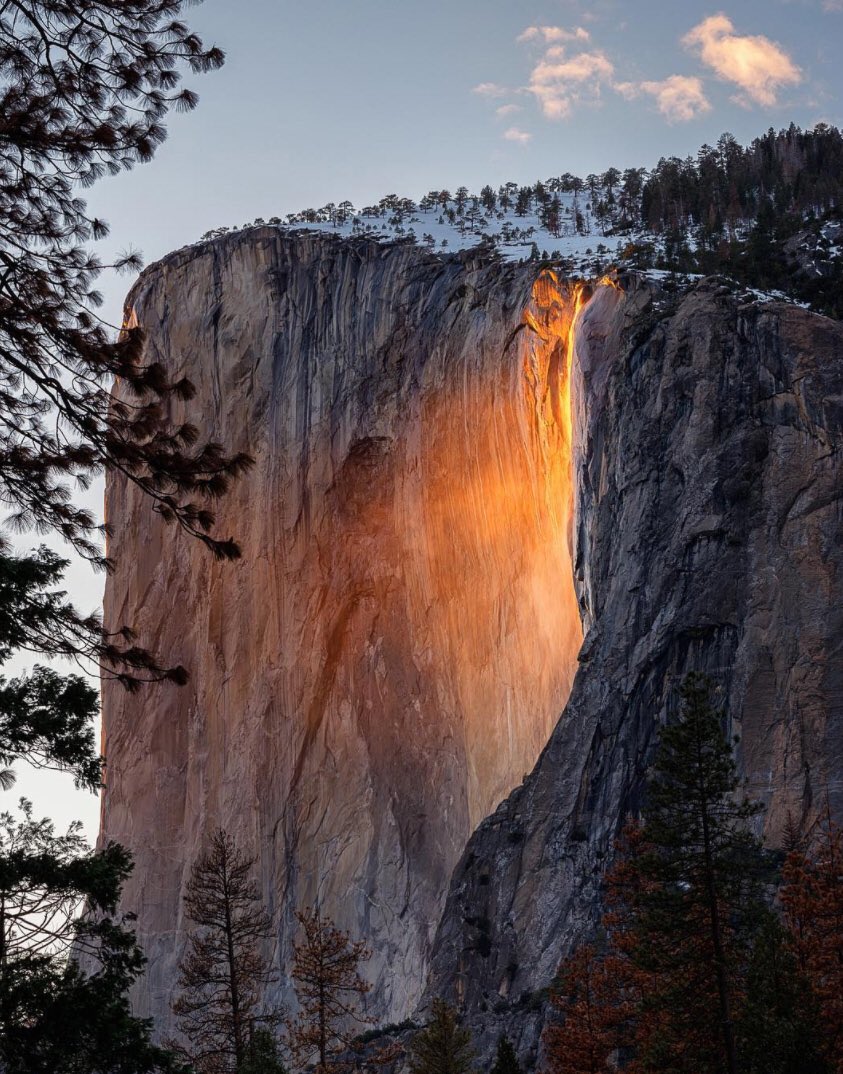
Horsetail Falls at Yosemite

from the US Department of Interior Twitter Feed

Every February a rare phenomenon makes Horsetail Fall glow like fire. Pic from Saturday by Ray Lee

A waterfall glows orange down the side of a granite formation
Posted by: Sandy Steinman | February 14, 2017

Anza-Borrego Wildflowers 2/11/17

Anza-Borrego Desert State Park  published a wildflower report dated February 11, 2017

Good rains in December and January have annual plants growing in the flower fields north of town, and along trails in western canyons. Desert lily plants are budding in many locations, including the badlands, and at the end of Di Giorgio Road, just beyond the end of the pavement. Most are not blooming just yet, but when they do, they are beautiful and fragrant!

So far, cool weather is allowing the ground to stay moist, and plants are continuing to grow. Sunflowers in the “Flower Fields” along Henderson Canyon Road are not yet budding, so give them a few more weeks to develop.

Spectacle-pod is starting at the north end of Di Giorgio Road. Extensive, deep mud should discourage even four-wheel-drive vehicles from driving into Coyote Canyon, but patches of sand verbena and dune evening primrose await those willing to walk a half-mile or so up the dirt road.

Poppies, phacelia, and brittlebush are just beginning to bloom at the Visitor Center, where cryptantha has been in bloom for a couple of weeks.

It’s hard to predict a peak, but we should start to see lots of flowers toward the end of February. If temperatures this month continue to be mild, flowers should persist into the first half of March, at least. Of course, another rain shower or two might extend the blooming period, so our fingers are crossed!

For updates, join Anza-Borrego Foundation’s email list at http://www.theabf.org or call the State Park Wildflower Hotline, 760-767-4684.

Posted by: Sandy Steinman | February 14, 2017

Saguaro National Park Wildflowers 2/14/17

Feb 14, 2017 Saguaro National Park reports: Jojoba’s beautiful little yellow flowers grace us with their presence. These yellow flowers signify that this specfic jojoba is male and a female jojoba will produce the acorn shape nut. These upright leafed shrubs can be found all around the park (there is one blooming right outside the Red Hills Visitor Center)

Source: Desert Wildflowers Tucson – Southern AZ – DesertUSA

Posted by: Sandy Steinman | February 14, 2017

Lake Elsinore Poppy Bloom 2/14/17

DesertUSA reports there is a good poppy bloom at Lake Elsinore on the north side of Railroad Canyon Rd. See photos at Desert Wildflower Reports for Southern California by DesertUSA

Posted by: Sandy Steinman | February 14, 2017

Birding Landfills 

The New York Times recently ran a story about what most experienced birders know – that landfills are rich birding sites. Read the story and learn about some of the better birding landfills across the country at A Birder’s Heaven: Just Follow the Stench to the Landfill

Posted by: Sandy Steinman | February 14, 2017

Marin County Wildflowers Homestead Valley Land Trust 2/14/17

Homestead Valley Land Trust reports

NEW
– Blue dicks, a soft blue cluster at the end of a long stem is bobbing blue on the way to Homestead Hill. There are many patches of it yet to bloom on the ridge trail and down in the brighter places along the Homestead Trail.
– Spring gold, a bright yellow low cluster, is blooming just down the face of the Ridgewood Rock. We can look forward to lots more as the blooms come where it carpets the lower part of the rock.
– Woodland strawberry is common at the forest edges where it is starting to bloom.
– Wood sweet cicely is abundant along all the woodland paths. Its small white blooms are appearing now. Once it goes to seed, the tender pods make a delicious trail snack.

Read More…

Posted by: Sandy Steinman | February 14, 2017

Santa Barbara Area Wildflowers

The Santa Barbara Independent has a story on best places to catch wildflowers in the Santa Barbara are. The mention Anacapa Island, Guadalupe Dunes, And Figueroa Mountain.

Read Story at  Where to Catch the Best Wildflowers

Posted by: Sandy Steinman | February 13, 2017

Antelope Valley Wildflower Update 2/13/17


Antelope Valley California Poppy Reserve SNR reports

As of February 13th, the hills are greening up but no flower buds have been seen yet. Because the rains started late and then came on heavily, it wasn’t the optimal precipitation pattern for poppies so we’re expecting a moderate poppy bloom. Their shallower roots from late germination will also be more vulnerable to late freezes and early heat waves. However, we might be getting a good show of some rarely seen flowers that need heavy rains. If all goes well, we can expect the bloom to start in early to mid-March and last until mid-April or later.

 Current Photos

Posted by: Sandy Steinman | February 13, 2017

Photographing  Owls 

Audubon Magazine has a recent article on how to successfully photograph owls including how to find them, techniques, tips and equipment. Read story at  How to Find and Photograph Owls — Bird Photography| Audubon

Posted by: Sandy Steinman | February 12, 2017

Death Valley Wildflowers 2/12/17

Death Valley National Park reported on its Facebook page today

We are starting to see some wildflowers appear in the southern end of Death Valley. By Ibex Dunes we are seeing Desert Gold and then off of Harry Wade Road we are seeing some Primrose, Desert 5 Gold, Buckwheat, and several other species as well. We probably won’t have as big of super bloom like last year but these recent blooms are promising

Posted by: Sandy Steinman | February 12, 2017

The Billion-Bug Highway

Animated video by NPR on the billions of  insects in the sky Look Up! The Billion-Bug Highway You Can’t See – YouTube

Posted by: Sandy Steinman | February 11, 2017

Marin County Wildflowers: Homestead Valley Land Trust 2/11/17

Homestead Valley Land Trust in Mill Valley in Marin County reports

NEW
– Checker lily is blooming along the Eagle Trail, going up, 8 steps past the little creek below 9e on the right.
– Chickweed, a native of Europe, is edible and nutritious, and is used as a leaf vegetable, often raw in salads.
– Douglas iris is blooming with purple and white blooms near the large Indian warrior patch at 9k.
– Ground iris is blooming white on the oak knoll after you cross the creek above 9d.
– Indian warrior is popping up in many locations but is only showing bright color at the large patch at 9k.
– Shooting star is blooming below the sign post at 9e with lots of buds nearby.

see photos at http://www.hvlt.org/february-10-2017/

Forests
Starting
– Forget-me-not* the familiar pretty little blue flower, a European native, is starting to bloom now. This is one of our most successful invasives covering the forest floor and crowding out native species.
Peaking
– Fetid adder’s tongue, one of our most exotic and earliest spring wildflowers is blooming in its woodland locations. It grows in patches so, if you see one, look for more.
– Green wattle with its heady scent, is blooming with its yellow puff flowers. This native of Eastern Australia blooms after the first rains.
– Trillium, with its white flower in the center of three heart shaped leaves is blooming in the forest.
Fading
– California bay laurel, one of the most common trees in the woods, is blooming with vanilla scented flowers.

Forest Edges
Starting
– Milkmaids, are just starting. This is a member of the mustard/radish family (edible).
Peaking
– Pacific hounds tongue with its small blue flowers and large leaves is popping up all over and blooming at the edges of the forest and in shaded meadows.

Meadows
Starting
– Death camus is blooming in woodland meadows, the whole plant is poisonous, hence the name.
– Greene’s saxifrage, one of the flowers in Homestead found only on the Ridgewood Rock is blooming there now. These tiny blooms stand atop long stems and bloom on the mossy shelves of the rock.
– White flowered onion*, native to the Mediterranean basin, is blooming in gutters and wet places. All parts of the plant from the bulb to the flower are edible.
Posted by: Sandy Steinman | February 11, 2017

Arizona 2017 Wildflower Bloom Predictions

The authors of Wild in Arizona had the following post on their Wild in Arizona blog

Arizona has received the rains needed the past three months. As a result, the desert is green, and we are starting to see wildflowers sprout

The rains need to continue every few weeks or the sprouts will produce less bloom stalks. We do have a 40% chance of rain this week, and we all hope for more (so all together now, rain dance!). So our current prediction for the Sonoran Desert wildflowers is a normal spring bloom…

BUT! This rain pattern we’re currently seeing is similar what we saw 2010, when we saw a big lupine bloom (see photo below from Silver King Mine, location #36 in our Wild in Arizona: Photographing Arizona’s Wildflower guidebook). If we get a lot of rain in February, we could also get a owl clover carpet bloom like we had in 2005 in places like the Eagletail Mountains (location #18 in the book).

If we don’t see much rain this month, we still have the old faithful poppy fields like we have seen in the last few years at Peridot Mesa (location #48). A few poppies are already starting to show around Lake Pleasant Regional Park (#20), White Tank Mountain Regional Park (#21), and Lost Dutchman State Park (#31).

If you would like to start planning your wildflower outings in Arizona this spring, pick up a copy of our book to help get you in the right place at the right time: Wild in Arizona: Photographing Arizona’s Wildflower

See photos and follow their blog at Wild in Arizona

Posted by: Sandy Steinman | February 11, 2017

Bison Reintroduced In Banff Nat. Pk.

The BBC reports

A herd of plains bison have been successfully reintroduced to Canada’s oldest national park, more than 100 years after they were nearly hunted out of existence.
The 16 bison were moved to the Banff National Park in Alberta last week.

Read story at Bison return to Banff national park in Canada – BBC News

Posted by: Sandy Steinman | February 10, 2017

California Pipevine Photos


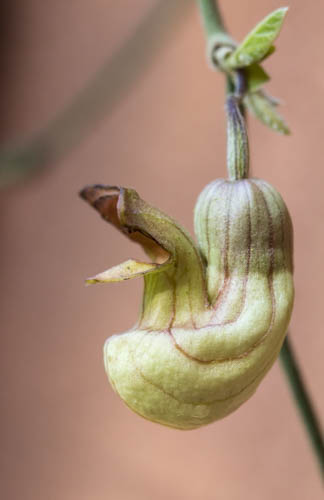
California Pipevine are now in bloom. Here are two photos from my garden today as well as an older photo of the Pipevine Caterpillar taken in the UC-Berkeley Botanical Garden.To see photos of the Pipevine Swallowtail Butterfly go to: http://www.cirrusimage.com/butterfly_pipevine.htm


California Pipevine/Aristolochia californica

California Pipevine/Aristolochia californica

Aristolochia californica, the California pipevine or California Dutchman’s-pipe is a perennial woody vine of western North America. The vine is endemic to northern California. It is native to the Sacramento Valley, northern Sierra Nevada foothills, San Francisco Bay Area, Northern Inner California Coast Ranges, southeastern Klamath Mountains.

The plant grows along riparian streambank areas, in chaparral, oak woodland, and mixed evergreen forest habitats. It is found below 700 metres (2,300 ft) in elevation.

California Pipevine/Aristolochia californica

California Pipevine/Aristolochia californica

The California pipevine’s flowers have a musty unpleasant odor which is attractive to tiny carrion-feeding insects. The insects crawl into the convoluted flowers and often become stuck and disoriented for some time, picking up pollen as they wander. Most eventually escape. The plant is not insectivorous, as was formerly thought. Fungus gnats (Mycetophilidae) may prove to be the effective pollinators. G.L. Stebbins suggested that pollination by deceit is presumed.

uc_botanical_garden_sandy-1080455

The larva of the endemic California pipevine swallowtail butterfly (Battus philenor hirsuta) relies on the California pipevine as its only food source. The red-spotted black caterpillars consume the leaves of the plants, and then use the flowers as a secure, enclosed place to undergo metamorphosis. The plant contains a toxin which when ingested by the caterpillars makes them unpalatable to predators.

The above information is from Wikipedia using the following sources.

  •  Calflora: Aristolochia californica
  • USDA Plants Profile for Aristolochia californica (California dutchman’s pipe)
    Jepson eFlora (TJM2) Aristolochia californica
  •  Encyclopedia of Life: Aristolochia californica; C. Michael Hogan, ed. 2010.
  •  California Native Plant Society Newsletter, “Aristolochia californica,” 1971, Vol. 7 p. 4-5.
  •  Cirrusimage.com: Pipevine Swallowtail Butterfly
Posted by: Sandy Steinman | February 10, 2017

Monarch Butterfly Population Drops Nearly One-third

Center for Biological Diversity News Release

Monarch Butterfly Population Drops by Nearly One-third

Iconic Butterfly Has Declined by More Than 80 Percent in Recent Decades

WASHINGTON— The annual overwintering count of  monarch butterflies released today confirms butterfly numbers fell by nearly one-third from last year’s count, indicating an ongoing risk of extinction for America’s most well-known butterfly. Scientists report that this year’s population is down by 27 percent from last year’s count, and down by more than 80 percent from the mid-1990s. This year’s drastic decline is attributed in part to more extreme winter storms that killed millions of monarchs last March in Mexico’s mountain forests, where 99 percent of the world’s monarchs migrate for the winter.

“The monarch butterfly is still in really big trouble and still needs really big help if we’re going to save this beloved orange-and-black wonder for future generations,” said Tierra Curry, a senior scientist at the Center for Biological Diversity.

A recent study by the U.S. Geological Survey concluded that there is a substantial probability that monarch butterflies east of the Rockies could decline to such low levels that they face extinction. Researchers estimate the probability that the monarch migration could collapse within the next 20 years is between 11 percent and 57 percent.

Read More…

Posted by: Sandy Steinman | February 9, 2017

Anza Borrego Wildflowers 2/9/17

DesertUSA reports on Anza Borrego

Water on the road at the entrance to Coyote Canyon, 4WD recommended, it should dry up this week. The Sand Verbena are starting to bloom, there are not many at this time. Plum canyon is very green a few flower are showing. The next seven day should be sunny and warm giving the wildflower the energy they need to grow. Still early in the season.

Ocotillo Wells SVRA reports: Cool-but-sunny weather continues to coax early bloomers here at OW. Field staff spotted a blooming Orcutt’s aster (Xylorhiza orcuttii) in Tule Wash this week. Also known as woody aster, this lavender-petalled beauty is native to clay, alkaline soils of Southern California and Northern Baja. Check out the shiny, spiny leaves.

See photos at Anza Borrego Desert State Park – Wildflower Reports – DesertUSA

« Newer Posts - Older Posts »

Categories