Posted by: Sandy Steinman | February 6, 2020

World’s biggest iceberg makes a run for it

The BBC reports

The world’s biggest iceberg is about to enter the open ocean.A68, a colossus that broke free from the Antarctic in 2017, has pushed so far north it is now at the limit of the continent’s perennial sea-ice.

Read article: World’s biggest iceberg makes a run for it – BBC News

Posted by: Sandy Steinman | February 5, 2020

Marin Wildflower Reports

Marin CNPS reports

Arctostaphylos virgata – Bolinas manzanita, LIST 1B.2,  along Sir Francis Drake Blvd., at Point Reyes last week.

Scoliopus bigelovii (fetid adder’s tongue) along Lucas Valley Road

Giant Trillium Just Starting Bloom, Lower Steep Ravine up from Hwy 1.

See photos and more reports at  Marin Native Plants

Posted by: Sandy Steinman | February 5, 2020

Slinkpod or Fetid Adder’s Tongue Photos & Info

Fetid Adder’s Tongue or Slinkpod Scoliopus Biglovii  is my favorite early season wildflower. Yesterday I went out to look for it in Redwood Forests in Marin and once again enjoyed photographing it.

This slideshow requires JavaScript.

The name Bigelovii honors John Milton Bigelow, a surgeon and botanist from Ohio, who did a botanical collecting trip in Marin County in the spring of 1854 that made a significant contribution to the Marin flora.  Scoliopus means crooked foot and refers to the curving stalk of the flower. When the plant first appears in the spring, the flower stalks stand up straight, holding the flower above the two leaves which are still quite small. After the flower has been pollinated, the fruit or seed pod begins to swell and the flower parts fall off. The weight of the growing pod causes the slender stalk to bend over and touch the ground, thus the common name “slink pod”  The name “adder’s tongue”refers to the mottled leaves that have grown quite large after the flowers have fallen off and are visible  for months.  The “fetid” part of the name coming from the odor of the fresh flower which  is thought to attract pollinators. (source for information was Marin CNPS)

Where to see Scoliopus bigelovii in Marin County: John Thomas Howell in Marin Flora lists Sausalito, Muir Woods, Mount Tamalpais (Blithedale canyon, Cataract Gulch, Fish Grade), Bolinas Ridge, San Geronimo Ridge, and San Rafael Hills for Marin County locations. A beautiful place to see Scoliopus bigelovii here in Marin County is Muir Woods National Monument.Cascade Falls in Mill Valley is an easy place to see Scoliopus bigelovii. From downtown Mill Valley, take Throckmorton past the public library all the way to the end where it intersects Cascade. Turn right onto Cascade and watch for a small parking lot on the right with a wooden sign reading CASCADE FALLS.  Source: Marin CNPS: Scoliopus bigelovii

To see other locations go the Calflora at http://www.calflora.org/cgi-bin/species_query.cgi?where-taxon=Scoliopus+bigelovii 


Posted by: Sandy Steinman | February 5, 2020

Koalas found dead on Australia logging plantation 

The BBC reports

Dozens of koalas have been found dead or injured at a timber plantation in the Australian state of Victoria, sparking an investigation by officials.

Blue gum trees – an important koala habitat – were harvested from the plantation in December, leaving only a few isolated stands of trees.

Some koalas had starved to death in the remaining trees. Others were apparently killed by bulldozers.

About 80 surviving koalas have been removed and are being cared for.

Read full story at  Koalas found dead on Australia logging plantation – BBC News

Posted by: Sandy Steinman | February 4, 2020

The Shocking Number of Florida Manatees Killed by Boats Last Year

The Revelator reports

An estimated 531 manatees died in Florida waters in the past 12 months. That’s a significant decrease from the number of deaths in 2018, when 824 manatees died, but it still represents a nearly 10% loss to their population in the state.

Read story at The Shocking Number of Florida Manatees Killed by Boats Last Year • The Revelator

Posted by: Sandy Steinman | February 3, 2020

Mexican Butterfly Conservationist Is Found Dead – updated

Since the original post more information has surfaced.  Read story at Sadness And Worry After 2 Men Connected To Butterfly Sanctuary Are Found Dead- NPR


The New York Times reported

The cause of death has not been determined, but criminal groups have often attacked environmentalists whose work impedes their interests.

The body of a Mexican conservationist devoted to the protection of the monarch butterfly in Mexico was found on Wednesday, two weeks after he went missing, the authorities said.

The conservationist, Homero Gómez González, managed a butterfly sanctuary in the state of Michoacán, a violence-ravaged region that is also the location of mountain forests where the butterflies settle every winter after a long and extraordinary migration from Canada and the United States.

Read story at Mexican Butterfly Conservationist Is Found Dead, Two Weeks After Vanishing

Posted by: Sandy Steinman | February 3, 2020

Homestead Valley Land Trust Wildflowers 2/2/2020

Homestead Valley has a new wildflower update. See photos February 2, 2020 NEW – Trilium is blooming under bay trees in the forest near the water tank at 6d. Forests – Fetid adder’s tongue, a small lily with distinctive red mottled leaves, is blooming at several locations in the forest along the Homestead Trail.
Posted by: Sandy Steinman | February 2, 2020

Henry Coe Wildflower Update 2/1/20

Henry Coe State Park has a new report for wildflowers currently in bloom. See what is currently flowering at the Pine Ridge Association website with photos and a list of flowers now in bloom at: Henry W. Coe – Wildflower Guide.


Posted by: Sandy Steinman | February 2, 2020

Kangaroo Lake Wildflower Hike

California Wildflower Hikes published an article from a visit to Kangaroo Lake Botanical  Special Interest Area in July. It includes plant lists, directions, hike description and map, and wildflower photos.

The Kangaroo Lake Botanical Special Interest Area has an amazing variety of wildflowers, and you’ll find them starting right at the trailhead. On this visit we found 57 different species of native wildflower, including 7 California endemics and 4 listed as rare by the California Native Plant Society. It’s off the beaten track, so you won’t find crowds – we saw only a couple of other hikers on a weekday in July.

Read article and see photos at Kangaroo Lake Botanical Special Interest Area

Posted by: Sandy Steinman | February 2, 2020

Garden Photos

Some photos from what is blooming my garden right now.

The Coastal Silk Tassel/Garrya elliptica in our garden currently has 16 inch long flower tassels.

Correa ‘Ivory Bells’ – White Australian Fuchsia/Correa sp. is believed to be a cross between Correa alba and C. backhousiana It is believed to be a cross between Correa alba and C. backhousiana

This slideshow requires JavaScript.

Posted by: Sandy Steinman | February 2, 2020

Why do elephant seals have a large snout?

Point Reyes National Seashore writes about why elephant seals have a large snout

The Snout With Clout!
Male elephant seals have what are known as secondary sexual traits or physical traits that appear in members of one sex and are not directly concerned with reproduction. In elephant seals, the secondary sexual traits are more about asserting dominance over other males than attracting a female mate. The trait they are probably most famous for is their large fleshy proboscis (their snout).

But what is the function of this magnificent appendage?

Perhaps the size of the appendage is not a visual tool of intimidation, but an auditory one due to the sound it helps produce. The threat clap of the elephant seal is produced in the vocal chords, but it appears that the inflated chambers of the proboscis amplify the vocalization. What an elaborate way to say, “You don’t want to mess with me dude!”


Want to learn more fun facts about elephant seals and see what’s new every week during their breeding season? Check out our weekly updates here: https://go.nps.gov/pore/EsealUpdate

Posted by: Sandy Steinman | February 1, 2020

Birding Sacramento National Wildlife Refuge 1/31/20

Yesterday I went birding at the Sacramento National Wildlife Refuge. I did the five mile auto loop with a friend. We had a number of Bald Eagle sightings. Most abundant were the Snow Geese, White-fronted Geese, American Wigeon, Northern Shovelers, Ring-necked Ducks and Coots.

This slideshow requires JavaScript.

Click read more to see our list of species identified.

Read More…

Posted by: Sandy Steinman | February 1, 2020

First Wednesday of Month Free at UC – Botanical Garden

 UC- Berkeley Botanical Garden

Every first Wednesday of the month at the Garden is free admission day.

The Regional Parks Botanic Garden is free every day.

Center for Biological Diversity News Release

Trump Administration Proposes Rule to Solidify Its Policy of Allowing Widespread Bird-killing at Industrial Sites

PORTLAND, Ore.— The Trump administration proposed a rule today to allow indiscriminate killing of birds at industrial sites across the country, including oil and gas operations.

The rule, proposed by the U.S. Fish and Wildlife Service, codifies a legal opinion put in place in December 2017 by the solicitor of the Department of the Interior and former Koch Industries employee, Daniel Jorjoni. This opinion dictated that “incidental killing” of birds is no longer prohibited by the Migratory Bird Treaty Act — a policy that runs counter to decades of enforcement.

Read More…

Posted by: Sandy Steinman | January 31, 2020

California State Parks Season Job Openings

At California State Parks we have many seasonal jobs available including…

Park Aides
Maintenance Aides
Environmental Services Interns
Seasonal Lifeguards
Forestry Aides
Seasonal Clerks

This is a great way to get your foot-in-the-door at California State Parks. Apply today!

Seasonal Openings: http://bit.ly/ParksSeasonalJobs

Questions? Contact us – we’re happy to help! Recruiting@parks.ca.gov

Posted by: Sandy Steinman | January 31, 2020

Henry Coe Wildflower Update 1/30/20

Henry Coe State Park has a new report for wildflowers currently in bloom. See what is currently flowering at the Pine Ridge Association website with photos and a list of flowers now in bloom at: Henry W. Coe – Wildflower Guide.


Posted by: Sandy Steinman | January 31, 2020

February 2020 CNPS Field Trips

Bay Area California Native Plant Society Chapter February Field Trips:

Check the individual chapter websites for trip details and late postings.

Bristlecone (Mono, Inyo and NE Kern counties) http://bristleconecnps.org/index.php

East Bay CNPS http://www.ebcnps.org/

Marin CNPS http://www.marin.edu/cnps/
Cascadiing Creeks – Thursday, February 27, 10:00 a.m. – 2:00 p.m. (Rain date, March 3)

Milo Baker (Sonoma county) http://www.cnpsmb.org/

Napa Valley http://www.napavalleycnps.org/

Santa Clara Valley http://www.cnps-scv.org/
Sat Feb 15 10am – 3pm Dirca – Rancho San Antonio Open Space Preserve (Cupertino)
Sun Feb 23 10am-4pm Hazelnut Trail, Montara Mountain, San Pedro Valley County Park (Pacifica)

Yerba Buena (San Francisco/Northern San Mateo) http://www.cnps-yerbabuena.org/
February 1, SATURDAY 10am to 11:30 am Field Trip – Lobos Creek Valley, Presidio of San Francisco
February 22, 2020, SATURDAY 10 am – 12 noon Early Spring Walk on Bayview Hill

If you are interested in information on other chapters go to: http://www.cnps.org/cnps/chapters/

Posted by: Sandy Steinman | January 30, 2020

Samuel P. Taylor State Park Wildflowers 1/29/20

Fetid Adder’s Tongue and Redwood Sorrel are blooming at the park. They are precursors to spring! Fetid Adder’s Tongue, also known as slinkpod, is “ill smelling” and is pollinated by fungus gnats. It’s seeds are spread by native ants, which eat the top layer of the seed and in so doing, help plant the seed in the ground. The plant also has the ability to clone itself.

See photos and read more about the park at Samuel P. Taylor State Park – Home

Posted by: Sandy Steinman | January 30, 2020

Point Reyes Fungus Fair 2/2/ 2020

The Fifteenth Annual Point Reyes National Seashore Fungus Fair
Sunday, February 2, 2020 
10 am to 4 pm
Fungi Collecting on Saturday, February 1, 2020

Ever wonder about all those mushrooms you’ve seen in the grasslands and forests at Point Reyes National Seashore? The Fungus Fair is a perfect opportunity to see them up close and learn more about them.

Since 2005, fungi have been gathered by volunteers who collect, identify, and catalog mushrooms for an ongoing study at the Point Reyes National Seashore.

Fungus Fair

During the Fifteenth Annual Fungus Fair on Sunday, February 2, 2019, wild mushrooms collected at the park will be on display at the Bear Valley Visitor Center. Visitors are invited to attend free lectures presented by area mycologists and to view hands-on informational displays about mushroom ecology, Death Cap Amanitas, edible and toxic species, and view fungi under a microscope. Local mycologists will be on hand to talk about fungi and their role in the environment.

Presentations

For 2020, the following talks are scheduled:

  • 11 am “What are Mushrooms Doing in My Forest” by David Rust
  • 12:30 pm “Amanitarita’s Freaky and Fabulous Fungi” by Debbie Viess
  • 2 pm “Toxic death caps and glow-in-the dark Mycena” by Catherine Adams

Read More…

Posted by: Sandy Steinman | January 30, 2020

February 2020 Birding Field Trips

February 2020 Golden Gate Audubon Birding Field Trips

For information on trips go to Golden Gate Audubon Field Trips

  • Ballena Bay, Alameda Saturday, February 1, 9:00–11:00 a.m.
  • UCSF Mt. Sutro Open Space Reserve, San Francisco
    Saturday, February 1, 8:30–11 a.m.
  • San Francisco Botanical Garden Sunday, February 2, 8:00–11:00 a.m.
  • Blake Garden, Kensington Wednesday, February 5, 9:00–11 a.m.
  • Tilden Nature Area, Tilden Regional Park, Berkeley
    Friday, February 7, 8:30–11:30 a.m.
    (First Friday bird walk)
  • Arrowhead Marsh, MLK Jr. Regional Shoreline, Oakland
    Saturday, February 8, 10:00 a.m.–1:00 p.m.
  • Pt. Isabel, Richmond Saturday, February 8, 11:00 a.m.–2:00 p.m.
  • Arrowhead Marsh, MLK Jr. Regional Shoreline BICYCLE TRIP, Oakland Sunday, February 9, 10:00 a.m.–1:00 p.m. Meet at EBRPD Tidewater Staging Area 10 a.m.
  • Lafayette Community Park, Lafayette Sunday, February 9, 8:30–11:00 a.m.
  • Salesforce Park, San Francisc Tuesday, February 11, 8:00–8:45 a.m. Repeats on 3/10 and 4/14
  • Hilltop Lake Park, Richmond Wednesday, February 12, 9:00–10:45 a.m.
  • Inspiration Point, Tilden Regional Park, Berkeley Friday, February 14, 8:30–11:00 a.m.
  • Livermore and Patterson Pass, Alameda County
    Saturday, February 15, 8:00 a.m.–12:00 p.m.
  • Arrowhead Marsh, MLK Jr. Regional Shoreline, Oakland
    Saturday, February 15, 9:00 a.m.–12:00 p.m.
  • BICYCLE TRIP: Arrowhead Marsh to Alameda Shoreline
    (This is a BART-to-BART trip) Saturday, February 15, 10:00 a.m. to about 3:00 p.m.
  • Chain of Lakes, Golden Gate Park, San Francisco
    Sunday, February 16, 8:30–11:30 a.m.
  • Fort Mason Community Garden, San Francisco
    Sunday, February 16, 8:00–10:00 a.m
  • Dimond Park and Sausal Creek, Oakland
    Wednesday February 19, 8:30 – 10:30a.m.
  • Corona Heights, San Francisco Friday, February 21, 8:00–10:00 a.m.
  • San Leandro Shoreline Bike and Bird, San Leandro to Hayward Saturday, February 22, 10:00 a.m.—about 3:00 p.m.
  • Valle Vista Staging Area, Upper San Leandro Reservoir, Moraga Saturday, February 22, 8:30–11:30 a.m.
  • Albany Mudflats & McLaughlin Shoreline State Park, Albany, CA Sunday, February 23, 1:30–3:30 p.m.
  • Lake Merritt and Lakeside Park, Oakland
    Wednesday, February 26, 9:30 a.m.–noon

For more Bay Area birding  field trips through out the Bay Area click on the Mt. Diablo Audubon Society Calendar 

Posted by: Sandy Steinman | January 29, 2020

Early Season Bloom Report For Anza-Borrego

Source: Bloom report out of the Anza-Borrego Desert

2020-January-24 We had significant rain in 2019

Things don’t look bad YET, for spring flowers, germination is good and wide spread.
The lack of recent rain, without predicted rain combined with higher temperatures, things are very uncertain.
This might force the plants to start blooming when they are still small.

This season doesn’t look like a Superbloom, maybe a normal or below average bloom.
The bad news, Sahara Mustard, London rocket and other bad plants are thriving, by the millions, in some places 100% of the plants are non native.

So even if the bloom might be OK, it could get drowned in a forest of non-native plants.

Additional info:

Tom Chester Anza-Borrego Desert Facebook Anza-Borrego Desert SP Bloom page ABDNHA Bloom page

January/26/2020 Coyote Canyon second to third crossing Tom Chester
Species in bloom: 63.

Posted by: Sandy Steinman | January 29, 2020

Homestead Valley Land Trust Wildflowers 1/28/2020

Homestead Valley has a new wildflower update. See photos January 28, 2020 The first flower of 2020 is one of the most beautiful to bloom in Homestead. NEW – Fetid adder’s tongue, a small lily with distinctive red mottled leaves, is blooming on the slope above the junction at 5 below Amaranth.
Posted by: Sandy Steinman | January 29, 2020

2020 Mono Lake Field Seminars

Registration for the Mono Lake Committee’s summer and fall 2020 Field Seminars will open on Saturday, February 1 at 9:00am for Mono Lake Committee members only.

If you are not a Committee member, but you wish to register in February, you may join the Committee and sign up for the class(es) of your choice. Non-members will be able to register beginning Sunday, March 1.

See the complete list of seminars at 2020 Field Seminars

Posted by: Sandy Steinman | January 29, 2020

Point Reyes Reopens Closed Roads

Pt. Reyes reports

Mt Vision and McClures Beach Roads are now open! Our long-awaited repairs have been completed and these areas are once again accessible for your next adventure.

Read more in the S.F. Chronicle

Rainy storms in February 2019 wiped out chunks of the McClures Beach Trailhead Access Road, as well as Mt. Vision Road in Inverness, rendering them impassable to hikers and beach-goers. Although the access road and parking lot for Pierce Point Ranch was open, the road leading to the McClures Beach parking lot was off-limits.

Story continues at  Point Reyes road, closed almost 1 year after washing away, reopens – SFGate

Posted by: Sandy Steinman | January 29, 2020

Monarch Population Remains At All-time Low

Xerces Society News Release

Population has not rebounded from all-time low. We must take action now to save the western monarch migration.

The Xerces Society today announced that the number of monarch butterflies overwintering in California remains at critical levels for the second year. The monarch population during the 2018–19 winter was an all-time low. Unfortunately, this year’s Western Monarch Thanksgiving Count numbers are no better.

The total number of monarchs counted this year was 29,418. Although this is 2,200 more than last year, it comes as a result of greater survey effort, with volunteers visiting more sites. There is no meaningful difference between the western monarch population this year and last.

In addition, in both years the population has been less than 30,000 butterflies, the threshold below which the migration may collapse.

Read More…

Posted by: Sandy Steinman | January 28, 2020

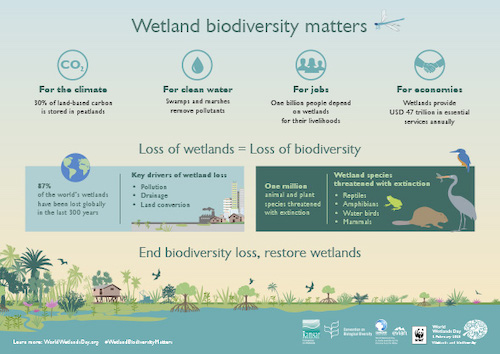
World Wetlands Day Feb. 2

Feb. 2 is World Wetlands Day celebrating wetlands and biodiversity. To find events near you and more information about World Wetlands go to Home – WorldWetlandsDay

Posted by: Sandy Steinman | January 28, 2020

Flickr Photo Contest Winners

See the winning of Flickr’s 2019 Best Shot contest at Best Shot Contest Winners 

Posted by: Sandy Steinman | January 27, 2020

Early Season Desert Wildflower News

Anza-Borrego Foundation reports

2020’s wildflower bloom is just about to begin. We anticipate scattered blooms to appear throughout the Park in mid-February. Check back for more details and bloom locations.

Poppy Reserve/Mojave Desert Interpretive Association has a a January 11 Field Observation for Antelope Valley

The iOS update is now available, with close to 1000 plants found in the Anza-Borrego Desert and surrounding area.
https://borregowildflowers.com/pages/ios_app.html

The Guardian reports on how the successful rewilding of wolves helped correct the Yellowstone ecosystem

Twenty-five years ago this month, wolves were reintroduced to Yellowstone, America’s first national park and an ecosystem dangerously out of whack owing to the extirpation of its top predator.

Read article at  A rewilding triumph: wolves help to reverse Yellowstone degradation | Environment | The Guardian

Posted by: Sandy Steinman | January 26, 2020

Rare Bird Alert: Summer Tanager in San Francisco

The San Francisco Chronicle  report on the dighting of summer tanager in San Francisco

A brilliant red bird — the sort you’d expect to find in a tropical forest — has made an unusual appearance in San Francisco’s Glen Canyon Park.

Read more at Sighting of summer tanager in San Francisco draws urban bird-watchers – SFGate

« Newer Posts - Older Posts »

Categories