Posted by: Sandy Steinman | January 26, 2020

How to Help Birds

How to Help Birds in 2020 From CornellLab of Ornithology

Last year drew to a close with news that North America had lost 3 billion birds since 1970. But that sobering finding kicked off a groundswell of commitment to bringing birds back—one that’s still surging in 2020. We’re often asked about simple, everyday ways that people can help birds—here are some of our favorites:

Posted by: Sandy Steinman | January 25, 2020

Will Southern California see a wildflower superbloom in 2020? 

Los Angeles Times reports

Right now, it’s too early to say, according to biologists and ecological resource officers who track seasonal shifts. California’s statewide drought officially ended in March, paving the way for the possibility of better blooms this year.

But Southern California’s patchwork of microclimates makes it hard to make a universal prediction about wildflower displays throughout the area. Some places report that, so far, conditions are lining up for what could be another amazing show.

Last year’s wildflowers were spectacular, from Lake Elsinore’s poppies to Anza Borrego’s carpets of desert daisies. This year, the forecast is uncertain.

Read full article Will Southern California see a wildflower superbloom in 2020? – Los Angeles Times

Posted by: Sandy Steinman | January 25, 2020

Be a Bird Advocate

From Audubon

Your voice is one of the most powerful assets when it comes to protecting birds and the places they live, and in 2020 we have BIG plans. If your New Year’s Resolutions include having a positive impact, then we’ve got you covered. This is our moment to make a real difference for birds.

Join the Audubon Advocacy 101 webinar on Tuesday, January 21, 2020, at 8:00 p.m. ET, to learn how to be an advocate for birds in your community and beyond. All are welcome.

We are coming together and building power across the nation to save birds, and we want you with us! Our Advocacy 101 training will give you the tools that you need to get started. All you need to bring along is the desire to get involved and change the world for good.

Last year, Audubon released the ground-breaking new climate change report that made one thing abundantly clear: We’re facing a bird emergency. The report offered a stark warning, but it also offered hope by showing that if we act today, we can help most climate threatened birds survive well into the future. 

Sign up today to join our Advocacy 101 webinar, and invite a friend.Audubon will follow up with monthly webinars, action items, and additional resources throughout the year, so stay tuned.

Posted by: Sandy Steinman | January 24, 2020

Saguaro National Park Rainfall & Wildflower Predictions

We’re doing great with winter precipitation so far at the park with 4.94” at the Visitors Center and over 8.5+” in the mountains! We only need a storm or two more and we should have a great spring bloom! Stay tuned…

Posted by: Sandy Steinman | January 24, 2020

Border Wall Threatens National Wildlife Refuge

NPR reports on how the Border Wall Threatens National Wildlife Refuge That’s Been 40 Years In The Making

Over the past 41 years, the U.S. Fish and Wildlife Service has been buying up land on the lower Texas-Mexico border to protect one of the most biologically diverse regions in North America from developers and farmers.

But the Rio Grande Valley of Texas is a hotspot for illegal immigration and drug smuggling, as well as biodiversity. That’s why the Trump administration is planning to build 110 miles of border wall through the valley (which is actually a river delta).

Read or listen to full article at  Border Wall Threatens National Wildlife Refuge That’s Been 40 Years In The Making

Posted by: Sandy Steinman | January 23, 2020

How One Utah Community Fought the Fracking Industry — and Won

The Revelator reports

Kanab, Utah, is known for its breathtaking beauty and proximity to national parks, but now the tourist-friendly destination has another claim to fame: Residents just drove a frac-sand mining development out of town. We’ve been following the story for months — here’s what happened.

from the Mono Lake Committee

Mono Lake Committee is hiring Information Center & Bookstore Assistants

January 18th, 2020 by Lily, Information Center & Bookstore Manager

Are you someone who loves talking with people and providing excellent customer service? Do you want to make the world a better place? As an Information Center & Bookstore Assistantat the Mono Lake Committee, you will be the face of this successful non-profit to visitors coming through the doors.

This is not your average retail experience—along with selling books, T-shirts, and gift items, you will be providing information to visitors about the important environmental success story of Mono Lake. You will sign up new Mono Lake Committee members and help visitors understand and appreciate Mono Lake’s unique ecosystem and the importance it plays for multitudes of birds and other wildlife.

Read More…

NPR  reports

It was a lifesaving mission as dramatic as any in the months-long battle against the wildfires that have torn through the Australian bush.

But instead of a race to save humans or animals, a specialized team of Australian firefighters was bent on saving invaluable plant life: hidden groves of the Wollemi pine, a prehistoric tree species that has outlived the dinosaurs.

Wollemia nobilis peaked in abundance 34 million to 65 million years ago, before a steady decline. Today, only 200 of the trees exist in their natural environment — all within the canyons of Wollemi National Park, just 100 miles west of Sydney.

Read more at  Aussie Firefighters Save World’s Only Groves Of Prehistoric Wollemi Pines : NPR

Posted by: Sandy Steinman | January 22, 2020

Sri Lanka elephants: ‘Record number’ of deaths in 2019

The BBC reports

A record number of elephants – 361 – have died in Sri Lanka during 2019, environmental groups say.

It is highest figure of elephant deaths to be reported since Sri Lanka became independent in 1948, conservationists said. Most were killed by people.

There are an estimated 7,500 wild elephants in Sri Lanka. Killing them is illegal, but the animals often come into conflict with rural communities.

Read full article at Sri Lanka elephants: ‘Record number’ of deaths in 2019 – BBC News

Posted by: Sandy Steinman | January 21, 2020

New hope for one of world’s most endangered reptiles

The BBC reports

Baby crocodiles found living in a remote region of Nepal give hope for the future of one of the rarest and strangest reptiles on earth.

Read story at New hope for one of world’s most endangered reptiles – BBC News

Read the Los Angeles Times report on the impact of the Australian fires and possible impact future fires could have on California at

Http://www.latimes.com/environment/story/2020-01-14/australia-fires-killed-millions-of-animals-kangaroo-island

ScienceDaily reports

A study has found that, left unchecked, the combined effects of deforestation and human-induced climate change could eliminate Madagascar’s entire eastern rainforest habitat by 2070, impacting thousands of plants, mammals, reptiles, and amphibians that are endemic to the island nation.

Read article at Climate change and deforestation could decimate Madagascar’s rainforest habitat by 2070 — ScienceDaily

Posted by: Sandy Steinman | January 19, 2020

How gray wolves in Yellowstone have struggled but survived

The Washington Post reports on the struggles of reintroducing Gray Wolves to Yellowstone at https://www.washingtonpost.com/science/gray-wolves-were-reintroduced-in-yellowstone-25-years-ago-its-been-a-struggle-but-today-they-survive/2020/01/17/12515f3a-3703-11ea-9541-9107303481a4_story.html

Posted by: Sandy Steinman | January 19, 2020

Which Mushrooms Are Poisonous Video

from the American Chemical Society and YubaNet

There are tens of thousands of mushroom species out there, and some of them could kill you. Today we’re going to test how well you can distinguish between perfectly safe and perilously poisonous, and we’ll dive into the chemistry behind what makes seemingly identical species so different:

Reactions is a video series produced by the American Chemical Society and PBS Digital Studios. Subscribe to Reactions at http://bit.ly/ACSReactions and follow us on Twitter @ACSReactions.

Posted by: Sandy Steinman | January 18, 2020

How To Understand Natural Disasters In A Climate Change Age 

The  FiveThirtyEight reports on

climate scientists what they think the headlines get wrong or leave out. They offered four tips for thinking about natural disasters and climate change — tips they say can make the difference between feeling hopeless about the future and finding ways to change it.

Read story at  How To Understand Natural Disasters In A Climate Change Age | FiveThirtyEight

Posted by: Sandy Steinman | January 17, 2020

Henry Coe Wildflower Update 1/7/20

Henry Coe State Park has early January wildflowers in bloom. See what is currently flowering at the Pine Ridge Association website with photos and a list of flowers now in bloom at: Henry W. Coe – Wildflower Guide.


Posted by: Sandy Steinman | January 17, 2020

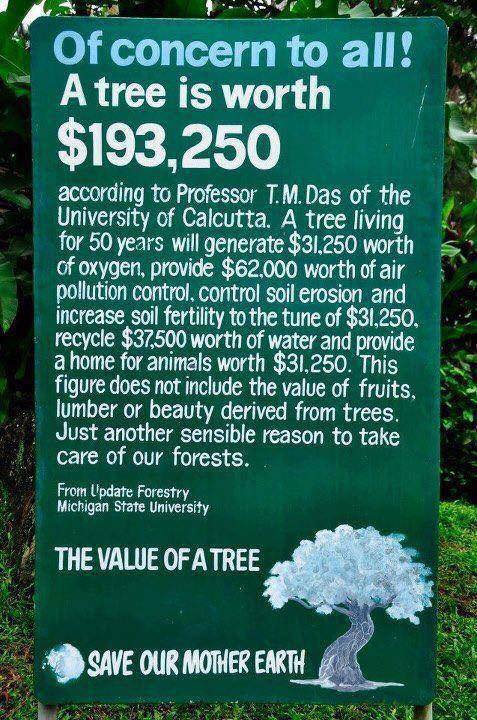
What is a Tree Worth?


Posted by: Sandy Steinman | January 17, 2020

Winners of the 2019 Wiki Loves Earth photo contest

See the excellent photos fo the winners of the 2019 Wiki Loves Earth photo contest at Imagination becomes reality in the winners of the 2019 Wiki Loves Earth photo contest – Wikimedia Foundation

The Guardian reports

New Zealand’s famous kiwi birds are suffering from dehydration as drought affects many northern areas of the country, with conservationists warning chicks may soon perish too.

There are 68,000 kiwi left in New Zealand but their number is declining at a rate of 2% a year. A century ago there were millions but attacks by dogs, cats, possums, stoats and rats have led to a huge decline.

Read full article at  New Zealand’s drought and record-breaking hot summers putting kiwi birds at risk | World news | The Guardian

Posted by: Sandy Steinman | January 17, 2020

Stomach illness outbreak in Yosemite impacts 170 people

The SF Chronicle reports

An outbreak of a stomach illness continues to impact visitors and employees at Yosemite, and on Thursday the national park said it has received reports from 170 people who experienced gastrointestinal issues.

While there have been only two confirmed cases of norovirus, the park said in a statement, “The overwhelming majority of the reported cases are consistent with norovirus.”

Read full article at Stomach illness outbreak in Yosemite impacts 170 people – SFGate

Posted by: Sandy Steinman | January 16, 2020

More on Drones: New Federal Recreation Drone Laws

New Changes to Recreational Drone Flying in the United States

There’s a new law (PDF) that describes how, when, and where you can fly drones for recreational purposes. Following these rules will keep you and your drone safe and will help keep the airspace available to everyone.

Here’s what you need to do:

  1. Register your drone, mark it on the outside with the registration number (PDF), and carry proof of registration with you.
  2. Fly only for recreational purposes.
  3. Follow the safety guidelines of a community based organization.
  4. Fly your drone at or below 400 feet when in uncontrolled or “Class G” airspace. This is airspace where the FAA is not controlling manned air traffic. To determine what type of airspace you are in, refer to the mobile application that operates your drone (if so equipped) and/or use other drone-related mobile applications. Knowing your location and what airspace you’re in will also help you avoid interfering with other aircraft.
  5. Do NOT fly in controlled airspace (around and above many airports) unless:
    1. You receive an airspace authorization for operations in controlled airspace through LAANC (Low Altitude Authorization and Notification Capability), before you fly. Learn more about approved LAANC UAS Service Suppliersfor recreational flyers.
    2. You are flying at a recreational flyer fixed site that has a written agreement with the FAA. The FAA has posted a list of approved sites (MS Excel) and has depicted them as blue dots on a map. Each fixed site is limited to the altitude shown on this map, which varies by location. Read More…
Posted by: Sandy Steinman | January 16, 2020

Updated Anza-Borrego Wildflowers App

 Anza-Borrego Wildflowers Guide – Home announced

We released the updated Anza-Borrego Flower App for android V 1.90 build 2020_01_07.

Changes:

  • Close to 1000 plant.
  • Many new photos, description and keys.
  • Fixed bugs.

Get app at https://borregowildflowers.org/pages/android_app.html

See sample at  Anza-Borrego Wildflowers Guide – Home


Posted by: Sandy Steinman | January 16, 2020

 Great Backyard Bird Contest Photo 2019 Winners and enter for 2020

See the winners of the 2019 Great Backyard Bird Count Photo Contest and entry information for 2020 at  2019 Contest | GBBC

Tips for Great Bird Photos

To get primed to submit award-winning photos for GBBC 2020, we’re passing along some tips from an expert. According to nature photographer and naturalist Liron Gertsman, taking great photos and advancing bird conservation can go hand-in-hand. Take a look at his tips and photos on the Birds Canada blog.

Audubon also has some excellent photography tips to share. Get your cameras ready for a picturesque GBBC!

Posted by: Sandy Steinman | January 16, 2020

Lawsuit Challenges Trump Plan to Frack, Drill California Public Lands

Center for Biological Diversity News Release

Lawsuit Challenges Trump Plan to Frack, Drill 1 Million Acres of California Public Lands, Minerals

LOS ANGELES— Conservation groups sued the Trump administration today challenging the last step in the administration’s plan to allow oil drilling and fracking on more than 1 million acres of public lands and minerals in Central California.

Today’s lawsuit, filed in U.S. District Court in Los Angeles, says the Bureau of Land Management violated federal law by failing to consider fracking’s potential harm to public health and recreation in the region, as well as harm to the climate and possible groundwater and air pollution. The suit also notes the potential for oil-industry-induced earthquakes.

The BLM plan would allow drilling and fracking on public lands across eight counties in California’s Central Valley and Central Coast: Fresno, Kern, Kings, Madera, San Luis Obispo, Santa Barbara, Tulare and Ventura.

Read More…

Posted by: Sandy Steinman | January 15, 2020

Drone Policies for Public Lands

East Bay Regional Parks https://www.ebparks.org/civica/press/display.asp?layout=11&Entry=392
The East Bay Regional Park District reminds park visitors that drones – motorized, remote-controlled aircraft – are illegal in all parks and open space areas in the District.

San Francisco Drone Policy https://sfrecpark.org/wp-content/uploads/Item-2-SFRPD-Drone-Policy_Final-wCitywide-Policy.pdf

Under the SFRPD Drone Policy, the Department may use drones for the following purposes only: (1) construction management; (2) environmental monitoring and documentation; (3) inspections; (4) emergency response; (5) search and rescue; (6) disaster response and recovery; (7) marketing; and (8) mapping and surveying.

Marin County Parks https://www.marincountyparks.org/parkspreserves/rules-and-regulations
AVIATION DEVICES: No model airplanes, drones, or any self-propelled crafts are allowed on District lands.

Unmanned Aircraft in California State Parks https://www.parks.ca.gov/?page_id=29229
Drones are currently allowed in State Parks, State Beaches, State Historic Parks, State Recreational Areas, and State Vehicular Recreation Areas except where prohibited by a District Superintendent’s posted order. Posted orders may prohibit drones for numerous reasons, including: protection of threatened species; threats to cultural and natural resources; high fire danger; public safety; recreational conflicts; impacts upon visitor experience privacy; and park unit classification. Therefore, drone users should always check with their local State Park District for any specific posted orders.

Drones in California State Wilderness Areas, Natural Preserves, and Cultural Preserves: State Park regulations prohibit the use of motorized equipment (including UASs) within wilderness areas, cultural preserves, and natural preserves (Cal. Code Regs. tit. 14, § 4351.) Therefore, drone users should always check the designation of the park unit before operating a drone.

Recreational Drones: California State Parks recommends that recreational drone users check with their local State Park District before operating a UAS within a State Park. Each park unit may have its own posted orders. Even absent a posted order on drones, it is within the discretion of park staff to contact drone operators when drones threaten visitors, property, wildlife, or privacy. If a drone operator continues to fly in a dangerous or reckless manner, they may be asked to stop flying and remove the drone from park boundaries.

National Park Policy on Drones https://www.nps.gov/articles/unmanned-aircraft-in-the-national-parks.htm
However, due to serious concerns about the negative impact that flying unmanned aircraft can have for safety of visitors, staff, and wildlife, they have been restricted in all but a few parks.
Unless an unmanned aircraft pilot obtains special permission through the FAA, use of unmanned aircraft must remain line of sight. In addition, although they do not directly address unmanned aircraft, the following existing 36 CFR sections may apply under certain circumstances.

  • If the unmanned aircraft pursuits or harasses wildlife or creates an intentional disturbance of wildlife nesting, breeding, or other activities, the user could be cited for a violation of 36 C.F.R. § 2.2.


Nevada State Parks
Nevada does have a rule saying that drones are prohibited in all Nevada State Parks.  A Part 107 operator may obtain a commercial use permit (FAQ).

Can you Fly a Drone in Parks, National Forests, and Wilderness Areas https://www.jmpeltier.com/rules-flying-drone-backpacking-hiking/
Where You Can & Can’t Fly a Drone

  • National Parks Service – PROHIBITED
  • State Parks – IT DEPENDS
  • National Forests – YES, MOST OF THE TIME
  • Wilderness Areas – PROHIBITED
  • BLM Land – YES, MOST OF THE TIME
  • Recreation Areas – DEPENDS

If you are aware of any drones violating these policies or threatening wildlife I encourage you to report the behavior to the appropriate rangers.
Posted by: Sandy Steinman | January 15, 2020

The Faces of Extinction: The Species We Lost in 2019

The Revelator reports on species We Lost in 2019

Three bird species, two frogs, a shark, a famous snail and one of the world’s largest freshwater fish were among those declared extinct this year.

Read more at The Faces of Extinction: The Species We Lost in 2019 • The Revelator

Posted by: Sandy Steinman | January 14, 2020

Oldest material on Earth discovered 

The BBC reports

Scientists analysing a meteorite have discovered the oldest material known to exist on Earth.

They found dust grains within the space rock – which fell to Earth in the 1960s – that are as much as 7.5 billion years old.

The oldest of the dust grains were formed in stars that roared to life long before our Solar System was born.

Read more at  Oldest material on Earth discovered – BBC News

NPR reports

BlackRock, the world’s largest asset manager, says that it will now make climate change central to its investment considerations. And not just for environmental reasons — but because it believes that climate change is reshaping the world’s financial system.

Read article at  World’s Largest Asset Manager Puts Climate At The Center Of Its Investment Strategy | Nevada Public Radio

Posted by: Sandy Steinman | January 14, 2020

Birding Elsie Roemer Bird Sanctuary 1/7/20

On January 7 I went birding at Elsie Roemer.  Elsie Roemer Bird Sanctuary is at the east end of Marsh Beach in the town of Alameda. It harbors aquatic birds and other salt marsh creatures. It was as the high tide was going out. There were very large numbers of shorebirds, which is what makes this one of the Bay Area’s top shorebird areas. We saw 29 different species.

This slideshow requires JavaScript.

Click Read more to see today’s bird list

Read More…

Posted by: Sandy Steinman | January 14, 2020

Drones in the Wildlife Protection Areas – Updated

Through further research I learned that Heron’s Head is a Port of San Francisco Recreation Area and managed by San Francisco Parks and Recreation. Both the Port and SF Parks and Recreation have bans on drones and were informed of the violations of drone policy.

To see original article click read more

Read More…

« Newer Posts - Older Posts »

Categories