Audubon Western Water News reports

For decades, too many Native American tribes in the Colorado River basin have been denied their fair share of water. Too many families on too many reservations have not had the access to clean water that most Americans enjoy. Today, Congress took a step in the right direction with the Navajo-Utah Water Rights Settlement Act, a bill included in the large omnibus package, the final legislative act of 2020. Audubon supported this settlement and its many benefits including:

  • Long-needed water infrastructure for citizens of the Navajo Nation in Utah, as well as access to freshwater and wastewater facilities
  • Affirmed allocation of 81,500 acre-feet of water for the tribe in Utah

Read full article at A Colorado River Win for the Navajo Nation as Congress Passes Major Omnibus | Audubon

Posted by: Sandy Steinman | December 22, 2020

CNPS Santa Clara Valley – YouTube

The Santa Clara Valley CNPS chapter has a YouTube Channel with videos on a number of topics including garden tours, talks about native plants and the environment by Doug Tallamy, how to use Calscape-native plant garden information website and more at CNPS Santa Clara Valley – YouTube

Posted by: Sandy Steinman | December 21, 2020

My Christmas Bird Count

As the Annual Christmas Bird Count was cancelled this year due to the current COVID Pandemic Lockdown. I decided to do my own small Christmas Count of birds in my yard and near-by neighborhood.

This slideshow requires JavaScript.

Birds seen in my yard, Cedar Rose Park and nearby streets in the North Berkeley Flatlands

  • Black Phoebe
  • Chestnut-backed Chickadee
  • Northern Mockingbird
  • White-crowned Sparrow
  • Yellow-rumped Warbler
  • Turkey Vulture
  • Oak Titmouse
  • House S[arrow
  • Lesser Goldfinch
  • California Towhee
  • Anna’s Hummingbird
  • California Scrub-Jay
  • American Crow
  • Common Raven
  • Ruby-crowned Kinglet
  • Bewick’s Wren
  • Hermit Thrust
  • Dark-eyed Junco
  • Bushtit
Posted by: Sandy Steinman | December 21, 2020

Will Jupiter and Saturn Appear as One Star in Tonight

EarthSky  reports on this once in a lifetime event that could explain the Christmas Star

Jupiter and Saturn – the 2 biggest planets in our solar system – are very close together on December 21. Will they look like one star? Some answers here. Plus, possible astronomical explanations for the Star of Bethlehem or Christmas star.

Will the planets Jupiter and Saturn appear as “one star” around the time of their great conjunction on December 21? Many are heralding them as a Christmas Star and comparing them to the Star of Bethlehem. Jupiter is the brightest starlike object in the evening sky now, and Saturn is as bright as the brightest stars. Jupiter and Saturn have been drawing closer and closer together. On December 21, 2020, they are separated by only 0.1 degree and visible from around the globe in the western twilight sky. They’re very close! But one star?

Read more EarthSky – Earth, Space, Human World, Tonight

Posted by: Sandy Steinman | December 21, 2020

Things to do in the parks this winter

Golden Gate National Parks Conservancy suggests things to do in the parks this winter. They include hikes, whale watching, bike rides, scavenger hunts and art in the parks. Read article at Things to do in the parks this winter | Golden Gate National Parks Conservancy

EarthSky reports

A severe climate change event on Venus may have transformed an Earth-like climate to the current uninhabitable-to-humans state.

We can learn a lot about climate change from Venus, our sister planet. Venus currently has a surface temperature of 840 degrees F (450 degrees C) – the temperature of an oven’s self-cleaning cycle – and an atmosphere dominated by carbon dioxide (96%) with a density 90 times that of Earth’s.

Read more at  Venus was once more Earth-like, but climate change made it uninhabitable | Space | EarthSky

Posted by: Sandy Steinman | December 20, 2020

Tree planting slows climate heating − and is costly

Climate Network News reports

The world can grow out of its climate emergency − but at a price. Enough tree planting around the world could achieve a 10% reduction in carbon emissions − but only if landowners are paid to plant and protect them.

And by 2055, the bill for planting trees to keep global heating from going any higher than the internationally-agreed target of 1.5°C above the average for most of human history could be US$393bn (£297bn) a year.

Grassland restoration, on the other hand, can pay dividends. And since grasslands are home to 40% of the planet’s natural vegetation, the rewards could be substantial, a second study suggests.

Read more at  Tree planting slows climate heating − and is costly | Climate News Network

Posted by: Sandy Steinman | December 19, 2020

Borrego Palm Canyon Palm Oasis is as lush and green as ever

from the Anza-Borrego Desert Natural History Association

After a devastating fire on January 18, 2020, Borrego Palm Canyon, the most popular hiking destination in Anza-Borrego Desert State Park, is now open to the public once again. The trail has been improved, and takes you near enough to the recovering grove to see and photograph the new growth. It is spectacular!

In January, a fire fully engulfed the main grove. The green crowns and magnificent skirts vaporized!

The damage appeared devastating. To the uninitiated, all the palms in the most impressive grove were dead. But the desert fan palm, Washingtonia filifera, is not like most other California trees. It is a fire survivor.
In fact, an adult fan palm almost never succumbs to flames. Within months after the blaze, an entire new crown, complete with a full complement of green fronds, emerges from the top of the trunk.
The desert fan palm can produce new seeds in less than four months following a burn event. What’s more, the desert fan palm produces two-to-three times more seeds after being burned. This is because other competitors are destroyed by the fire, leaving more water for the palms and increasing fruit production.
Posted by: Sandy Steinman | December 18, 2020

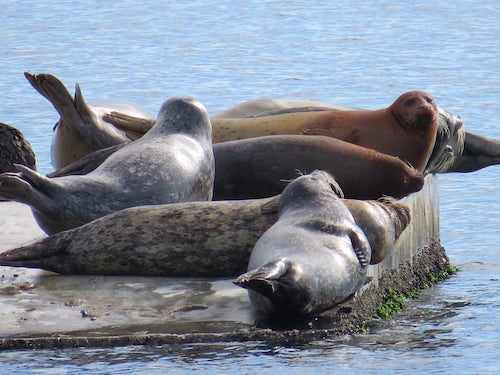
Harbor Seals at Encinal Beach in Alameda

From East Bay Regional Parks

How many harbor seals do you count in the image below? They are resting and warming up on this floating dock at Encinal Beach in Alameda. Many more seals will arrive as herring, one of their favorite foods, start spawning in the winter. Up to 80 harbor seals have been seen squeezed together on this very same dock! They can easily be seen with binoculars from the nearby Bay Trail.
To volunteer and report observations and numbers of seals contact: alamedaharborseals@gmail.com
More general information about harbor seals can be found here:
Posted by: Sandy Steinman | December 18, 2020

Public Lands Prove to be an Essential Need

from Lost Padres ForestWatch

Our public lands are at the forefront of the current health crisis as places the community consistently turns to for solace. When the COVID-19 stay-at-home orders went into effect, many people looked to the nation’s wealth of natural open space as safe to visit. But what happens when our forests and other public lands close, or people are discouraged from visiting them?

Read more at  Public Lands Prove to be an Essential Need

Posted by: Sandy Steinman | December 17, 2020

Updated ‘Redlist:’ 20 Frogs and Fish Declared Extinct

Center for Biological Diversity News Release

28% of Assessed Species at Risk of Extinction

WASHINGTON— An updated assessment released today by the International Union for the Conservation of Nature found that 28% of evaluated species of plants and animals around the globe are now at risk of extinction.

Seventeen freshwater fish from the Phillipines were declared extinct, along with three frogs from Central America. Conservation has helped some tropical frogs, but 22 species from Central and South America were deemed possibly extinct, as was the lost shark from the South China Sea.

The new update to the “Red List of Threatened Species” identifies 35,765 species as belonging to an extinction risk category out of 128,918 for which there is enough information to determine their conservation status.

Read More…

Posted by: Sandy Steinman | December 16, 2020

Upcoming & Recorded Past CNPS Events

UPCOMING (All times are PDT) 

DEC.
December 16, 7:30 pm Project 467: Enhancing Native Plant Diversity at Edgewood – SCV Chapter

December 17, 7:30 pm In-vitro Conservation of Dudleya–Fighting Plant Poaching and Extinction. Speaker: Kevin Allison – Orange County Chapter

December 18, 6 pm Wreath Masters Live Judging

Read More…

Posted by: Sandy Steinman | December 16, 2020

Point Cabrillo Lightstation Virtual Wildflower Show

 From the Dorothy King Young Chapter California Native Plant Society
The Dorothy King Young branch of the California Native Plant Society has just added our Point Cabrillo Lightstation to its Virtual Wildflower Shows. A gazillion thanks to Jim Gibson, webmaster extraordinaire, for working tirelessly to upload native plant lists and photos for many of our local parks and reserves. Thanks, also, to the photographers who donated their images. When blooming, these native beauties can be seen close to the trails. Please stay on trails and take away only pictures, not plants or plant parts. Enjoy! https://dkycnps.org/vwtours/ptcabrillo/ptcabrillo.html (find all the tours here: https://dkycnps.org/wildflowers.html)

NPR reports

The Fish and Wildlife Service has declined to list the monarch butterfly as endangered, even though it finds such a listing necessary. Officials cite limited resources and other species in danger.

Listen to the report  Trump Administration Postpones Listing Monarch Butterfly As Endangered Species : NPR

or read news release from Xerces Society Much-Needed Federal Protection for America’s Beloved Monarch Butterfly Warranted, but Precluded

Posted by: Sandy Steinman | December 16, 2020

Biogeography & Diversification of Central American Hummingbirds

The Western Foundation of Vertebrate Zoology Conservation Seminar Series Presents:“Biogeography and Diversification of Central American Hummingbirds”

Seminar December 18th, 2020 @ 6:00pm PDT

The WFVZ is hosting Professor Rosa Alicia Jiménez, a research biologist who is interested in understanding the diversity of life.  She will speak about her current Ph.D. work on Hummingbirds that she is conducting through U.C. Berkeley. Get your tickets here!!

Center for Biological Diversity News Release

 Conservation groups today sued the Trump administration to reverse its approval of what would be the first new oil well and pipeline in Carrizo Plain National Monument since it was established in 2001.

The legal action also seeks to resolve the fate of other long-dormant wells and associated facilities that the Bureau of Land Management identified for possible removal in 2013.

“It’s appalling that it takes a lawsuit to protect our spectacular national monuments, but we’ll do whatever’s necessary,” said Ileene Anderson, a senior scientist at the Center for Biological Diversity. “The Trump administration has flouted the law to appease polluting industries, decimate public lands and worsen the climate crisis. Thankfully this disastrous fracking frenzy is almost over.”


The Bureau originally approved the well and pipeline in 2018 but withdrew that approval last year after Los Padres ForestWatch and the Center for Biological Diversity filed objections. The conservation groups cited the well’s potential harm to wildlife, views and the climate.

In May the Bureau reapproved the project, continuing to disregard significant environmental harms. The proposed fossil fuel extraction would harm threatened and endangered wildlife, mar scenic views and violate several laws, including the Endangered Species Act and National Environmental Policy Act, as well as the monument’s resource-management plan.

The proposed well site is located at the base of the Caliente Mountains, inside the western boundary of Carrizo Plain National Monument. The area is home to several protected species, including threatened San Joaquin antelope squirrels, endangered San Joaquin kit foxes and an endangered flowering plant called the Kern mallow.

“Today’s lawsuit asks the Bureau to do what its own management plan requires it to do: Phase out oil drilling in the Carrizo Plain National Monument and clean up the mess that has been left behind,” said ForestWatch executive director Jeff Kuyper. “More wells and pipelines will send this precious landscape — and our planet — in the wrong direction.”

The well would be drilled on a pad that hasn’t produced oil since the 1950s. In 2016 the Bureau agreed to the oil company’s request to abandon the old well, pipelines and other equipment at the site. The company, E&B Natural Resources, was supposed to restore the area to its natural condition, including recontouring and reseeding. The work was never done.

The Bureau’s approval of new development backtracks on plans to restore the land. The monument’s management plan calls for phasing out oil drilling in the national monument, including promptly capping and remediating old wells and facilities that have not produced oil in decades. Some of the oil wells in Carrizo Plain National Monument have sat dormant since the 1950s, potentially emitting greenhouse gasses, leaving a blight on the landscape and posing a risk to underground water supplies.

The groups’ lawsuit calls for a plan to properly abandon and reclaim old well sites owned by E&B Natural Resources. In 2013 the Bureau and the oil company began evaluating 12 idle wells in the Carrizo Plain to determine whether they should be permanently plugged and the surrounding land restored to natural conditions. Seven years later only one of the wells has been addressed. The Bakersfield-based oil company has a history of spills and violations across California.

Today’s lawsuit centers on the Russell Ranch Oil Field, which covers approximately 1,500 acres of the Carrizo Plain National Monument and adjacent private land. In 2018 the field produced only 128 barrels of oil per day ― 0.03% of the state’s total oil production and one of the lowest-producing oilfields in the state. The field is reportedly nearing the end of its useful life.

The lawsuit was filed in U.S. District Court in Los Angeles. The groups are represented by the Center for Biological Diversity and the Stanford Environmental Law Clinic.
Read More…

Posted by: Sandy Steinman | December 15, 2020

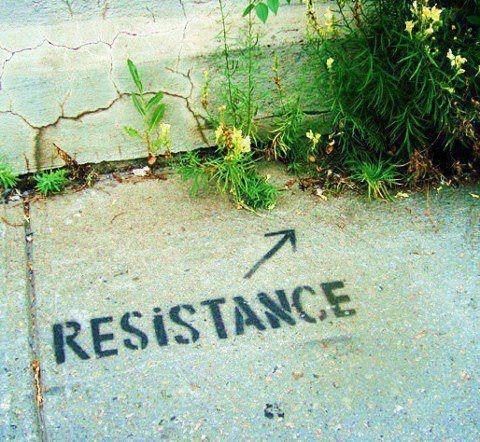
Resistance

from Alt National Park Service

Posted by: Sandy Steinman | December 15, 2020

12 Trump Attacks on the Environment Since the Election 

The Revelator

In its final days, the administration is rushing to cement its destructive legacy with attacks on clean air, wildlife and public lands that could be difficult to undo.

It isn’t surprising that an administration that has attempted to roll back more than 100 environmental protections in the past four years would step up its assault in its waning months. But that doesn’t make the continued attacks any less important.

Read more and see what areas of the environment are under attack 12 Trump Attacks on the Environment Since the Election • The Revelator

Posted by: Sandy Steinman | December 15, 2020

UC – Berkeley Botanical Garden Photos 12/14/20

Photos from a visit to the UC-Berkeley Botanical Garden on December 14, 2020.

The garden is currently open daily to the public from eleven to five by reservation .  Garden members can enter at ten. There is an entrance fee (free for garden members) and paid parking.  For more information and to make reservations  go to UC-Botanical Garden.

This slideshow requires JavaScript.

Posted by: Sandy Steinman | December 15, 2020

Video on Learning To ID Larger Shorebirds

From East Bay Regional Parks 

Shorebirds 101, Part One: The Larger Shorebirds Join Naturalist Susan as she teaches us some tips and tricks to identify some of the many shorebirds that make San Francisco Bay home.

See video at  Shorebirds 101, Part One: The Larger Shorebirds


Posted by: Sandy Steinman | December 15, 2020

Virtual Program: NorCal Bats!

NorCal Bats! December 21, 2020 – 10:30am-11:15am

Meet Corky Quirk and her Northern California Bats! This virtual program is an informative presentation all about bats who live in the Bay Area. You’ll learn about Northern California bats, the myths that surround them, and the importance of bats in our environment, and last but not least, you’ll get to see a few of Corky’s rescue bats and ask all about them.

Register for this program here. The Zoom link will be sent out the afternoon before the program.

This program is sponsored by the Friends of the Berkeley Public Library.

Posted by: Sandy Steinman | December 15, 2020

A Bumper Crop of Mushrooms in Ukraine

The  New York Times reports on Ukraine’s abundant mushroom season

Hunting for mushrooms deep in the forest is the ideal socially distanced pastime.

This fall, Ukrainians have been driving their cars down country roads, getting out and walking deep into the forest for the world’s most socially distanced pastime: mushroom hunting.

By serendipity, the country had a bumper crop of mushrooms in a year when gathering them remains one of the few activities for those wanting to get out of the house while avoiding other people.

Read article at  ‘I Have Never Seen so Many Toadstools.’ A Bumper Crop of Mushrooms in Ukraine – The New York Times


Posted by: Sandy Steinman | December 14, 2020

Trump Administration Auctions Off California Public Lands for Oil, Gas

Center for Biological Diversity News Release

First Sale in Eight Years Comes Ahead of Biden’s Promised Leasing Ban

BAKERSFIELD, Calif.— The Trump administration opened bidding today in the first auction of California federal public lands to oil companies in eight years. Despite community opposition and ongoing legal disputes, the Bureau of Land Management put over 4,000 acres in Kern County up for sale for oil drilling and fracking.

Conservation and community groups have voiced opposition to the sale since it was announced in late August. The Bureau received nearly 35,000 written comments condemning the plan, as well as a letter signed by more than 85conservation, environmental justice, public health and community groups.

President-elect Joe Biden has pledged to ban new oil and gas leasing on federal public lands and waters when he takes office Jan. 20.

Read More…

Posted by: Sandy Steinman | December 14, 2020

Nest in Place with the  Oakland Museum of California

Discover the world of California birds wherever you are, from our Gallery of California Natural Sciences to your home. Get creative with bird-themed games, learn tips for beginning birding, explore bird sounds from the California Library of Natural Sounds, and more. Check back often for more activities being hatched up!

Check out their programs for birding games, creating bird maps, learning bird sounds, beginning birding, exploring birding habitats and bird migration. All can be done while sheltering in place at   Nest in Place | Oakland Museum of California

Posted by: Sandy Steinman | December 13, 2020

The Art History of Mount Shasta

A previously recorded webinar form the Siskiyou Land Trust – Lost Legacy: the Art History of Mount Shasta

Back in November, SLT hosted local art historian Bill Miesse for a webinar on Zoom.  This unique presentation on the early artists and paintings of the mountain was also recorded, and the edited video is available to stream at https://www.siskiyoulandtrust.org/nov-17-online-webinar-lost-legacy-180-years-of-the-art-of-mount-shasta/

Posted by: Sandy Steinman | December 13, 2020

Virtual Audubon Program 12/16/20

from Audubon

One bright spot in the year that was 2020 has been the time we’ve virtually spent with you during I Saw A Bird. What began as an idea to keep our community connected has taken flight and become one of our favorite hours each month.

Join us this Wednesday at 7 p.m. ET / 4 p.m. PT as we look back at some highlights, including a new clip from our interview with the legendary Dr. Jane Goodall, snippets from our favorite panel discussions, a brand new video wrapping up the year’s wins for birds, and so much more.

Click RSVP blow for Wednesday’s show

RSVP


NPR reports

They’re dynamiting mountainsides and bulldozing pristine desert for a barrier the incoming Biden administration is expected to cancel.

Read more at  Trump’s Border Wall: The Race Is On To Build As Many Miles As Possible : NPR

Posted by: Sandy Steinman | December 12, 2020

2020 Geminid meteor shower peaks Dec. 13 to 14

Earthsky reports

The Geminid meteor shower – always a highlight of the meteor year – is expected to peak in 2020 on the night of December 13-14 (Sunday evening until dawn Monday). You might see a decent spattering of meteors on the preceding nights (December 11-12 and December 12-13) as well. And you might catch a Geminid meteor anytime this week, as the shower builds to its peak. The Geminids are a very reliable shower if you watch at the best time of night, centered on about 2 a.m. for all parts of the globe, and if you watch in a dark sky. The meteors tend to be bold, white and quick. This shower favors Earth’s Northern Hemisphere, but it’s visible from the Southern Hemisphere, too. The curious rock comet called 3200 Phaethon is the parent body of this shower.

On a dark night, near the peak, you can often catch 50 or more meteors per hour

Read more All you need to know: Geminid meteor shower 2020 | Astronomy Essentials | EarthSky

Posted by: Sandy Steinman | December 12, 2020

CNPS Upcoming and Past Virtual Events

UPCOMING (All times are PDT) 

DEC.

December 15, 6 pm Intro to iNaturalist – A Meeting of Nature Journaling, Identification, and Citizen Science – Redbud Chapter

December 18, 6 pm Wreath Masters

RECORDED PAST EVENTS

Social Justice and Diversity in Conservation:
Juneteenth: Let’s Take It Outside Virtual Town Hall
A Dialogue on Intersectional Environmentalism – Latino Outdoors
“What We Can Learn From Our Past to Move Toward an Equitable Future” – CNRA Speaker Series
Native plant ecologist Justin Luong on academia and LGBTQ+ Representation in STEM – podcast
Diversity in Plant Sciences: Panel discussion led by Naomi Fraga – California Botanic Garden
Resilient Parks, Resilient Californians with Sec. Wade Crowfoot – Cal Parks Foundation
Poppy Hour: A Conversation with Hop Hopkins – Theodore Payne Foundation

Read More…

December 16, 6pm: Bristlecone Chapter – Eastern Sierra Audubon Joint Holiday (Zoom) Party, with speaker Deanna Dulen: A Mosaic for Re-Wilding Damaged Landscapes: Climate Refugium, Forests, and Birds

Join the Bristlecone Chapter and Eastern Sierra Audubon for a virtual holiday party and presentation. We’ll start with announcements from 6-6:30 before the program at 6:30-7:30: A Mosaic for Re-Wilding Damaged Landscapes: Climate Refugium, Forests, and Birds Presented by Deanna Dulen. What are the possibilities of re-wilding some of the lost and degraded habitats ravaged by climate change including intense mega-fires? This presentation will present some information on the emerging field of Climate Refugia and fire recovery science, and some of the experimental efforts in collaborating with birds to restore lost forests. We’ll end with a Q&A Session at 7:30-and wrap-up by 8:30 pm.

For more information and links to past presentations go to  Bristlecone Chapter Meetings | CNPS Bristlecone Chapter

Past Presentations:

  • California Desert Protection and Desert Flora
  • Conservation Stories, a Virtual Lecture Series


« Newer Posts - Older Posts »

Categories