KRON4 reports

Lyme disease is transmitted through tick bites, but researchers and educators warn that it’s not the only disease carried by the parasitic arachnids.

This year, the tick population is expected to surge due to a mild winter and early spring as well as abundant rainfall. Also, people who have been getting outdoors because of the coronavirus pandemic are encountering the insects more frequently.

Read more at Tick population expected to surge, and they’re carrying more than Lyme disease: researchers | KRON4

Posted by: Sandy Steinman | June 3, 2021

Save Tesla Park from motorized vehicles

Posted by: Sandy Steinman | June 3, 2021

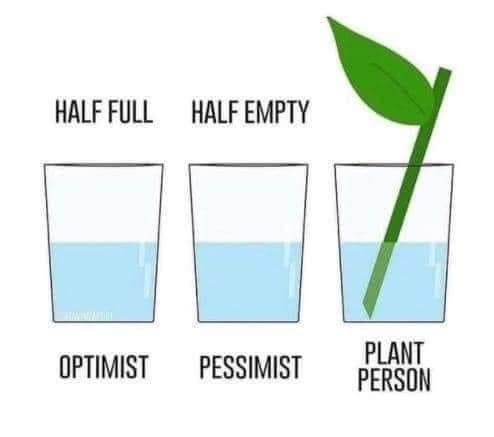
Plant Person

from Native Here Nursery

Posted by: Sandy Steinman | June 3, 2021

Top ten tips on how to stay safe in the summer heat

from Anza-Borrego Foundation

Top ten tips on how to stay safe in the summer heat for those hardy visitors.

  1. Always research the weather before heading out. Know what the temperatures will be at what time of the day by checking the hourly weather.
  2. Avoid heat peak times by heading outside in the early morning or late afternoon.
  3. Bring plenty of water and stay hydrated. You should always have more water than you need if there is an emergency, and you get stuck outside for longer than you expect.
  4. Always let someone know your itinerary, including where you are going and when you will return.
  5. Learn to recognize heat-related illnesses such as heat exhaustion or heat stroke. Symptoms vary but may include headache, dry skin, high body temperature, red skin or rash, rapid pulse, dizziness, and confusion.
  6. Wear lightweight, loose, breathable, and light-colored clothing. Bonus if it has an SPF of 50 or more.
  7. Avoid dehydrating drinks such as alcohol, coffee, or tea. Supplement with electrolytes if you will be sweating.
  8. Use sunblock, sunglasses, and a hat to avoid sunburn.
  9. Stay in the shade as much as possible and rest frequently.
  10. Create a backup plan. Sometimes it is just too hot to be outdoors, so have a fun backup plan indoors just in case!
Posted by: Sandy Steinman | June 3, 2021

Start Gardening for Birds Today

Birds Canada writes about how and why to garden for birds

We all know that nature is under threat. Habitat loss and degradation is still one of the main drivers of bird population declines globally. Birds need your help, and you can be part of the solution. Transform your garden or yard into a beautiful outdoor space that you can enjoy, while also re-creating habitat for birds. We are excited to launch our Gardening for Birds website, video series, and resources that will help you help birds by making it easy for you to design and plant a garden that is great for birds. Whether you have an existing garden that could use a few tweaks or an expansive lawn that you’re hoping to transform for the benefit of nature, the website, videos, and associated resources will give you a head start on welcoming more birds to your place!

Read at  Start Gardening for Birds Today! | Birds Canada | Oiseaux Canada

Posted by: Sandy Steinman | June 2, 2021

Tuolumne Meadows Campground Opens 6/21

Tuolumne Meadows Campground will open on Monday, June 21, by reservation only. Reservations for arrival dates from June 21 through July 14 will be released on Tuesday, June 15, at 7 am PDT at https://www.recreation.gov/camping/campgrounds/232448. Reservations for July 15 through September 19 were released earlier this year during regular booking windows.

Posted by: Sandy Steinman | June 2, 2021

June CNPS Events

June California Native Plant Society Events

See more events

Posted by: Sandy Steinman | June 2, 2021

Job Opening: Conservation Advocate–East Bay & N. California

We have just posted a job announcement for a full-time Conservation Advocate–East Bay and Northern California. This person will be responsible for conservation advocacy on projects for our CNPS East Bay Chapter and for supporting the state CNPS office’s conservation priorities. This is an exciting new position for someone with a BA or BS degree and four to eight years of relevant professional work experience. The full job description provides more details and information about applying (applications are due by June 18). Please help us spread the word!
Posted by: Sandy Steinman | June 2, 2021

Talks on Lichens and Mallow 6/3/21

from San Luis Obispo CNPS

Is a lichen a native plant? Are mallow trees only found in the tropics? Really? Find out Thursday at our June 3 Zoom meeting at 7pm (and then impress your friends at post-Covid cocktail parties).
Cal Poly grad students and McLeod scholarship recipients Stephanie Calloway and Michael Mulroy will be sharing their exciting research 🌱
Stephanie is researching the critically endangered island mallow (Malva assurgentiflora subsp. assurgentiflora) and Michael is researching understudied rock-dwelling lichen communities.
Register in advance for this meeting:
After registering, you will receive a confirmation email containing information about joining the meeting.
Posted by: Sandy Steinman | June 2, 2021

The Falconer film

from Golden Gate Audubon

Black Birders Week — The Falconer film
Friday, June 4 — 5 to 7 p.m.  Via Zoom

Celebrate Black Birders Week (May 30 through June 5) with us through a free online screening of The Falconer, a documentary following Master Falconer Rodney Stotts as he strives to build a bird sanctuary and provide nature access to his stressed community in Washington D.C. It’s a story of second chances: for injured birds of prey, for an abandoned plot of land, for a group of teenagers who dropped out of high school, and for Rodney himself.
We’re co-sponsoring this Zoom “watch party” with Nature in the the City and Outdoor Afro. There will be a Q&A discussion after the film. For details, registration, Zoom link, and a film trailer, see:
vr_button (4)
Black Birders Week was created in 2020 by BlackAFinSTEM in response to the Central Park birdwatching harassment incident and police brutality against Black Americans. It spotlights Black birders and focuses on joy experienced in the natural world, as well as the work to be done to combat racism and promote inclusivity in racism. View the week’s national events here.

The Guardian reports

The Biden administration on Tuesday suspended oil and gas leases in Alaska’s Arctic National Wildlife Refuge, reversing a drilling program approved by Donald Trump and reviving a political fight over a remote region that is home to polar bears and other wildlife – and a rich reserve of oil.

The interior department order follows a temporary moratorium on oil and gas lease activities imposed by Joe Biden on his first day in office. Biden’s 20 January executive order suggested a new environmental review was needed to address possible legal flaws in a drilling program approved by the Trump administration under a 2017 law enacted by Congress.

Read more at  Biden suspends Trump-era oil drilling leases in Alaska’s Arctic refuge | Alaska | The Guardian

Posted by: Sandy Steinman | June 1, 2021

UC Wildfire Research Symposium 6/4/21

UC Wildfire Research Symposium

Friday, June 4 – 8:00AM – 12:00PM Pacific Time – Presented Online

Wildfires and their aftermath impact all Californians and cost the state hundreds of millions of dollars every year. How can we plan for and prevent wildfires, address them quickly to minimize damages, and ensure equitable recovery? Join expert researchers from UC’s campuses and national labs to learn how their cutting-edge work can help California achieve its wildfire resilience and recovery goals.

REGISTER HERE: https://uckeepresearching.org/2021-uc-resilience-symposium-series/​

Posted by: Sandy Steinman | June 1, 2021

Talk: Native Bees are Picky, What you Plant Matters 6/3/21

June 3, THURSDAY @ 7:30 pm

Speaker: Sam Droege
Zoom registration here 
The conservation of native bees is the management and conservation of native plants.   Many native bee species (up to 50% in southern California) gather pollen from only one family of plants, often restricting themselves to a single genus, at times, one species of plant.  Rare bees, and therefore bees most in need of conservation, are often these specialist bees.  The good news is that bees are small and readily colonize newly planted landscapes.  That landscape could be your quarter acre lot, they aren’t picky about the neighborhood, just their food plants.   We will talk plants, patterns, what to plant, the bees that benefit, and where to find lists of plants that host bees.

Sam Droege grew up in Hyattsville, Maryland, received an undergraduate degree at the University of Maryland and a Master’s at the State University of New York – Syracuse.  Most of his career has been spent at the USGS Patuxent Wildlife Research Center.  He has coordinated the North American Breeding Bird Survey Program, developed the North American Amphibian Monitoring Program, the Bioblitz, Cricket Crawl, and FrogwatchUSA programs and works on the design and evaluation of monitoring programs.  Currently his team is running an inventory and monitoring program for native bees, developing tools and techniques manuals, along with online identification guides for North American bees at www.discoverlife.org, reviving the North American Bird Phenology Program, and producing public domain hi-resolution photographs of bees, insects, and flowers @USGSBIML

You can learn more by following the USGS Native Bee Lab @USGSBIML on Instagram, Tumblr, and Facebook.

Posted by: Sandy Steinman | June 1, 2021

Birds Canada Photo Contest

The 2021-22 Calendar Photo Contest runs from June 1 until July 5. Contest winners will be featured in our 2021-22 Calendar, they will receive 3 copies of the calendar and will receive a one-year subscription to BirdWatch Canada. Our judges will have the tough job of selecting photos that represent all of Canada.

You can submit photos at https://www.birdscanada.org/calendar/.

Posted by: Sandy Steinman | June 1, 2021

New Anza-Borrego Foundation Land Acquisitions

From the Anza-Borrego Foundation

Land Acquisition: Tax Defaults

Monitoring county tax default sales is an important means of land acquisition within Anza-Borrego Desert State Park. Every year, ABF purchases tax defaulted properties from the County of San Diego as well as Riverside and Imperial counties. This year was no different with five properties, totaling 35 acres, we purchased. Tax Default sales occur when property taxes have been unpaid for more than five years. This is often the result of an owner passing away and not having any heirs. Of the five parcels, one is in the hills less than a mile east of Collins Valley, one is just a few hundred yards from popular hiking trail “The Slot”, and another is in the beautiful Cactus Garden area off Kane Springs Rd. The two other parcels are located just north of Kane Springs Rd. With your support, we continue to acquire these properties to ensure the benefit and enjoyment of present and future generations.

Posted by: Sandy Steinman | May 31, 2021

It is Black Birders Week

Black Birders Week was created in 2020 by BlackAFinSTEM in response to the Central Park birdwatching harassment incident and police brutality against Black Americans. It spotlights Black birders and focuses on joy experienced in the natural world, as well as the work to be done to combat racism and promote inclusivity in racism. View the week’s national events here.

Posted by: Sandy Steinman | May 31, 2021

What Are 1,600 Species of Native Bees Doing in California?

Tuesday, June 1, 2021  10:00-11:00 AM PT

Presented Online via Zoom

Hosted by Belmont Village, Albany as part of the UC Retiree Learning Series.

Speaker: Gordon Frankie, Professor Emeritus of Entomology, Department of Environmental Science, Policy, & Management at UC Berkeley.

Gordon Frankie is professor emeritus from UC Berkeley (as of July 1, 2020). He received his Ph.D in Entomology from UC Berkeley in 1968. He then went to Costa Rica for two years to research bees and their plants on a postdoc appointment from the former Botany department at UCB. Gordon taught courses in entomology and environmental science at Texas A&M University from 1970 to 1976 and then joined the Berkeley faculty in late 1976 where he taught the same courses. His specialty is native bees of California and Costa Rica and their host plants. He is also interested in how to conduct research so that it can be transferred easily to lay audiences. Gordon still teaches and also runs the urban bee lab on the Berkeley campus where he is actively curating about 122,000 bee specimens for eventual deposit in the Essig Museum of Entomology at UCB.

NPR  reports

Across the United States, the number of birds killed from flying into buildings is rising. Now researchers are studying what people can do to try to limit bird deaths, particularly during migrations.

Read or listen to the story at  As More Birds Fly Into Buildings, Scientists Study How To Limit Collision Deaths : NPR

Posted by: Sandy Steinman | May 30, 2021

Carson Pass Visitors Station is open

Carson Pass Station is open information, permits and sales.

There will be a spring sale of discontinued merchandise in front of the station on Saturday-Monday, May 29th-June 1. Stop by for a bargain.

Mormon Emigrant Trail is open.

No wildflowers yet. Trail is mostly open to Frog Lake, but snow coverage from there on.

Dirt roads will open on April 1, but there is the possibility of damage. For the information bulletin from the USFS, please click here.

To obtain an idea of trail conditions, you may find it helpful to go to our Facebook page, which contains reports, pictures and recent accounts from people up at the pass. Simply click on the Facebook symbol at the bottom of the page.

Carson Pass Phone: 209-258-8606.

More information is available by going to the Eldorado National Forest website by clicking here.


Posted by: Sandy Steinman | May 30, 2021

Carson Pass Wildflower PDF for Print or Phone

Here is a wildflower pdf, common flowers in the Carson Pass area, not all of them, that you can download and print or keep on your phone. Pictures provide by Larry Moore, current president of the ENFIA Board, thank you Larry.
Posted by: Sandy Steinman | May 29, 2021

Regional Parks Botanic Garden Photos 5/25/21

Photos from a visit to the Regional Parks Botanic Garden in Tilden Park in Berkeley on May 25, 2021

The Regional Parks Botanic Garden is a botanic garden of California native plants. The garden is open for visitors Tuesday, Thursday, Saturday and Sunday. Admission is free but reservations are required. For reservations click here.

You  can see other photos from the Regional Parks Botanic Garden by several photographers on the garden’s Flickr group page at Regional Parks Botanic Garden.

This slideshow requires JavaScript.

The Guardian reports

State lawmakers agree on $400m measure to expand ‘wildlife corridors’ in effort to help panthers and other endangered species

According to the US Fish and Wildlife Service, the Florida panther is “the only known breeding population of puma in the eastern United States”.

In order to be taken off the danger list, the Florida panther needs three established populations and sufficient habitat to support those animals.

Currently there is only one population of up to 230 Florida panthers in the wild, but that is a story of recovery through conservation, since relentless hunting took the numbers in the state down to fewer than 20 by the early 1970s.

Read full story at  Big cat comeback? Florida strikes bipartisan deal to help endangered panthers | Florida | The Guardian

Posted by: Sandy Steinman | May 28, 2021

UC – Berkeley Botanical Garden Photos from 5/24/21

Photos from a visit to the UC-Berkeley Botanical Garden on May 24, 2021.

The garden is currently open daily to the public from eleven to five by reservation .  Garden members can enter at ten. There is an entrance fee (free for garden members) and paid parking.  For more information and to make reservations go to UC-Botanical Garden.

This slideshow requires JavaScript.

from California State Parks

California State Parks will honor men and women who have served or are serving in the Armed Forces this Memorial Day by offering free admission at participating state parks.

“This free day not only honors Armed Forces and veterans for their service and sacrifice to our country, but it also gives them the opportunity to enjoy California’s amazing, diverse and wonderful parks and explore their history and beauty,” said Lisa Mangat, Director of California State Parks.

Read More…

Posted by: Sandy Steinman | May 28, 2021

Talk: Native Bees are Picky, What you Plant Matters 6/3/21

From S. F. CNPS Chapter

Native Bees are Picky, What you Plant Matters
June 3, THURSDAY @ 7:30 pm
Speaker: Sam Droege
Zoom registration here 

The conservation of native bees is the management and conservation of native plants.   Many native bee species (up to 50% in southern California) gather pollen from only one family of plants, often restricting themselves to a single genus, at times, one species of plant.  Rare bees, and therefore bees most in need of conservation, are often these specialist bees.  The good news is that bees are small and readily colonize newly planted landscapes.  That landscape could be your quarter acre lot, they aren’t picky about the neighborhood, just their food plants.   We will talk plants, patterns, what to plant, the bees that benefit, and where to find lists of plants that host bees.

Read More…

The Guardian reports

Ecuador has confirmed that a giant tortoise found in 2019 in the Galápagos Islands is a species considered extinct a century ago.

The Galápagos national park is preparing an expedition to search for more of the giant tortoises in an attempt to save the species.

The turtle was found two years ago on Fernandina Island, one of the youngest and most pristine in the archipelago, during a joint expedition between the Galápagos national park and the Galápagos Conservancy.

Read more at Giant tortoise found in Galápagos a species considered extinct a century ago | Galápagos Islands | The Guardian

Posted by: Sandy Steinman | May 27, 2021

Job Openings at UC Berkeley Botanical Garden

The Garden is growing… and we are hiring!
  • Visitor Experience Part-Time Coordinator
  • Membership Manager
  • Rental Monitor: On-Call Event Assistance
  • Marketing & Communications Specialist
Work for one of the top botanical gardens in North America. The UC Botanical Garden is a non-profit research garden and museum for the University of California at Berkeley, having a notably diverse plant collection including many rare and endangered plants. Established in 1890, the Garden, which is open to the public year-round, has over 13,000 different kinds of plants from around the world, cultivated by region in naturalistic landscapes over its 34 acres.
The UC Botanical Garden is an Equal Opportunity Employer.
Posted by: Sandy Steinman | May 27, 2021

UC-Berkeley Botanical Garden June Virtual Programs

See the current list of free zoom programs at the UC-Berkeley Botanical Garden at June Programs

Posted by: Sandy Steinman | May 27, 2021

History of Vaccines Through an E.Bay Regional Park

Sobrante Ridge, now a small East Bay preserve known for its endangered pallid manzanitas, was used for vaccine testing and development in the decades before it became a public park.

What happened there in the 1950s influenced the way vaccines are produced today.

Read story at:

The Story of the Infamous “Cutter Incident”
Posted by: Sandy Steinman | May 26, 2021

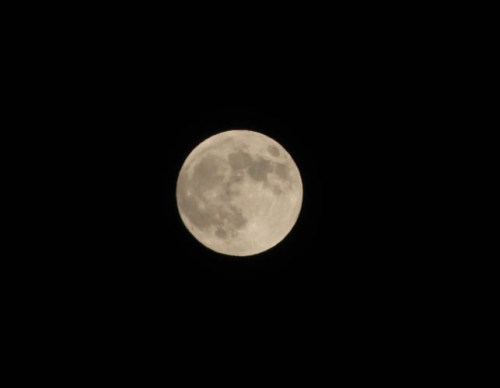
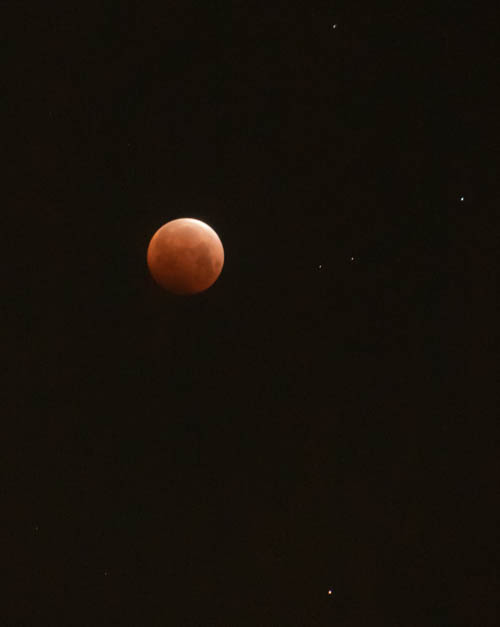
Super Moon and Lunar Eclipse

I somehow managed to get up very early this morning to photograph the Lunar Eclipse.


Supermoon


Lunar Eclipse

« Newer Posts - Older Posts »

Categories