Posted by: Sandy Steinman | December 30, 2021

New Southern California 70,000 Acre Preserve

from the Nature Conservancy

It is my great pleasure, to introduce
The Frank and Joan Randall Preserve at the Tehachapi Mountains.
Established in December 2021, this preserve is now TNC’s largest in California at over 70,000 acres. The LA Times covers this historic acquisition. The preserve is located at the southern end of the Sierra Nevada Mountains, and the landscape is part of a wildlife linkage that connects four of California’s most critical ecological regions: the Sierra Nevada, the Mojave Desert, the Central Valley and the South Coast.

We’d like to thank Frank and Joan Randall who championed the creation of this preserve. Read the donor spotlight.

Posted by: Sandy Steinman | December 29, 2021

UC Berkeley’s Sierra Lab Eclipses December Snow Record

Berkeley, CA Patch reports

A powerful winter storm that blanketed the Sierra Nevada mountains and shuttered a 81-mile stretch of Interstate 80 over the weekend has helped a UC Berkeley research station set a new December snowfall record.

The UC Berkeley Central Snow Lab in Soda Springs (Nevada County) on Tuesday morning reported 202 inches of snow, making it the third snowiest month in recorded history obliterating a 1970 record 179 inches for the month.

Read more UC Berkeley’s Sierra Lab Eclipses December Snow Record | Berkeley, CA Patch


Posted by: Sandy Steinman | December 29, 2021

Five Eye-Catching Bay Area Mushrooms to See in Winter

Bay Nature reports on some of the most interesting mushrooms to look for in the Bay Area this winter

From the whimsical to the macabre to the downright bizarre, there’s an incredible amount of diversity in the shape, size, color, and design of Bay Area fungi. According to the citizen science app iNaturalist, almost 1,700 species of fungi and lichens have been found in the greater Bay Area.

Read more at  Five Eye-Catching Bay Area Mushrooms to See in Winter – Bay Nature

See the late December and  January schedule of events at Anza-Borrego at View ABDNHA Activities

COVID NOTES
In the interest of maintaining a healthy environment for everyone participating in our activities, proof of full COVID vaccination (2 shots minimum) is required. This applies to hikes, tours, birding trips, and all indoor activities. Proof can be the original CDC vaccination card, a photo of the card on your phone, a printed paper copy of the card, or an online vaccination passport.

Update 12/27. 
All lectures scheduled until January 15, 2022 will be presented as webinars only. 

Posted by: Sandy Steinman | December 28, 2021

Sahul – A Paradise for Birds-Zoom Presentation 1/5/22

from Santa Clara Valley Audubon

On January 5, Bay Area Bird Photographers is delighted to welcome back our good friend Bob Lewis. Bob has presented to our group several times over the years — always enthralling us with his vast knowledge and lovely photos. This time Bob will cover some new territory when he presents: “Sahul – A Paradise for Birds”.

Bob writes:
“Australia and New Guinea are part of the Australian geological plate, or Sahul.  After a brief visit to O’Reilly’s, a wonderful jungle lodge near Brisbane, Australia, we’ll fly to Port Moresby, the capital of Papua New Guinea.  Our route in PNG will take us from the lowlands in the south of the island to the highlands on the western border, and then on to Mount Hagen, a 12,000’ extinct volcano.  New Guinea has 708 species of birds and 5 endemic families and is home to most species of spectacular Birds of Paradise and fascinating Bowerbirds.  We’ll discuss a bit of geological history, a bit of taxonomy, and look at examples of many of PNG’s 70 bird families.”

Date: Wednesday, Jan 5  Time: 7:30 PM
Zoom link to enter meeting:
https://us02web.zoom.us/j/89845364954?pwd=RnlxQ1BWbjR3R09pWW1vTm9kTVVrQT09

Please “arrive” a bit early, allowing time to join the meeting.
More details at www.scvas.org/babp

Center for Biological Diversity News Release

Four California Frog Populations Proposed for Endangered Species Act Protection

SACRAMENTO— In response to a Center for Biological Diversity petition and lawsuit, the U.S. Fish and Wildlife Service today proposed Endangered Species Act protection for four populations of foothill yellow-legged frogs in the Sierra Nevada and central and Southern California. This stream-dwelling frog species has disappeared from more than 50% of its historic habitat in the state.

Read More…

Posted by: Sandy Steinman | December 28, 2021

CA isn’t cutting greenhouse gas emissions fast enough, report

The Sacramento Bee reports

California is not cutting greenhouse gas emissions fast enough to meet a 2030 deadline for reductions, according to a new report.

At the state’s current rate of progress, California will miss that deadline by several decades.

The 2021 California Green Innovation Index, released by the nonprofit group Next 10 and prepared by Beacon Economics, reveals that California reduced its greenhouse gas emissions by 1.6% from 2018 to 2019. Between 2017 and 2019, the state averaged a greenhouse gas emission decrease of 1.3% per year, far below what is needed to meet California’s greenhouse gas emission reduction goals for 2030 and 2050.

Read more at  CA isn’t cutting greenhouse gas emissions fast enough, report | The Sacramento Bee

Posted by: Sandy Steinman | December 27, 2021

Top 100 Polluter Indexes

POLITICAL ECONOMY RESEARCH INSTITUTE reports on the top polluters

The Top 100 Polluter indexes identify the top corporate air and water polluters and top greenhouse gas emitters using the most recent data available from the U.S. Environmental Protection Agency. The Top 100 Polluter Indexes are part of PERI’s Corporate Toxic Information Project.

read more and see who the polluters are at PERI – Top 100 Polluter Indexes


Posted by: Sandy Steinman | December 26, 2021

Starving manatees in Florida are taxing efforts to save them 

NPR reports

In Florida, an ecological disaster has led to the deaths of more than 1,000 manatees. The large, slow-moving marine mammals graze on seagrass in shallow coastal areas, but a massive die-off of seagrass has left them without enough to eat.

Read more listen to the story at  Starving manatees in Florida are taxing efforts to save them : NPR

Posted by: Sandy Steinman | December 25, 2021

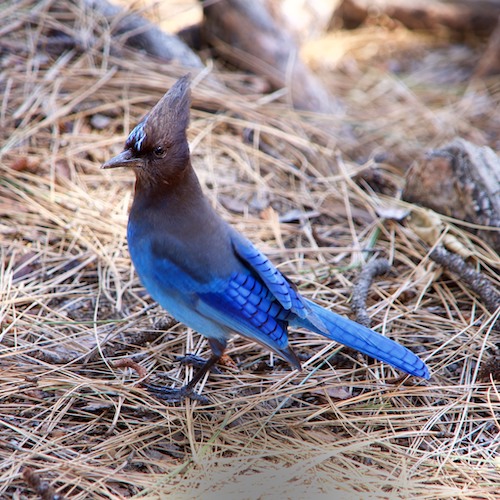
The Stellar Jay Christmas Carol

from the Yosemite National Park Facebook page

He sees you when you’re eating
He knows when you missed your plate
He knows if you’ve didn’t finish your food
So eat all your food for goodness sake!
Posted by: Sandy Steinman | December 25, 2021

Giraffes May Be as Socially Complex as Chimps and Elephants 

The New York Times  reports

A review of earlier research shows giraffes have the markings of social creatures, including friendships, day care and grandmothers.

Giraffes seem above it all. They float over the savanna like two-story ascetics, peering down at the fray from behind those long lashes. For decades, many biologists thought giraffes extended this treatment to their peers as well, with one popular wildlife guide calling them “aloof” and capable of only “the most casual” associations.

But more recently, as experts have paid closer attention to these lanky icons, a different social picture has begun to emerge. Female giraffes are now known to enjoy yearslong bonds. They have lunch buddies, stand guard over dead calves and stay close with their mothers and grandmothers. Females even form shared day care-like arrangements, called crèches, in which they take turns babysitting and feeding each others young.

Read more at Giraffes May Be as Socially Complex as Chimps and Elephants – The New York Times

Posted by: Sandy Steinman | December 24, 2021

Kings Canyon & Sequoia National Parks Closure Updates 12/24/21

from Kings Canyon & Sequoia National Parks Closure Updates
Happy Christmas Eve from the soggy foothills of Sequoia National Park! Yesterday’s rainfall at lower elevations caused many patches of rock and debris fall onto the Generals Highway, with wet snow and ice accumulating at higher elevations. With more rain and snow expected to arrive in the coming hours, the Giant Forest in Sequoia National Park will remain closed today as well as tomorrow, December 25.
The Generals Highway remains closed above the Foothills Visitor Center (approximately one mile inside the Sequoia National Park entrance on Highway 198).
Visitors to Grant Grove in Kings Canyon National Park should be prepared for wet, snowy, and icy conditions throughout the weekend. Expect tire chain controls and that trails will be under several feet of snow. For the most updated roads conditions, call 559-565-3341
Posted by: Sandy Steinman | December 24, 2021

Virtual Class: Gardening for the Birds 12/31/21

from Cornell Lab Bird Academy

Growing Wild: Gardening for Birds and Nature- Attracting birds to your to your space: A Brand-New Online Course

There’s nothing more rewarding than attracting birds to your outdoor space and knowing that you’re helping them thrive, but it can be overwhelming to know where to start. We created this course to help you design welcoming spaces for birds and guide you through bird-friendly plant choices. It all starts with seeing things from a bird’s perspective and transforming your space to meet their needs. With the inspiration, know-how, and planning guides in this course, you’ll gain everything you need to start growing wild and greeting new bird visitors.
In This Course You Will:
•Get planning guides that help you deliver what birds need
•Choose plants and natural features that attract birds and other wildlife
•Use Bird Academy’s curated list of bird-friendly plants for your region
•Learn which native plants will thrive in your conditions
Designed for anyone interested in gardening for birds with an outdoor space large or small, this course serves as your friendly guide.
Posted by: Sandy Steinman | December 24, 2021

Who are the twelve birds of Christmas?

from the Western Foundation of Vertebrate Zoology


Ever wondered about all the birds mentioned in the famous Christmas carol “The Twelve Days of Christmas?” Pamela Rasmussen, an integrative biologist at Michigan State University, and coordinator of MSU’s crowd-sourced global bird sounds website, AVoCet shares the real bird species identities of all birds mentioned in the song.

The “partridge in a pear tree” is probably the red-legged partridge (Alectoris rufa), which was introduced to England as a sporting bird just before the song was written. This bird breeds naturally in southwestern Europe.

Read More…

Posted by: Sandy Steinman | December 24, 2021

Here’s why there are so many crows in the Bay Area right now

The S. F. Chronicle reports on why there are so many crows in the Bay Area right now

A cacophony of squawks echoing through the streets of San Francisco as a mass of birds with shiny black plumage descend upon a skyscraper, or a grassy expanse in Golden Gate Park. Similarly, they’re often spotted congregating around Lake Merritt in Oakland, or just about anywhere in Berkeley — and as winter looms, their numbers appear to be stronger than ever.

Why are there so many crows in the Bay Area? It’s a question that comes up just about every year for the Golden Gate Audubon Society.

Read more  Here’s why there are so many crows in the Bay Area right now

Posted by: Sandy Steinman | December 23, 2021

UK chief vet warns avian flu at phenomenal level in UK 

The BBC reports

The UK’s chief veterinary officer has told the BBC there is a “phenomenal level” of avian flu in the UK.

Tens of thousands of farmed birds have already been culled, as the ” largest number of premises ever” in an avian influenza outbreak are infected.

Officials say the risk to human health is low – there is no link to the Covid-19 pandemic – but infected birds should not be touched.

Read more at  UK chief vet warns avian flu at phenomenal level in UK – BBC News

Posted by: Sandy Steinman | December 23, 2021

Local Coho Salmon Numbers Are Looking Good

Pt. Reyes National Seashore reports
A holiday treat for all of us! Coho salmon numbers in local creeks are looking good this year! With all the rain we’ve got (and more to come!) the coho are having a great spawning season so far. Along Olema Creek, NPS biologists have already counted over 50 coho and 16 redds.
Redds are nests dug by a female by making rapid movements of her tail which dislodges the gravel. She makes a depression that is about as deep and as long as her body. Eggs and sperm are released into this redd where they will get buried by the gravel that she dislodges by digging upstream. She can release 1500 or more eggs in each redd.
Check out the video to see a few males fighting for their chance to spawn.
If you would like to see spawning coho, please check out our website to see local viewing areas: https://go.nps.gov/pore/CohoViewing.
You can also learn more about the coho monitoring program: https://www.nps.gov/im/sfan/salmonids.htm
NPS video description: three large male fish trying to swim upstream and pushing each other out of the way.
Posted by: Sandy Steinman | December 22, 2021

E.P.A. Announces Tightest-Ever Auto Pollution Rules

The New York Times  reports

The Environmental Protection Agency on Monday announced strengthened limits on pollution from automobile tailpipes in a bid to reduce a major source of the carbon dioxide emissions that are heating the planet.

The more stringent rule — the most significant climate action taken to date by the Biden administration and highest level ever set for fuel economy — would require passenger vehicles to travel an average of 55 miles per gallon of gasoline by 2026, from just under 38 miles per gallon today.

Read more at E.P.A. Announces Tightest-Ever Auto Pollution Rules – The New York Times

Anthropocene reports

Think SARS-CoV-2 is just hitting humans? Add hundreds of species to high-risk list.

More than 500 mammal species are high-risk candidates for carrying the SARS-CoV-2 virus that causes COVID, based on a new study of common traits among species with a protein gateway for the virus.

Read article at Think SARS-CoV-2 is just hitting humans? Add hundreds of species to high-risk list.

Posted by: Sandy Steinman | December 21, 2021

Sequoia and Kings Canyon National Parks Photo Contest

from Sequoia and Kings Canyon National Parks 

Calling all photographers! After a hiatus last year, we are closing out this year with a 2021 Facebook Photo Contest! We will begin accepting submissions tomorrow, December 21, at 9 a.m., and will close submissions on Thursday, December 23, at 4 p.m. Enter the contest by sending your photo to us by direct message on those three days, with the hashtag #SequoiaKingsNPSPhotoContest2021.
We will select the top three winners in the following categories: Sequoias, Wilderness, Wildlife, Nature, Dark Sky, and Find Your Park. Winners will be announced by the end of the year! Please note that all photos submitted to the contest are automatically entered into the public domain.
Make sure to read through the contest rules before you submit! They can be found here: https://www.nps.gov/…/photosmul…/photo-contest-rules.htm
Posted by: Sandy Steinman | December 21, 2021

Free Book Challenging Concept of Species

Posted by: Sandy Steinman | December 20, 2021

Climate change report: Earth has 11 years to avoid the worst scenarios

NPR Reports

The current rate of greenhouse gas pollution is so high that Earth has about 11 years to rein in emissions if countries want to avoid the worst damage from climate change in the future, a new study concludes.

Despite dipping in 2020 because of the global pandemic, greenhouse gas emissions are on track to return to pre-pandemic levels, according to the annual Global Carbon Budget report.

Read more at Climate change report: Earth has 11 years to avoid the worst scenarios : NPR

Posted by: Sandy Steinman | December 19, 2021

Climate Change and Birds Near You

Audubon reports

Not all birds that live in the same place will be affected the same way. In this activity, learn about climate impacts on your local birds.

Climate change is a global problem. It’s sometimes called global warming because temperatures are rising across the entire planet. But it won’t affects birds the same way everywhere. Birds that live near the ocean are likely harmed by sea-level rise. Birds that nest in drier areas in the western United States are likely to experience more wildfire. And birds that nest in the Arctic, where they hunt in the ocean for ice-loving fish, are already being affected by melting sea ice.

See tools for learning about birds near you and how climate change’s impact on them at  Climate Change and Birds Near You | Audubon

Posted by: Sandy Steinman | December 18, 2021

Job Openings: Lichenarium Technician & Environmental Specialist

Santa Barbara Botanic Garden Seeks Lichenarium Technician

Senior Environmental Specialist – County of Sonoma


Posted by: Sandy Steinman | December 18, 2021

12 Things to Know about Mistletoe 

The National Wildlife Federation Blog recently wrote things we might not know about mistletoe.

Often used as a symbol of renewal because it stays green all winter, mistletoe is famed for its stolen-kisses power. But the plant also is important to wildlife, and it may have critical value for humans, too. Extracts from mistletoe—newly used in Europe to combat colon cancer, the second greatest cause of cancer death in Europe and the Americas—show signs of being more effective against cancer, and less toxic to humans, than standard chemotherapy.

Read post at  12 Things to Know about Mistletoe • The National Wildlife Federation Blog : The National Wildlife Federation Blog

Posted by: Sandy Steinman | December 17, 2021

Dragonflies and damselflies disappearing as wetlands are lost 

The BBC  reports

The loss of marshes, bogs and swamps is driving a rapid, global decline in dragonflies, researchers say.

Their plight has been highlighted by the International Union for the Conservation of Nature’s latest Red List of Threatened Species, following its first comprehensive assessment of this colourful group of insects.

Wetlands loss is due to urbanisation and unsustainable agriculture, it says.

Now, 16% of dragonflies and damselflies are under threat of extinction.

Read more at  Dragonflies and damselflies disappearing as wetlands are lost – BBC News

Posted by: Sandy Steinman | December 16, 2021

The Win-Wins of Climate and Biodiversity Solutions 

The Revelator reports

The climate is changing, and species are going extinct faster than any time since civilization began. The two crises are not independent. That’s good news — it means there are solutions that benefit both biodiversity and climate.

Nature is already our best defense against runaway increases of greenhouse gas emissions. Earth’s lands and waters currently absorb about 40% of the carbon dioxide human activity and natural processes release into the atmosphere. That can’t continue, though, without our oceans acidifying and plants reaching the limit of what they can absorb.

Read more at  The Win-Wins of Climate and Biodiversity Solutions • The Revelator

Posted by: Sandy Steinman | December 15, 2021

Job Opening: Native Plant Program Scientist

Native Plant Program Scientist at Calif Department of Fish and Wildlife

We want you to join our team within the Habitat Conservation Planning Branch (Branch) located in West Sacramento. The California Department of Fish and Wildlife’s Native Plant Program (Program) is hiring an Environmental Scientist to support the conservation and recovery of native plant species. This position leads the review of the status of plants listed as endangered or threatened under California Endangered Species Act (CESA).

Read more and learn how to apply at  CalCareers

CNN  reports

As the rapidly heating planet alters the landscape of the Arctic region up north, scientists have discovered disturbing and alarming signs at the southern end of the planet, particularly in one of the ice shelves safeguarding the Antarctic’s so-called “Doomsday glacier.”(Thwaites Glacier)

If the Thwaites collapsed, the event could raise sea levels by several feet, researchers say, putting coastal communities as well as low-lying island nations further at risk.

Rea article at  Scientists warn a critical ice shelf in Antarctica could shatter within the next five years – CNN

« Newer Posts - Older Posts »

Categories