Text and Photos
submitted by Celia Zavatsky
Jepson Prairie Wildflower Update as of the morning of Thursday, June 9, 2011: In the previous report I warned that Downingia (and vernal pool flowers and plants in general) can dry up very quickly. So it’s no surprise that the 100+ sq ft display of blue Downingias seen by a fellow docent on Sunday (photo attached) was gone by today — 4 days later — especially with the sun and wind increasing the last few days causing much more rapid evaporation.

Olcott Downingia by Celia Zavatsky
However, since our group included 2 Jepson Prairie docents, we were able to enter the gates and see what was still blooming. The display itself, i.e. the density of a sheet of blue, had gone, but lingerers of little groups or individuals of Downingias, wooly marbles, and white navarretias were scattered throughout, with even an occasional yellow field owls clover. We didn’t stop there, however, we had seen some small patches of yellow and white in some wetter areas in another pasture adjacent to the lake and went to see what was there. They were full of a wonderful diversity of vernal pool plants: more Downingia but a different species (maybe 2) than in the first area, goldfields, more floriferous navarretia (some in quite dense sweeps — photo attached), an occasional ubiquitous yellow seep-spring monkeyflower, loosestrife, brass buttons, coyote thistle (not a real thistle but with equally sharp spines on its leaves and bracts when it matures) not quite in flower yet, and nice stands of 2 native vernal pool grasses which a lot of people may not know unless they’ve come on a docent-led tour in a preserve like this one — meadow foxtail and vernal pool hairgrass, both in flower and very charming. The rose-purple Crown Brodiaea was scattered here and there peeking out from the brown grasses — they appeared very large and healthy this year.
Wildlife seen were on land: a very long (3+ ft) gopher snake crossing the road and young tiger salamanders who had just metamorphosed from the aquatic larval stage, emerged from the edge of Olcott Lake, and were on their way to begin the rest of their development on land to become a fully sexual adult 4 years hence. I am attaching a photo of one — you can see that they haven’t begun to look like the grown adult yet. You can’t just run into one by chance like with the gopher snake; they were part of a study conducted by researchers at UC Davis who were kind enough to let me photograph one. They are only out in the early morning hours when it’s wet and dewy and before it’s light.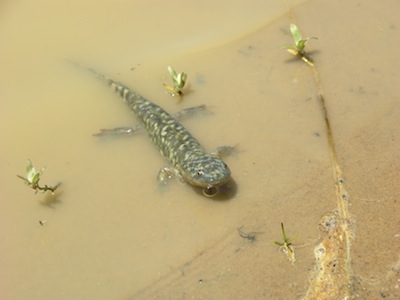
To repeat what I posted in the previous blog: No one is allowed inside the fences without a docent except on the self-guided nature trail located in the triangular pasture across the road from the eucalyptus grove and parking area on the northwest side of Olcott Lake. The touring season for spring 2011 is over, but it will resume next year in March of 2012. To see photos of many of the plants listed above and to learn more about Jepson Prairie and vernal pools in general go to http://www.vernalpools.org/ and click on Jepson Prairie.
Unfortunately, if you visit on your own in the next few days and walk the self-guided nature trail, I doubt that you would see the small but intense and diverse flower displays we saw in the other pastures — although there might be an occasional plant in bloom. Come next year March thru middle-May to see much more.


 Natural History Wanderings
Leave a comment