Posted by: Sandy Steinman | September 13, 2017

Why The US West Fire Season Is So Bad In Spite of Snowy Winter

The Associated Press reports

Wildfires are chewing across dried-out Western forests and grassland, putting 2017 on track to be among the worst fire seasons in a decade.

A snowy winter across much of the West raised hopes that 2017 wouldn’t be a dried-out, fire-prone year, but a hot, dry summer spoiled that.

Read about what happened, and how bad things are:

The US West had a snowy winter, so why the fiery summer?

Posted by: Sandy Steinman | September 12, 2017

Saddlebag Lake Wildflowers 9/12/17

Mono County Tourism reports

Park at Sawmill Campground off Saddlebag Lake Road and follow the trail to the end of the valley! Loads of wildflowers – with some underbrush starting to change from green to gold!

Flowers in bloom included lupine, paintbrush and red heather

see photos at  Mono County Tourism – California’s Eastern Sierra – Home

Posted by: Sandy Steinman | September 12, 2017

Anza-Borrego Desert Photo Contest 

Anza-Borrego Foundation is proud to partner with Borrego Art Institute and Kesling’s Kitchen to present the 2018 Anza- Borrego Desert Photo Contest. The contest is meant to encourage desert lovers and photography enthusiasts to capture their favorite views, moments and adventures in Anza-Borrego Desert State Park. Since the theme of the contest is the unique and natural beauty of Anza-Borrego Desert State Park, all photographs must be taken within the Park boundaries. Ribbons will be awarded to First, Second, and Third place winners, and a Grand Prize will be awarded to the Best of Show. All place winners also receive a gift membership to Anza-Borrego Foundation, good for one year.
DIGITAL SUBMISSIONS ARE DUE ON  DECEMBER 1, 2017, AT 12PM PACIFIC
For information on how to participate go to
Posted by: Sandy Steinman | September 11, 2017

Fall Color Reports, Drives, Walks, & Locations 

UC_Botanical_Garden_Fall_-2931

I have recently updated the Fall Color section of Natural History Wanderings:  Fall Color: Reports, Drives, Walks, and Locations

Sections include:

House__Sandy__Fall_Color-8387

UC_Botanical_Garden_Fall_Sandy-45

Berkeley_Fall_Color_Ssndy-9168

Posted by: Sandy Steinman | September 10, 2017

Yosemite Road Updates

Yosemite National Park reported yesterday 9/9/2017

As of 2pm today, Highway 41 has re-opened. There is now access between Oakhurst and Yosemite’s south entrance. Motorists should use caution while traveling in the area while fire equipment and firefighters continue operations.

Glacier Point Road is currently closed for visitor safety and fire operations due to Empire Fire.

Posted by: Sandy Steinman | September 10, 2017

 New England Fall Color 9/10/17

New England Today ‘s map shows that leaves have started to turn in most of New England, but it is still very early. Check out the map and follow fall color changes at Live Fall Foliage Map – New England Today

Posted by: Sandy Steinman | September 10, 2017

Homestead Valley Land Trust Wildflowers 9/9/17

Homestead Valley Land Trust reports on September 9

NEW
– Coyote brush, dioecious with male and female flowers on different plants, is blooming now.
– California mugwort is blooming along the trail below Amaranth. This aromatic plant is an important medicinal around the world.

Forests
Fading
– Chasmanthe, native to South Africa, has orange flame flowers
– Old Man’s Beard is a nasty invasive vine, native to the UK, that will create bowers, overcoming native trees and shrubs. We’ve pulled it off redwood trees in Three Groves. Muir Woods has a much worse infestation climbing redwoods and elsewhere in the park.
– Rosilla with its tall yellow flower and backward facing petals is blooming beside the creek that pasess the Ridgewood Rock.
– Roughleaf aster is blooming in the forest along the Eagle Trail.

Read More…

Posted by: Sandy Steinman | September 10, 2017

Light Pollution Threatens Pollination

Many of your are aware that light pollution  greatly impacts star-gazing and  creates problems for birds in terms of migration and building collisions, but now there is also evidence of it impacting pollination.

University of Bern News Release

Light pollution as a new threat to pollination

Artificial light disrupts nocturnal pollination and leads to a reduced number of fruits produced by the plant. This loss of night time pollination cannot be compensated by diurnal pollinators. The negative impact of artificial light at night on nocturnal pollinators might even propagate further to the diurnal community, as ecologists of the University of Bern were able to show.

The number of bees and other diurnal pollinators is declining worldwide – due to diseases, introduced parasites, pesticides, climate change and the continuing loss of habitats. Now, Eva Knop’s team from the Institute of Ecology and Evolution at the University of Bern, shows for the first time, that nocturnal pollinators can be affected by artificial light leading to a disruption of the pollination service they provide. “So far, nocturnal pollinators have been largely neglected in the discussion of the worldwide known pollinator crisis”, says Knop. However, there are numerous nocturnal pollinators, and they play an important role for plants, as the study in the Bernese Prealps shows. Knop’s team found out, that flowers on meadows which were experimentally illuminated with street lamps are visited around two thirds less frequently by pollinators, than those that were on meadows without any light sources in the vicinity. This has an effect on the fruit set, and therefore the reproduction of plants. The study has now been published in the magazine “Nature”.

Loss of nocturnal flower visitors

In the last 20 years, the light emissions have increased by 70%, particularly in residential areas. “As it is possible that light sensitive insects have already disappeared in regions with high levels of light pollution, we conducted our study in the still relatively dark Prealps”, explains Knop. The researchers could show that during night a total of almost 300 insect species visited the flowers of around 60 plant species on ruderal meadows without any artificial light sources in the vicinity. Interestingly, on meadows with experimentally set up street lights, the nocturnal pollination visits were 62% lower than in the unlit areas. The LED lamps used, are used as standard for public street lighting.

Consequences for biodiversity

This loss of nocturnal flower visitors leads to a reduction of the fruit set of plants, as the researchers have proved for the first time, with the example of the cabbage thistle (Cirsium oleraceum). The pale flower heads of the cabbage thistle are a rich and easily accessible source of pollen and nectar, for numerous species of insects, and are amongst the most visited plants both during the day and at night. The team investigated a total of 100 cabbage thistles, which were growing on five meadows experimentally illuminated with LED street lamps, and five meadows without artificial light. The illuminated plants were visited much more rarely by pollinating insects at night, than the unlit plants. The decline in pollinators had a significant influence on the reproduction of the cabbage thistles: at the end of the test phase, the average number of fruits per plants was around 13% lower. “The pollination during the day obviously cannot compensate for the losses in the night”, says Knop.

Diurnal pollinators also affected

The study also shows, that the nocturnal pollinators indirectly promote the diurnal pollinators, by visiting the same plants. The underlying mechanisms are still unknown – a possible explanation could be that the plants have a fitness advantage thanks to the nocturnal pollinators, and therefore provide more nutrition for the diurnal pollinators. A loss in nocturnal pollination due to increasing light pollution, could therefore also indirectly have a negative effect on the diurnal pollinator community. According to Knop, this still needs to be researched in detail, as well as the long-term consequences of the pollination losses for the biodiversity.

The findings have driven the researchers to demand action: “Urgent measures must be taken, to reduce the negative consequences of the annually increasing light emissions on the environment”, says Knop. This will be big challenge, as residential areas are worldwide increasing.

Publication details:

Knop E., Zoller L., Ryser R., Gerpe Ch., Hörler M., Fontaine C. (2017) Artificial light at night as a new threat to pollination. Nature, 02. August 2017, doi:10.1038/nature23288

Posted by: Sandy Steinman | September 9, 2017

Birding Elsie Roemer Bird Sanctuary 9/9/17


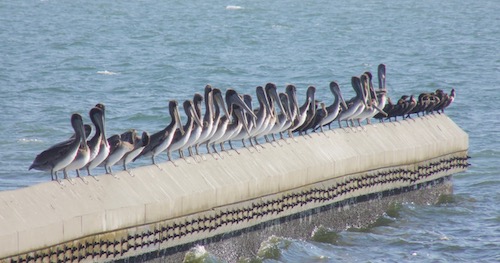
Brown Pelicans and Double-crested Cormorants

Today I went birding at Elsie Roemer starting about a little over an hour past high tide. Elsie Roemer Bird Sanctuary is at the east end of Marsh Beach in the town of Alameda. It harbors aquatic birds and other salt marsh creatures.

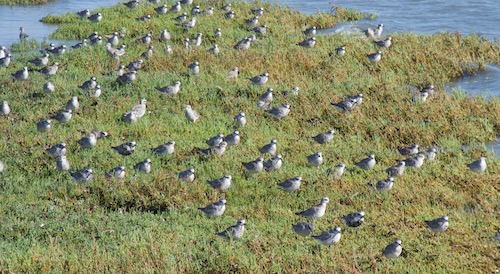
Black-bellied Plovers


There were large numbers of Black-bellied Plovers and Sanderlings today. There was also a lot of Brown Pelican action. We saw 19 different species today.

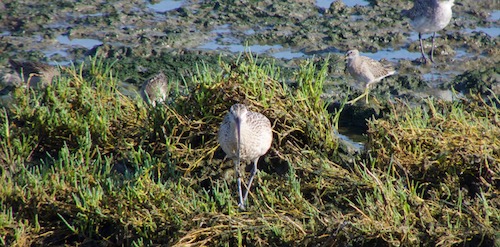
Long-billed Curlew and Dowitchers


Click Read more to see today’s bird list

Read More…

Posted by: Sandy Steinman | September 9, 2017

Superior National Forest Fall Color 9/8/17

Superior National Forest reports

Current Conditions (September 8, 2017):

Color is somewhere around 5% of peak at the moment.  Sarsaparilla and aster leaves are yellow in the understory, and a few mountain maple trees are orange, but the larger trees only have a few leaves or branches turning color as yet.

When is the PEAK?!

The peak of fall color is as unpredictable as the spring ice out date.  It depends on weather conditions through the growing season, as well as leaf stripping wind and rain in the fall.  It also depends on what you are looking for as birches, tamaracks, and maples all peak at different times.  The location in the Superior National Forest makes a difference as well.  The North Shore area will peak at a different time than the inland area, but, depending on weather, it could be earlier or later than inland.  The best we can offer is our collection of pictures taken every week at the same photopoint on the Honeymoon Trail since 2008.  By looking at this history, you can decide when you think peak will be this year.

For downloadable maps of the fall color tours, choose from the options below:

Our nationally designated Scenic Byways and Scenic Drives are also good locations for fall colors:

Posted by: Sandy Steinman | September 9, 2017

Where Do Birds Go In A Hurricane?

Forbes has an article on how bird behavior and copying styles for dealing with hurricanes at   Where Do Birds Go In A Hurricane?

Posted by: Sandy Steinman | September 9, 2017

Monarch Butterfly Extinction Threat

The San Francisco Chronicle reports

Western monarch butterflies, which crowd trees along the California coast every winter and flush them with color, have declined so dramatically since the 1980s that the species will likely go extinct in the next few decades if nothing is done, scientists said Thursday in a population study of the treasured creatures.

Read full article at Scientists say decline in monarch butterflies brings risk of extinction – San Francisco Chronicle

Posted by: Sandy Steinman | September 8, 2017

Mono County Fall Color Drives

Mono County has list of its favorite fall color Drives

  • Rock Creek Canyon
  • June Lake Loop
  • Lundy Canyon
  • Conway Summit and Virginia Lakes
  • Summers Meadow and Green Creek Road
  • West Walker River and Sonora Pass

See details at  Fall Color Drives

Posted by: Sandy Steinman | September 8, 2017

Popular Park Needs Parking Reservations

The San Francisco Chronicle reports

A popular county park in the Sierra foothills started requiring reservations for parking and trail access last weekend.

Hidden Falls Regional Park west of Auburn, a wilderness-style park where visitors can hike, mountain bike or horseback ride to small waterfalls, has started requiring online parking reservations for Fridays, Saturdays, Sundays and holidays. Reservations are free until Oct. 15, after which they will cost $8. Parking now is free and will remain free Mondays through Thursdays.

Read more at  Popular park needs reservation to park – San Francisco Chronicle

Posted by: Sandy Steinman | September 7, 2017

How Recent Hot Spell May Effect Fall Color

California Fall Color reports

With California experiencing record-breaking temperatures statewide this past week (Death Valley recorded 129.72 degrees – tying its previous record), one has to wonder whether all that hot air will delay the appearance of fall color.

There was certainly little of it to be seen in the Northern Sierra this past weekend. On a getaway at North Lake Tahoe, only a few spots of color could be found.

So, I called Parcher’s Resort at 9,290′ near South Lake in Bishop Creek Canyon (Inyo County), which is about the highest and earliest reporting location in our network of color spotters. The desk clerk at Parchers (Jared Smith was out fishing, lucky guy) said “just tiny splotches of yellow” can be seen in the aspen groves that surround the resort and along South Lake Road.

As can be seen in this photo, the aspen appear to be healthy and vibrant. Last winter’s heavy snowfall has kept them nourished. So, when they do begin turning lime, yellow, orange, pink and red, the show should be long-lasting and brilliant.

Soon, the hot days of summer will vanish and the golden days of autumn will be here.

0 – 10% – Just Starting – Bishop Creek Canyon

0-10% – Just Starting – Lake Tahoe

Posted by: Sandy Steinman | September 7, 2017

San Juan National Forest 9/7/17

San Juan National Forest  reports

Date: 9/7/17

Estimated Percentage of Current Fall Foliage:
Durango to Purgatory – 0%
Molas Pass – 0%
Silverton/Red Mtn Pass – 5%-10%
Pagosa – 0%
Dolores to Lizard Head Pass – 0%
Mancos/La Platas – 0%
Ouray to Telluride – 0%

Areas with Greatest Amount of Color / Recommended Viewing Areas:
Nothing really going yet, but a few trees getting started

Estimated Peak Viewing Period:
Give it two weeks or so before large areas have changed.

Viewing Suggestions / Tips:
The third and forth week of September is usually the best time.

Weather should be clear and Montana smoke heading out soon.

Trees That Are Currently Turning Color:
A touch of aspen and some high elevation bushes.

For More Information on Fall Colors Please Contact:

San Juan Public Lands Center, Durango (970) 247-4874

Posted by: Sandy Steinman | September 7, 2017

What Does A Blue Whale’s 440 Pound Heart Look Like?

Did you know that a Blue Whale can have a 440 pound  heart. Read about  and see images of how scientists preserved a 440 pound Blue Whale’s heart at Scientists Preserve Whale Heart Scientists Preserve Whale Heart.


Posted by: Sandy Steinman | September 6, 2017

Eastern Sierra Fall Color: Lake Sabrina 9/4/17

Lake Sabrina Boat Landing reports

A bit early for color this year. We have a few areas starting to lighten up and turn a very light yellow.


Posted by: Sandy Steinman | September 6, 2017

American Pikas Disappearing In Sierra

University of Santa Cruz News Release

American pika disappears from large area of California’s Sierra Nevada mountains

Study documents local extinction of pikas from the largest area yet reported and projects climate change will cause drastic decline for the charismatic mammal within decades

The American pika, a small mammal adapted to high altitudes and cold temperatures, has died out from a 64-square-mile span of habitat in California’s northern Sierra Nevada mountains, and the cause appears to be climate change, according to a new study published August 30 in PLOS One.

Researchers surveyed pika habitat throughout the north Lake Tahoe area and found that pikas had disappeared from an area that stretches from near Tahoe City to Truckee, more than ten miles away, and includes Mount Pluto. This local extinction is the largest area of pika extinction yet reported for the modern era.

Read More…

Posted by: Sandy Steinman | September 5, 2017

Western Wildfires Endanger Beloved Sites At National Parks

NPR reports on the impact of Wildfires at Glacier, Columbia River Gorge and Yosemite.

Wildfires burning in the Western U.S. are threatening some of America’s most treasured national parks – and in some areas, the damage has already been done.

Last week in Montana, a 20-square-mile blaze burned the historic Sperry Chalet, a hotel and dining room built in 1914 and only reachable by trail.


via Western Wildfires Endanger Beloved Sites At National Parks : The Two-Way : NPR

Posted by: Sandy Steinman | September 5, 2017

How Birds Cope With Hot Weather

With the recent hot weather the Golden Gate Birder reports on how birds handle excessive heat

Birds don’t sweat in hot weather, but they have other coping mechanisms such as panting.

Read story to learn how birds have been managing the recent heat wave on the west coast Golden Gate Audubon SocietyHow birds handle hot weather – Golden Gate Audubon Society

Posted by: Sandy Steinman | September 4, 2017

Yosemite Fire Updates

My Motherlode.com has an update on the  three fires in the Yosemite Area including trail and road closures effecting Yosemite at Yosemite Shares Latest On South Fork, Empire Fires | myMotherLode.com

Posted by: Sandy Steinman | September 4, 2017

What Do Birds Do During a Total Eclipse? 

Cornell Lab of Ornithology reported on how birds behaved during the eclipse staying eBird reports and radar. Some of their findings were

  • Aerial insectivores dropping out of the skies
  • Radar reveals an emptying sky
  • Nocturnal (and crepuscular) birds emerge
  • Roosting and confusion

Read article and see charts What Do Birds Do During a Total Eclipse? Observations from eBird and Radar on August 21, 2017 : BirdCast

Posted by: Sandy Steinman | September 3, 2017

Rattlesnake Plantain In Bloom at Kruse Rhododendron

submitted by Timothy Boomer

I’m pleased to report that rattlesnake plantain (Goodyera oblongifolia) is now in bloom at Kruse Rhododendron State Natural Reserve, just north of Salt Point. My blog entry with directions can be found at:
http://wildmacro.com/blog/2017/rattlesnake-plantain-now-in-bloom-090317.html

Main species page is:
http://www.wildmacro.com/library/flora/western-rattlesnake-plantain-goodyera-oblongifolia.html

Posted by: Sandy Steinman | September 3, 2017

Birding Eastshore State Park In Berkeley For World Shorebird Day

I was out birding today again for the Global Shorebird Counting Program which is part of World Shorebird Day. Today was McLaughlin Eastshore State Park in Berkeley, which included North Cove, Berkeley Meadow, Sea Breeze and Virginia Annex. It was a hazy sunny day with temperatures 74 F at start, 80 F at end. We started at Gilman walked to Sea breeze, north on shoreline by University Av. to end of Meadow, along west side of Meadow, Virginia Annex and back to Gilman. Observers Clayton Anderson and Sandy Steinman. We saw 24 different species. Most unusual for this are was a Western Wood-Peewee in the Berkeley Meadow. We found Spotted Sandpipers, Black Oystercatchers and Black Turnstones, which were absent yesterday in Emeryville.

This slideshow requires JavaScript.

Click Read more to see Bird List

Read More…

Posted by: Sandy Steinman | September 3, 2017

Wildfire Reaches Yosemite Giant Sequoias

The San Francisco Chronicle reported at 5:45 p.m. yesterday

SAN FRANCISCO (AP) – The Latest on heat and wildfires in the Western United States (all times local): 5:45 p.m. Authorities say a fire burning near Yosemite National Park has entered a 2,700-year-old grove of giant sequoias. California fire officials said Saturday the wildfire entered the Nelder Grove late Friday night.

Read full story and see photos at: The Latest: California wildfire reaches giant sequoia grove – SFGate

Yosemite National Park reports State Highway 41 IS CLOSED FROM 8 MI NORTH OF OAKHURST (MADERA CO) TO 2.9 MI NORTH OF THE
MADERA/MARIPOSA CO LINE due to the fire. A detour is available
FOR YOSEMITE NAT’L PARK ROAD INFORMATION CALL 209-372-0200


Posted by: Sandy Steinman | September 3, 2017

Henry Coe Wildflower Update 9/2/17

Henry Coe State Park has a new wildflower bloom report  for September 2, 2017 at the Pine Ridge Association website with photos and a list of flowers now in bloom at: Henry W. Coe – Wildflower Guide.

Posted by: Sandy Steinman | September 3, 2017

Groups Challenge Decision to Remove Yellowstone Grizzly Protections

 EarthJustice News Release

GROUPS CHALLENGE DECISION TO REMOVE YELLOWSTONE GRIZZLY PROTECTIONS

Delisting defies best available science, sidesteps important legal safeguard

A coalition of tribal and conservation interests today filed a lawsuit in federal court seeking to restore critical protections to the Yellowstone region’s iconic grizzly bears before new threats, including hunting, push the population further into decline.

Today’s suit challenges a June 2017 decision by the U.S. Fish and Wildlife Service to remove the Yellowstone-area grizzly population from the list of species protected by the Endangered Species Act, which enables the states of Idaho, Montana, and Wyoming to move ahead with plans for trophy hunting of grizzlies.

The Fish and Wildlife Service’s decision came despite a recent increase in grizzly deaths in the Yellowstone region following the demise of some of the bears’ key food sources, including the seeds of whitebark pine.  Federal biologists documented a record-high 61 grizzly deaths in 2015 and 58 in 2016, with the majority of those caused by people.  As a result, the government’s own estimate of the Yellowstone grizzly population level has declined from 757 in 2014 to 695 in 2016.

Read More…

Posted by: Sandy Steinman | September 2, 2017

Birding Emeryville Shoreline for World Shorebird Day

Willets and Marbled Godwits at Emeryville Shoreline

Today I went birding at the Emeryville shoreline. Our observations were included in the Global Shorebird Counting Program which is part of World Shorebird Day. Included were Emeryville Crescent State Marine Reserve and Emeryville Park and Marina, which are all part of Eastshore State Park . Weather was sunny, hazy and unusually hot for this location. 78 F to start and 95 F at finish. We saw 25 species in all.

Click read more to see bird list

Read More…

Posted by: Sandy Steinman | September 2, 2017

Mono County Wildflowers

 Mono County Tourism reports on their Facebook Page:

Due to the late snowmelt at higher elevations, wildflowers will be blooming into September this year! (This was Twenty Lakes Basin last weekend).

Image may contain: mountain, cloud, sky, grass, tree, outdoor and nature

« Newer Posts - Older Posts »

Categories