Posted by: Sandy Steinman | November 26, 2019

‘Bleak’ U.N. Report Finds World Heading to Climate Catastrophes

The New York Times reports

Four years after countries struck a landmark deal in Paris to rein in greenhouse gas emissions in an effort to avert the worst effects of global warming, humanity is headed toward those very climate catastrophes, according to a United Nations report issued Tuesday, with China and the United States, the two biggest polluters, having expanded their carbon footprints last year.

The summary findings are bleak,” the report said, because countries have failed to halt the rise of greenhouse gas emissions even after repeated warnings from scientists. The result, the authors added, is that “deeper and faster cuts are now required.”

Read full article at ‘Bleak’ U.N. Report Finds World Heading to Climate Catastrophes – The New York Times

Posted by: Sandy Steinman | November 26, 2019

In the Fight Against Climate Change, Not All Forests Are Equal

The New York Times reports

Forests are a great bulwark against climate change, so programs to reduce deforestation are important. Those efforts usually focus on stopping the destruction in areas where it is already occurring.

But a new study suggests these programs would do well to also preserve forests where deforestation and degradation haven’t begun. Gradual loss of these largely pristine, intact forests has a much greater climate impact than previously accounted for, the researchers said.

Read full story at In the Fight Against Climate Change, Not All Forests Are Equal – The New York Times

Posted by: Sandy Steinman | November 25, 2019

Australian Flower Photos – Part 1

I just posted an album of photographs on Flickr of Australia flowers from a recent trip to southwestern Australia at Flowers of Southwestern Australia – Part 1 The photos are best viewed full screen or as a slide show by clicking the little box that looks like a computer screen with an arrow in it. It is third from left at the top right section of the album. You can also see other photos from the trip to Australia at

 Orchids of Southwestern Australia (recently updated with some new new additions)

Australian Birds and and Other Animals. 

Australian Landscapes

Posted by: Sandy Steinman | November 25, 2019

BLM Move to Colorado Threatens Public Lands, Science and the Climate

The Revelator reports

How a Federal Agency’s Move to Colorado Threatens Public Lands, Science and the Climate. The Bureau of Land Management relocation to Grand Junction reflects a widespread pattern of destabilization under President Trump.

Read story at  Westward Heave-ho: How a Federal Agency’s Move to Colorado Threatens Public Lands, Science and the Climate • The Revelator

Posted by: Sandy Steinman | November 24, 2019

Birding Elsie Roemer Bird Sanctuary 11/23/19

Yesterday I was birding at Elsie Roemer with friends. Elsie Roemer Bird Sanctuary is at the east end of Marsh Beach in the town of Alameda. It is one of the best places to see large numbers of shorebirds. We saw 32 species today. There were very large numbers of shorebirds today. Of note was we saw a Say’s Phoebe, a bird I haven’t usually seen there, the large number of Killdeer and not seeing any Semi-palmated Plovers.

Click Read more to see today’s bird list

Read More…

Posted by: Sandy Steinman | November 24, 2019

New Ethnobotany Database for Southern California

Manhattan Beach Botanical Garden writes about a New Ethnobotany Database for Southern California

Humans have occupied southern California for about 12,000 years. During this time, they have relied on local plants for food, tools, medicine, shelter and clothing. Kevin Curran, who teaches biology courses at USD in San Diego, has compiled an ethnobotany database that includes a comprehensive list of the native plants used historically by our local Native Americans.Many of the plants discussed are native to the LA region and surrounding Mojave Desert. These plants have successfully adapted to the mostly dry and warm climate of the region. Certain southern California native plants evolved to survive in the extreme heat of the Sonoran Desert while others enjoy the cool, sea breeze of the Coastal Sage Scrub plant community. Provided on the database is a clickable list of the native California plants that have been useful in some way to the early settlers of southern California, organized into 3 parts:

  1. List of the native plants used by Native Americans in southern California.
  2. Brief discussion of the main Native American groups of the region.
  3. Description of the plant communities of southern California.
Enjoy this interesting and educational site here: http://www.ethnoherbalist.com/southern-california-native-plants-medicinal/  
Posted by: Sandy Steinman | November 24, 2019

Rosemary is not a Rosemary – It’s a Sage!

The Telegraph  reports

Rosemary is not a separate species of plant after all — it is a sage, the Royal Horitcultural Society (RHS) has ruled as they tell gardeners to change their plant labels.

The RHS is to adopt a change in the scientific name for rosemary after research has shown that is in fact a salvia, or a sage.

In technical terms it will now be known as Salvia rosmarinus, rather than Rosmarinus officinalis, but its common name – rosemary – remains unchanged.

Read more at  Rosemary is not a rosemary, rules RHS – it’s a sage, as they tell gardeners to change plant labels

Posted by: Sandy Steinman | November 23, 2019

Death Valley Electrical Fire

Death Valley National Park reports

On the afternoon of 11/20 a fire started in the electrical substation that distributes power to most of Death Valley. Panamint Springs was not impacted. Because of the location and complexity of the substation, the rebuild may take days or weeks.
Southern California Edison has dispatched a large generator with the intent to run all of Stovepipe Wells and Furnace Creek. There will still likely be times without power as repairs are made or the generator undergoes maintenance.
Those visiting should anticipate prolonged periods without power or connectivity. The Furnace Creek cell tower is powered by separate generator, but will likely be down at times as well. The park will have limited ability to respond to emails, posts, or phone calls for the duration of the outages. The parks internal radio system used by emergency responders and law enforcement is operational.

Posted by: Sandy Steinman | November 23, 2019

Plants might be helping each other more than thought

ScienceDaily reports

Contrary to the long-held belief that plants in the natural world are always in competition, new research has found that in harsh environments mature plants help smaller ones — and thrive as a result.

Read article at Plants might be helping each other more than thought — ScienceDaily

Center for American Progress News Release

The Trump administration’s attacks on Alaska’s Arctic National Wildlife Refuge and Tongass National Forest could release almost 5 billion metric tons of carbon dioxide equivalent, according to a new analysis from the Center for American Progress.

That’s almost as much pollution as all the world’s cars emit in a year—which is more than 1 billion passenger vehicles, the analysis finds. The decision to strip protections from these areas in favor of industry completely ignores climate impacts, including the effects of shrinking sea ice, coastal erosion, and permafrost loss.

Read full article RELEASE: New Drilling, Logging in Alaska’s Protected Areas Could Release as Much Pollution as All the World’s Cars Emit in a Year – Center for American Progress

Posted by: Sandy Steinman | November 21, 2019

Australian Landscape Photos

I just posted an album of photographs on Flickr of Australia landscapes from a recent trip to southwestern Australia at Australian Landscapes. The photos are best viewed full screen or as a slide show by clicking the little box that looks like a computer screen with an arrow in it. It is third from left at the top right section of the album. You can also see other photos from the trip to Australia at

 Orchids of Southwestern Australia (recently updated with some new new additions)

Australian Birds and and Other Animals. 

Posted by: Sandy Steinman | November 21, 2019

World’s donkeys being ‘decimated’ by demand for Chinese medicine

The Guardian reports

Half the world’s donkey population could be wiped out in the next five years, as millions are slaughtered for their hides to meet rising demand for a traditional Chinese medicine.

Read full story at  World’s donkeys being ‘decimated’ by demand for Chinese medicine | World news | The Guardian

Posted by: Sandy Steinman | November 20, 2019

Bird Movement Ecologist Job Opportunity

Birds Canada and The National Audubon Society are looking to hire a joint Movement Ecologist. The Movement Ecologist will work closely with the Audubon’s Migratory Bird Initiative and Conservation Science teams and the Migration Ecology and Data Science and Technology teams at Birds Canada to promote effective conservation outcomes through movement and migration ecology research. See the job description.

Posted by: Sandy Steinman | November 20, 2019

A Silicon Valley Disruption for Birds That Gorge on Endangered Fish 

The New York Times reports

To persuade some migrating Caspian terns to stop short of the Columbia River, scientists planted plastic decoys and patio speakers in San Francisco Bay.

The goal of those doppelgängers was to lure terns to breed on the islands, and, in doing so, prevent endangered salmon and trout living hundreds of miles to the north from vanishing.

A Silicon Valley Disruption for Birds That Gorge on Endangered Fish – The New York Times

Arnold Arboretum of Harvard University announcement

The Arnold Arboretum of Harvard University promotes and supports research consistent with its mission to discover and disseminate knowledge of the plant kingdom. To foster both independent and collaborative work, the Arboretum offers fellowships and awards to students, post-doctoral researchers, and professionals of the biological and horticultural sciences. Applicants are encouraged to define and develop paths of inquiry using the Arboretum’s resources, including its world-renowned living collection, herbarium, plant records, library and archives, greenhouse and laboratories, and the expertise of its staff. Please visit the links below for additional information or download flyers that describe the fellowship, awards and internship. Applications are accepted yearly.

The deadline for fellowships and awards is Feb 1. The deadline for the internship program is March 1.

To learn more and submit applications go to Research Fellowships » Arnold Arboretum

Posted by: Sandy Steinman | November 18, 2019

Birding Eastshore State Park 11/18/19


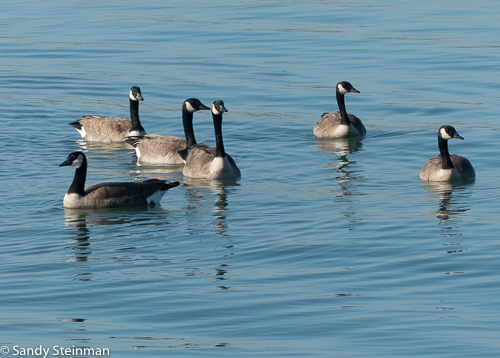
Canada Geese

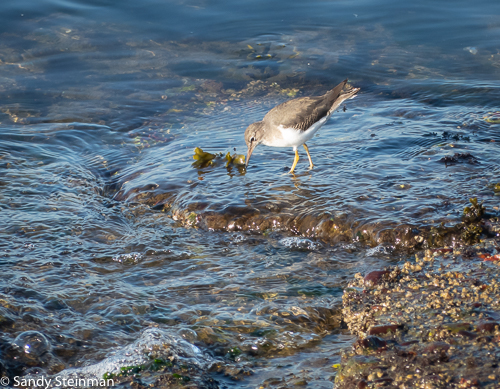
Today I went birding in Eastshore State Park in Berkeley, CA between Gilman St. and University Av. with my friend Eric Schroeder. We saw 40 different species today with the 40th being the relatively common California Towhee, which we saw in the parking lot just before we left. The least common birds we saw were a Cackling Goose that was with a group of about 20 Canada Geese on the soccer field and a number of Ruddy Turnstones that were hanging out with a larger group of Black Turnstones. The most abundant birds were Canada Goose, American Wigeon, Bufflehead, Western Gull, Least Sandpiper, Rock Pigeon, House Finch, White-crowned Sparrow, and Red-winged Blackbird. I think this was the first time I have been to Eastshore State Park and didn’t see a Mallard.


Spotted Sandpiper


Eric’s has been doing a big year as a fundraiser for Golden Gate Audubon.  A big year is  where you attempt to see as many species as you can in a year. He currently is at 950 birds for the year and hopes to get to over 1000. If you’d like to learn more check out his web page.

Click Read for today’s bird list

Read More…

Posted by: Sandy Steinman | November 18, 2019

Photographs of Australian Birds and and Other Animals 

I just posted an album on Flickr of photographs of birds and other animals from a recent trip to  southwestern Australia in September and October 2019 at Australian Birds and and Other Animals.  The photos are best viewed full screen or as a slide show by clicking the little box that looks like a computer screen with an arrow in it. It is third from left at the top right section of the album. You can also view an album of photos on Flickr of Orchids of Southwestern Australia

Posted by: Sandy Steinman | November 18, 2019

Yosemite Tempoarily Closes Tioga Rd. and Glacier Pt. Rd.

Yosemite National Park reports

The first hint of winter is on the way! As a result, Tioga Road (continuation of Highway 120 through the park) and Glacier Point Road will temporarily close due to an incoming storm on Tuesday, November 19 at 3 pm. These closures could last several days or longer. Call 209/372-0200 (then 1, 1) to check on updates.

US National Weather Service Hanford California has issued a winter storm watch for several inches of snow above 6,000 feet (but just a slight amount of rain in Yosemite Valley). You can check forecasts for different areas of the park at https://www.nps.gov/yose/planyourvisit/weathermap.htm.

Posted by: Sandy Steinman | November 18, 2019

Collapse of desert birds due to heat stress from climate change

UC Berkeley reports

As temperatures rise, desert birds need more water to cool off at the same time as deserts are becoming drier, setting some species up for a severe crash, if not extinction, according to a new study from the University of California, Berkeley.

The team that last year documented a collapse of bird communities in Mojave Desert over the last century — 29% of the 135 bird species that were present 100 years ago are less common and less widespread today — has now identified a likely cause: heat stress associated with climate change.

Read more at  Collapse of desert birds due to heat stress from climate change | Berkeley News

Posted by: Sandy Steinman | November 17, 2019

Humpback Whale Population On The Rise 

EarthSky reports

After a near-miss with extinction, a population of humpback whales in the South Atlantic has rebounded.

A population of humpback whales in the South Atlantic has rebounded from the brink of extinction.

According to a new study, published October 16, 2019 in the peer-reviewd journal Royal Society Open Science, the western South Atlantic humpback population has grown to 25,000. Researchers believe this new estimate is close to pre-whaling numbers.

Read full article at Humpback whale population on the rise | Earth | EarthSky

Posted by: Sandy Steinman | November 16, 2019

A Big Win For US National Parks

Alt National Park Service  reports

A big win! The Trump administration abruptly disbanded an advisory committee earlier this month whose recent recommendations to greater privatize national parks were met with heavy criticism. The Interior Department quietly ended meetings of the Outdoor Recreation Advisory Committee more than four months before its charter was set to expire on March 13, 2020

Posted by: Sandy Steinman | November 16, 2019

Tiny Brains Don’t Stop These Birds From Having a Complex Society 

The New York Times reported

A study published Monday in Current Biology shows that the vulturine guineafowl of eastern Africa, like humans, have many-layered societies. In the past, scientists hypothesized that such social structures require a lot of brainpower. But the pea-brained guineafowl are revealing the flaws in that assumption.

Read full story at Tiny Brains Don’t Stop These Birds From Having a Complex Society – The New York Times

Posted by: Sandy Steinman | November 15, 2019

2019 Leonid Meteor Shower Peaks Nov. 17 to 18

Earthsky reports

November’s wonderful Leonid meteor shower is active from about November 6 to 30 each year. The peak is expected in 2019 on the night of November 17 (morning of November 18). The shower happens as our world crosses the orbital path of Comet 55P/Tempel-Tuttle. Like many comets, Tempel-Tuttle litters its orbit with bits of debris. It’s when this cometary debris enters Earth’s atmosphere and vaporizes that we see the Leonid meteor shower. In 2019, a waning gibbous moon will light up the sky during the shower’s peak. In a dark sky, absent of moonlight, you can see up to 10 to 15 meteors per hour at the peak. In 2019’s moonlit sky? We can’t predict, but some of the brighter meteors should be visible in moonlight.

Read more at  All you need to know: 2019’s Leonid meteor shower | Astronomy Essentials | EarthSky

Posted by: Sandy Steinman | November 14, 2019

Disturbing News For Butterfly Populations

The San Diego Union-Tribune  reports

A UC Davis professor’s simple mission: Record and identify every butterfly he sees. What he’s discovered has disturbed him

Shapiro says 2018 was the worst butterfly season he ever experienced. The number of species across all elevations was down, something he had never seen before.

As a scientist, Shapiro knew this catastrophic count provided a valuable data point. The abysmal numbers could help other researchers understand how to make sense of future plunges in butterfly populations and perhaps help them pinpoint the culprit. But as a person who has spent his whole life among butterflies, he could not help but feel morose.

Read full story at Meet the scientist who’s been counting California butterflies for 47 years and has no plans to stop – The San Diego Union-Tribune

Posted by: Sandy Steinman | November 13, 2019

Sudden Oak Death Spreading Rapidly In California 

The San Francisco Chronicle reports

Sudden Oak Death (SOD), a deadly disease for oak trees, is on the rise in California. According to a survey conducted by UC Berkeley scientists, the number of infected trees has almost doubled since 2018.

Read article at  ‘Scariest tree pathogen in the world’ spreading rapidly in California – SFGate

Posted by: Sandy Steinman | November 12, 2019

How Scientists Got Climate Change So Wrong

The New York Times has an informative opinion piece “How Scientists Got Climate Change So Wrong”

Few thought it would arrive so quickly. Now we’re facing consequences once viewed as fringe scenarios.

Read article at How Scientists Got Climate Change So Wrong – The New York Times

Posted by: Sandy Steinman | November 11, 2019

Orchid Photos from Australia

I did a recent trip to Southwestern Australia in September and October. It is one of the world’s five Mediterranean climates (Southwestern Australia, West Cape South Africa, Central Chile, Coastal California and off course the area around the Mediterranean Sea) Mediterranean climates are characterized by dry summers and mild, wet winters. They are habitat with rich botanical diversity.

I have put together an album of photos on Flickr at Orchids of Southwestern Australia The photos are best viewed full screen or as a slide show by clicking the little box that looks like a computer screen with an arrow in it. It is third from left at the top right section of the album.

I will be posting more photos from Australia in the coming weeks.

Posted by: Sandy Steinman | November 11, 2019

Anza-Borrego Wildflowers Bloom 11/8/19

 Anza-Borrego Wildflowers Guide has a post with photos in bloom on November/08/2019 from a  survey north of Third Crossing in Anza-Borrego. See photos at  https://borregowildflowers.org/pages/blooming.html


Posted by: Sandy Steinman | November 11, 2019

Towns like Mammoth want control of Forest Service recreation 

The LA Times has an article on efforts by local towns to help finance national forest recreation services that have been severely cut by the federal government.

In the shadow of Mt. Whitney, local officials frustrated by U.S. Forest Service budget cuts want to take charge of recreation facilities in the Eastern Sierra. Some conservationists are wary.

Read full article that discusses the positive and negative aspects of local funding of national forest recreation areas at  Towns like Mammoth want control of Forest Service recreation – Los Angeles Times

Posted by: Sandy Steinman | November 10, 2019

Geographic Information Systems (GIS) Coordinator Job Opportunity

GIS Coordinator

Compensation: $82,128.17 – 99,847.83 anually
Opening date: October 11, 2019
Closing date: November 15, 2019

We are currently recruiting for a full-time Geographic Information Systems (GIS) Coordinator – a critical team member who will support planning for the land conservation activities of Ag + Open Space. This position is assigned to Ag + Open Space’s Conservation Planning Program. This is an excellent opportunity to join a mission-driven organization with a passion for protecting lands that contribute to Sonoma County’s scenic beauty, local agriculture, native habitats and recreational lands.

Click read more about job position and how to apply

Read More…

« Newer Posts - Older Posts »

Categories