Posted by: Sandy Steinman | April 8, 2021

Berkeley Street Photos April 5, 2021

Photographed in the North Berkeley Flatlands between April 5, 2021.

This is part of my continuing project,  the “Stay at Home Photo Project”.  It includes many street photos from Berkeley and Albany as well as photos from the UC Berkeley campus, my yard and neighbors’ yards  You can see larger higher quality versions of many of the photos at Flickr in my collection Stay at Home Photo Project .

This slideshow requires JavaScript.

Posted by: Sandy Steinman | April 8, 2021

BirdSpotter 2020-21 Photo Award Winning Submissions

See the FeederWatch BirdSpotter photo submissions for 2020 to 2021 at Award Winning Submissions

The Guardian reports

Yurok Tribe will create a captive breeding facility in Redwood national park for birds that could be released as early as this fall

After a century of absence, the endangered California condor is set to return to the skies of the Pacific north-west.

Read more at Endangered condors return to northern California skies after nearly a century – The Guardian

Posted by: Sandy Steinman | April 7, 2021

The Beaver Believers – 4/8/21

from Los Padres ForestWatch

Join us on Thursday, April 8 at 7pm for a screening of The Beaver Believers, a documentary about the fascinating world of North America’s largest rodent. Learn about their role in ecosystems across the West, and stay for a Q&A with the filmmaker and other beaver experts. A portion of the proceeds from the screening go to our conservation efforts in the Central Coast region.
Posted by: Sandy Steinman | April 7, 2021

A Gray Wolf’s Epic Journey Toward the Central Coast

Los Padres ForestWatch reports

For the first time in more than a century, a gray wolf has returned to California’s central coast region as part of an epic journey from Oregon spanning more than 600 miles and eighteen counties in California. The wolf, known as OR-93, is fitted with a radio collar, and was detected in both Monterey and San Luis Obispo counties.

Read more at A Gray Wolf’s Epic Journey Toward the Central Coast

Posted by: Sandy Steinman | April 7, 2021

Virtual Nature Talks! – WILDFLOWERS Tonight 4/7/21

Virtual Nature Talks! – WILDFLOWERS, Wed, April 7, 2021, 7pm!!!!
You still have time to register!! Contact Lara at lzegart@tamcsd.org.
TCSD presents Virtual Nature Talks! – Wildflowers. Join NPS volunteer and Board member Steffen Bartschat and Ranger Mia Monroe, as well as our guest speaker Maria Alvarez of the NPS, as they present information on the wonderful wildflowers that grow in the Tam Valley area. Learn about threats to them and how you can protect them.
Ranger Mia will also provide updates on the NPS.
Email Lara, lzegart@tamcsd.org for zoom information and to answer questions.
Posted by: Sandy Steinman | April 7, 2021

Mono County Seasonal Road Conditions 4/7/21

from Mono County Tourism
 Monitor Pass Hwy 89: Closed – plowing started April 1st
👉 Sonora Pass Hwy 108: Closed – plowing started April 1st
👉 Tioga Pass Hwy 120 West: Closed – Plowing will start April 15th
👉 Bodie Road Hwy 270: Open from the junction of U.S. 395 to end of the paved section of the road. The dirt road is clear until ½ mile before the State Park entrance. There is still a ½ mile hike into the park with wet and muddy conditions. Due to limited space, RV’s and trailers are not advised.
👉 Mono Mills Road/State Route 120 E: OPEN
👉 North June Lake Loop/State Route 158 N: OPEN
👉 Virginia Lakes Road: Closed at Dunderberg Meadows Road
👉 Saddlebag Lake Road: Closed
👉 Lundy Lake Road: Open to Lundy Lake Resort
👉 Rock Creek Road: Closed at Snow Park – opening will begin 4/12
Posted by: Sandy Steinman | April 7, 2021

Berkeley Street Photos April 2 to 5, 2021

Photographed in the North Berkeley Flatlands between April 2 and 5 2021.

This is part of my continuing project,  the “Stay at Home Photo Project”.  It includes many street photos from Berkeley and Albany as well as photos from the UC Berkeley campus, my yard and neighbors’ yards  You can see larger higher quality versions of many of the photos at Flickr in my collection Stay at Home Photo Project .

This slideshow requires JavaScript.

Posted by: Sandy Steinman | April 7, 2021

Zoom Program on Ocotillos 4/15/21

The Anza-Borrego Foundation has an upcoming presentation on What You Need to Know About Ocotillos Before You Die on April 15, 5:00 pm – 6:30 pm PDT 
Join us for the first webinar in our virtual Anza-Borrego: In Focus series! Did you know? In the American Southwest, there are more streets named after the ocotillo than any other desert plant. It is the only species that blooms every year regardless of rainfall. Migrating hummingbirds can’t survive without their blossoms. Learn what every desert aficionado should know about the desert’s most remarkable keystone species. Presented by Jim Cornett, who has been studying ocotillos in the Park since 2007. Cost: Free of charge.

Register in Advance for This Zoom Webinar

Posted by: Sandy Steinman | April 7, 2021

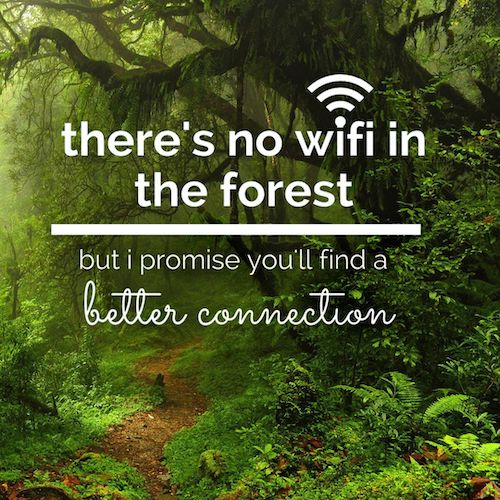
No Wifi in the Forest

from Alt National Park Service

Posted by: Sandy Steinman | April 7, 2021

New Feature on eBird: Habitat Association Charts

New interactive habitat association charts for 649 species

Newly released habitat regional charts show habitat associations for 649 species for every week of the year. These interactive visualizations provide insight into how species’ habitat associations change across space and time on a scale not possible before. What types of habitats are your favorite species found in throughout the year? Explore the new habitat regional charts to find out!

Learn how to interpret habitat regional charts and start exploring

Posted by: Sandy Steinman | April 6, 2021

Job Opening: Public Lands Advocate – Los Padres ForestWatch

The Public Lands Advocate position is an exciting blend of advocacy, community organizing, relationship-building with stakeholders and local elected officials, conducting outreach to underserved communities, and mobilizing volunteers to clean up trash and make the forest a better place for everyone to visit.

Early-Bird Passes to the Point Reyes Birding & Nature Festival are on Sale Now!

Get Your Bird On! Early-Bird Tickets Available for Point Reyes Birding & Nature Festival Through April 16th! Register Today!

We are excited for this year’s event, as we have an amazing line up of local, national, and international speakers joining us from April 22nd – 25th featuring a variety of topics.

Just some of our featured classes included in the four-day online event:

  • Vulture: The Private Life of an Unloved Bird with Katie Fallon
  • Book Club: A Special Q& A with Julie Zickefoose on her book: Saving Jemima: Life and Love with A Hard-Luck Jay
  • Nature Journaling, Building a Bigger Bird Brain with John Muir Laws
  • A Hoot of a Time: Owls of Marin County with Joe Mueller
  • Past, Present & Future with Richard Crossley
  • Great Warriors: Hummingbirds, Fire & Conserving Mexican Biodiversity with Dr. Sarahy Contreras-Martínez & Juan Pablo Galván Martínez
  • A Year with the Urban Gray Fox with Bill Leikam
  • Snouts & Bills: The Relationship Between Northern Elephant Seals and the Birds the Benefit  with Dr. Sarah Allen
  • Is the Monarch Vanishing from the West? with Mia Monroe, Dr. Robert Michael Pyle, and Dr. Cheryl Schultz. 
  • Migrating California Shorebirds: A Look at Our Coastal Species at Bodega Bay with Lisa Hug
  • Field Guide to the Birds of the Sierra Nevada: A New Perspective on Field Guides with Keith Hansen & David Wimpfheimer.
  •  

Check Out the Full Program and Speaker Line Up!

Posted by: Sandy Steinman | April 6, 2021

Cannibalism May Be Key for These Cockroach Couples

The New York Times reports

Males and females of a species that mates monogamously complete their bond by gnawing off each other’s wings, a new study found.

For certain cockroaches living inside rotten logs in Asia, nothing says “I love you” like some minor cannibalism.

Newly mated pairs of one species, Salganea taiwanensis, take turns chewing each other’s wings down to stubs after they move into the homes where they will jointly raise babies. Scientists say this unique behavior may have evolved because of the roaches’ truly monogamous bond.

Read more at Cannibalism May Be Key for These Cockroach Couples – The New York Times

Posted by: Sandy Steinman | April 5, 2021

April 5 to 12 Is International Dark Sky Week

International Dark Sky Week, held during the week of the new moon in April, is a week during which people worldwide turn out their lights in order to observe the beauty of the night sky without light pollution. This event was founded in 2003 by high school student Jennifer Barlow of Midlothian, Virginia.

Learn more about Dark Sky week at  Home | International Dark Sky Week

Posted by: Sandy Steinman | April 5, 2021

Japan’s cherry blossom ‘earliest peak since 812’

The BBC reports

The cherry blossom season, Japan’s traditional sign of spring, has peaked at the earliest date since records began 1,200 years ago, research shows.

The 2021 season in the city of Kyoto peaked on 26 March, according to data collected by Osaka University.

Increasingly early flowerings in recent decades are likely to be as a result of climate change, scientists say.

Read more at Japan’s cherry blossom ‘earliest peak since 812’ – BBC News

Posted by: Sandy Steinman | April 4, 2021

Richardson Bay Audubon Center is Reopening

It has been a long year since we had to close the doors of our center to the public in compliance with the public pandemic response. It is now spring of a new year and along with all the new life that comes with the season, it fills us with such joy and rejuvenation to announce that the Richardson Bay Audubon Center & Sanctuary grounds are open to the public once again.

Our open hours are 9 AM to 5 PM from Monday through Friday. We ask that all visitors respect public mandates and wear a mask at all times, maintaining proper distance from others on the grounds of the center.

To learn more subscribe to  the newsletter at Richardson Bay Audubon Center Newsletter


Posted by: Sandy Steinman | April 4, 2021

A Dry Winter Ends, and Now We Wait for Fire – Bay Nature

Bay Nature  report

The 2020-2021 winter ends as one of the driest on record, with a long summer and fall ahead

The relationship is not so straightforward as a dry winter leading immediately to a catastrophic fire season. The 2017 North Bay fires followed an exceptionally wet winter and a record-breaking fall heat wave. The 2020 lightning fires followed a very dry winter but started in a freak ignition event, a summer lightning storm nearly unprecedented in Northern California’s recent memory. A long, hot summer and fall following a wet winter might result in a more flammable landscape than a mild, foggy summer following a dry winter.

Those are some of the caveats against predicting a bad 2021 fire season ahead. But still, scientists and land managers say, a second dry winter in a row isn’t good news for the upcoming fire season.

Read detailed article of fire risks for this coming summer at A Dry Winter Ends, and Now We Wait for Fire – Bay Nature

Posted by: Sandy Steinman | April 3, 2021

Video shows 1,000-dolphin ‘stampede’ off California coast

The San Francisco Chronicle reported

‘Super-pod,’ ‘mega-pod’ or a ‘dolphin stampede,’ whatever you want to call it, the sight of 1,000 dolphins swimming alongside you is a rare and mesmerizing spectacle.

Tourists on a charter boat off Dana Point in Orange County were treated to that very sight for four hours last week, and the footage released of the marvel is breathtaking.

See video link and read story at  Video shows 1,000-dolphin ‘stampede’ off California coast

North Coast CNPS Programs for more info go to: https://northcoastcnps.org
April –all of it.  ArtShare April, the art prelude to the Wildflower Show.  See the Wildflower Show tab on this webpage. Little Free Wildflower Art Galleries, Facebook and Instagram sharing, art inspirations, and Friday Zoom art demonstrations. REGISTER HERE
Apr. 2, 7 p.m. Zoom art demo. “How to See a Wildflower” with Annie Reid
Apr. 9, 7 p.m. Zoom art demo. “Pen and Watercolor fun with Flowers” with Patricia Sennott
Apr. 16, 7 p.m. Zoom art demo. TBA
Apr. 23, 7 p.m. Zoom art demo. Amanita Mollier will share her silkpainting process and stories of her subjects.

Apr. 14, Wed.  7:00 p.m. Zoom evening programPutting the Forest back in Forestry” with Laurie Wayburn of the Pacific Forest TrustApr. 17, Saturday.  Spring Wildflower Show. The all new, covid-safe Wildflower Show opens the first of its iNaturalist projects.

Apr. 18, Sun. Horse Mountain Field Trip

Apr. 25-May 2, Sat.-Sun. 7:00 p.m. daily. Spring Wildflower Show via Zoom features wildflower fun and speakers on serpentine soils and plants.  Flowers are added to the show on iNaturalist through April 30.

May 1-2, Sat.-Sun.  Spring Native Plant Sale, by appointment

May 12, Wed. 7:00 p.m. Zoom Serpentine Ecology: Wacky soils build glorious places” with Kristi Mergenthaler

May 14-17, Fri-Mon. North Fork Smith Overnight Field Trip

Jun 27, Sun. Canoe Fire (Humboldt Redwoods State Park) field trip

Posted by: Sandy Steinman | April 3, 2021

5 spring wildflower hikes in Sonoma County

The Press Democrat  describes five Spring wildflower trails in Sonoma County at  5 spring wildflower hikes in Sonoma County

Posted by: Sandy Steinman | April 3, 2021

Healthy Oceans Need Healthy Soundscapes

The University of Santa Barbara reports

Researchers document the impacts of noise on marine animals and ecosystems and identify actions to restore healthy ocean sounds.

A global team of researchers set out to understand how human-made noise affects wildlife, from invertebrates to whales, in the oceans, and found overwhelming evidence that marine fauna, and their ecosystems, are negatively impacted by noise. This noise disrupts their behavior, physiology, reproduction and, in extreme cases, causes mortality. The researchers call for human-induced noise to be considered a prevalent stressor at the global scale and for policy to be developed to mitigate its effects.

Read article at Healthy Oceans Need Healthy Soundscapes | The UCSB Current


Posted by: Sandy Steinman | April 2, 2021

April Is Native Plant Appreciation Month

The goal of Native Plant appreciation Month is to appreciate the beauty and importance of native flora and it’s relationship to our native pollinators, our wildlife, and ultimately, ourselves. Through this educational process our goal is to develop appreciation of native plants
and to encourage grassroots advocacy for their protection.

Read how the state of Washington is celebrating including a link to a presentation by Doug Tallamy at Native Plant Appreciation Month

Posted by: Sandy Steinman | April 2, 2021

Elephants in Africa Face Grave Extinction Threat

Center for Biological Diversity News Release

Elephants in Africa Face Grave Extinction Threat, New Expert Assessment Finds

Africa’s Forest Elephants Recognized as Separate Species, Highlighting Peril

GENEVA— In a long-awaited move, the International Union for Conservation of Nature announced today that elephants in Africa face a serious risk of extinction. At the same time, it is officially identifying African elephants as two distinct species: savanna elephants and forest elephants.

The reclassification — part of an update to IUCN’s Red List of Threatened Species — could boost recognition of the dire plight of forest elephants. Forest elephant populations were found to have declined by more than 80% in the last 93 years. Savanna elephant populations declined by more than 50% over the last 75 years.

Read More…

Posted by: Sandy Steinman | April 1, 2021

UC – Berkeley Botanical Garden Photos from 3/30/21

Photos from a visit to the UC-Berkeley Botanical Garden on March 30, 2021.

The garden is currently open daily to the public from eleven to five by reservation .  Garden members can enter at ten. There is an entrance fee (free for garden members) and paid parking.  For more information and to make reservations  go to UC-Botanical Garden.

This is part of my continuing pandemic project,  the “Stay at Home Photo Project”.  It includes many street photos from Berkeley and Albany as well as photos from the UC Berkeley campus, my yard, local botanic gardens, and neighbors’ yards  You can see larger higher quality versions of many of the photos at Flickr in my collection Stay at Home Photo Project.

This slideshow requires JavaScript.

Posted by: Sandy Steinman | April 1, 2021

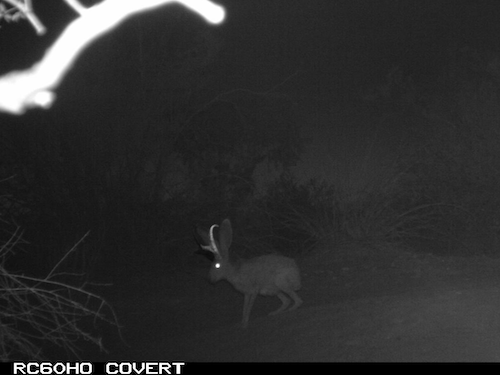
Jackalope Spotting

From Organ Pipe Cactus National Monument
Rare species spotted at Organ Pipe!
With spring in the air, visitors have the chance of glimpsing this elusive critter loping across the desert. While few remain, small populations can be found through the American West.
Jackalopes are typically mottled brown in color, weighing between three and five pounds. In addition to their distinctive antelope-like antlers, they’ve also been reported to mimic human sounds when trying to elude capture. They’ll take interest in groups of campers, and will even mimic the voices of people singing around a campfire.
This species is the fastest land animal in North America, reaching up to 90 miles per hour over flat ground. This fiery speed helps them avoid predators, but they will also use their horns for self-defense if necessary.
Unlike other lagomorphs (rabbits and hares), this species breeds exclusively at night during lightning storms. As the intensity of the storm increases, more jackalopes gather to mate.
If during your time in our monument you happen to spot one of these animals, you can fill out a wildlife report card at the Kris Eggle Visitor Center. While they are not overly aggressive, please respect wildlife and keep your distance if you encounter one.
NPS Photo
ID: Night motion-triggered photo of a jackalope, a jackrabbit looking animal with pronghorn-like antlers
April Fools. My favorite fictitious animal


Posted by: Sandy Steinman | April 1, 2021

Purple Urchins Devour Kelp Forests, So Divers Fight Back

NPR  reports

They’re purple, spiky and voracious, and just off the West Coast, there are more of them than you can count.

Purple sea urchins have exploded in recent years off California, covering the ocean floor in what divers describe as a “purple carpet.” And they devour kelp: the once-lush forests of seaweed that hugged the coastline are disappearing. Since 2014, 95 percent of the kelp have vanished across a large part of Northern California, most of it bull kelp.

Kelp forests provide a crucial ecosystem for a broad range of other marine life and animals, so their demise threatens the ecology across the entire stretch of California coast. The kelp’s abrupt decline is being driven by warming waters, and it’s a case of how climate change is helping push already-stressed ecosystems over the edge.

Read more at  Purple Urchins Devour Kelp Forests, So Divers Fight Back : NPR

from Yerba Buena CNPS

CA’s Magnificent Oaks And Their Many Relations

April 1, THURSDAY @ 7:30 pm   Speaker: Kate Marianchild
Zoom registration here 

California’s iconic and magnificent oaks support a more diverse array of organisms than any other terrestrial ecosystem in the state. In a presentation filled with wood ducks, woodrats, woodpeckers, and many other species, author and naturalist Kate Marianchild will discuss the keystone role oaks play in oak woodland food webs. We’ll learn about symbiotic connections between oaks and other organisms, such as fungi, jays, and caterpillars, and we’ll marvel at the tiny wasps who bend enormous oak trees to their bidding. We will crawl with Kate through woodrat mansions, fight for breeding opportunities with acorn woodpeckers, and defend mistletoe with bluebirds. Who could stay away?

Posted by: Sandy Steinman | March 31, 2021

 UC Botanical Garden April Seasonal Programs & Workshops 

See the UC Berkeley Botanical Garden April Zoom programs and recorded March programs at  Seasonal Programs & Workshops – UC Botanical Garden

Posted by: Sandy Steinman | March 31, 2021

Job Openings: Lead Biological Field Technician (Temporary/Seasonal)

NatureServe is seeking to fill up to two full-time, seasonal crew lead field biological technician to conduct field sampling. The field season is expected to occur from late April to mid-August. The work will include following established vegetation and soil sampling methods on new or existing ecological monitoring sites, including plot and line-based sampling, identification of plants to the species level, digging soil pits and analyzing soils. Knowledge of native plants, the flora of northeastern California and northwestern Nevada, ecological field monitoring methods, field sampling and project management needed. Availability for participation in a BLM AIM training near Susanville, CA in late April is strongly preferred.

Read more and learn how to apply at  Lead Biological Field Technician (Temporary/Seasonal)

« Newer Posts - Older Posts »

Categories