The U.S. Fish and Wildlife Service announced recovery plans today for the endangered Pallid Manzanita/Arctostaphylos pallida and Baker’s larkspur/Delphinium bakeri.
According to Wikipedia the Pallid Manzanita/Arctostaphylos pallida is a fire-adapted shrub has 13 populations that are in Alameda and Contra Costa counties. The two largest populations are found in Huckleberry Botanic Regional Preserve in Alameda and Contra Costa Counties and at Sobrante Ridge Regional Park in Contra Costa County.
Baker’s larkspur/Delphinium bakeri has only one small remaining population, in western Marin County.Baker’s larkspur grows on decomposed shale within coastal scrub plant community. Its range historically included the Point Reyes Peninsula and areas between Camp Meeker and Petaluma, California.
Wikipedia reports:
In July 2002, county-hired road crews mowing weeds in the critical habitat area cut down 30 to 50 Baker’s larkspurs. Scientists initially believed the action may have caused the species’ extinction.
In October 2004, the plant was nearly made extinct in earnest by road workers using heavy machinery to unclog a roadside drain. The last remaining population of about 100 plants was reduced to five individuals.
I have posted photos from the Regional Parks Botanic Garden of both plants below.
Read press release at Center for Biological Diversity Endangered Species Act Recovery Plan Set for Two Unique Bay Area Plants.
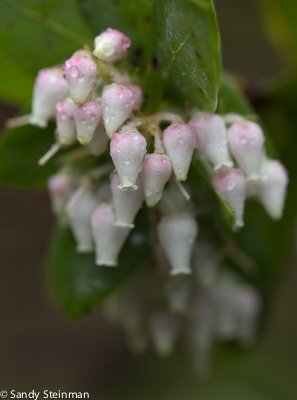
Alameda Manzanita/Arctostaphylus pallida

Baker’s Larkspur/ Delphinium bakeri (rare and endangered)


 Natural History Wanderings
Leave a comment